






















For the ordinary Nigerian, security should mean the ability to go to farm, travel, learn, trade and sleep without fear. For government, security should mean more than statements after attacks. For security agencies, security should mean prevention, not only response. For communities, security should mean partnership with protection. For criminals, security policy must mean that violence will no longer pay
By Kunle Olawunmi
Nigeria’s fight against terrorism has reached a difficult stage. The country is not without effort. Soldiers are fighting. Camps are being cleared. Weapons are being recovered. Suspects are being arrested. Yet the threat keeps returning. Why? Because Nigeria has been fighting armed men more than it has been destroying the ecosystem that makes armed men possible.
A terrorist is not a lone gunman. He is the final product of a chain. Behind him are recruiters, financiers, food suppliers, fuel sellers, arms brokers, informants, ransom negotiators, corrupt gatekeepers, frightenede communities, porous borders and weak justice. Kill the fighter and leave that chain alive, the war returns in another For the ordinary Nigerian, security should mean the ability to go to farm, travel, learn, trade and sleep without fear. For government, security should mean more than statements after attacks. For security agencies, security should mean prevention, not only response. For communities, security should mean partnership with protection. For criminals, security policy must mean that violence will no longer payplace.
This is the message for citizens, governors, security commanders, legislators, traditional rulers, religious leaders, market leaders and community volunteers. The war is not only in the forest. It is also in the money trail, the market, the village path, the telephone call, the fuel supply, the border crossing and the court file.
The figures are sobering. The Global Terrorism Index 2026 ranks Nigeria as the fourth most impacted country by terrorism. It reports that attacks increased from 120 incidents in 2024 to 171 in 2025. Deaths rose by 46 percent to 750, the highest figure since 2020. Borno alone recorded 67 percent of attacks and 72 percent of deaths. Civilians accounted for 67 percent of terrorism fatalities.
These figures show that terrorism remains a direct threat to citizens, not only to the state.
Military pressure matters. Nigerian soldiers have paid a high price. Many have died so that others may live. That sacrifice must be respected. But rifles alone cannot defeat a network. A camp can be cleared in the morning, and a new camp can be supplied in the evening if the money, fuel, phones, motorcycles and informants remain untouched. Nigeria needs force, but it must be intelligence led force.
Nigeria will begin to win decisively when it stops treating terrorism only as armed violence and starts treating it as an ecosystem. The war within is not only against terrorists. It is against the money, fear, silence, impunity and weak governance that keep terrorism alive
For security agencies, the first assignment is fusion. The DSS may know the local contacts. Military intelligence may know routes. The police may know criminal actors. The Nigerian Financial Intelligence Unit may see suspicious money patterns. Customs and Immigration may see border movement. But if these pieces arrive late, they become history, not intelligence. The centre of gravity is not data collection alone. It is timely action.
For communities, the message is equally serious. The first warning often comes from the village, the farm, the motor park, the market or the forest edge. Terrorists pass through real places. They buy food. They ask for directions. They move on motorcycles. Someone usually sees them. But people will not report if their names are leaked. They will not speak if they are abandoned after giving information.
Community intelligence works only when the state protects the source and respects the community. For families of victims, the issue of ransom is painful. No parent will watch a child die because of theory. No husband will ignore the cry of a wife. No community will sit quietly when its children are in a forest. That human pain must be acknowledged. But as national policy, ransom is dangerous. It rewards abduction. It turns kidnapping into business.
SBM Intelligence reported that kidnappers demanded more than 48 billion naira between July 2024 and June 2025, while about 2.57 billion naira was received. It also recorded 4,722 abducted persons across at least 997 incidents, with at least 762 deaths.
This is no longer random crime. It is an economy of fear.
Government therefore needs a professional hostage strategy. Nigeria needs trained negotiators, technical tracking, controlled contact with abductors, discreet surveillance, rescue intelligence and post release pursuit. The aim should be clear: save the victim, trace the chain, arrest the facilitator and prevent the next abduction. Rescue must not end the case. Release must begin the investigation.
For banks, POS operators, fintech firms, telecoms providers, cattle markets, transport unions and local traders, the message is direct. You are now part of national security. The Nigerian Financial Intelligence Unit has shown that kidnap ransom can move through cash, bank accounts, POS terminals, fintech wallets, wire transfers, crypto linked channels and structured withdrawals.
Terrorism is not only funded in remote forests. It can also be enabled through ordinary transactions that look small until they are connected.
The state must follow the money with seriousness. Freeze suspicious accounts. Track facilitators. Watch repeated POS withdrawals. Monitor the conversion of ransom into arms, cattle, motorcycles, fuel and logistics. A terrorist with money becomes a commander. A kidnapper with money becomes an employer. Remove the money and the group begins to weaken from within.
Accountability is another weak point.
Nigerians often hear that sponsors are known. The public then asks, if they are known, why are they not punished? The answer has three parts. Intelligence is not always evidence. Powerful actors often use proxies. Institutions can be compromised. These problems are real, but they must not become excuses.
Nigeria needs better conversion of intelligence into admissible evidence. It needs protected witnesses. It needs asset tracing. It needs faster terrorism financing prosecution. It needs political courage.
The poor foot soldier must not be punished while the powerful sponsor walks free. Rehabilitation also needs balance. Operation Safe Corridor is necessary as a non kinetic tool. Some people entered insurgent groups through coercion, hunger, fear, abduction or deception. Others are hardened killers. The state must not treat all of them the same.
Reintegration can reduce the manpower of insurgency if it is properly screened and monitored. But victims must not feel forgotten. Communities must be consulted. Serious offenders must face justice. Rehabilitation without justice creates anger. Justice without reintegration can prolong war. Nigeria needs both.
The lesson is simple. Nigeria cannot only bomb its way out of terrorism. It must govern its way out. It must secure farms, schools, roads and communities. It must protect informants. It must fight financial networks. It must punish sponsors. It must strengthen borders. It must coordinate agencies. It must rebuild trust.
For the ordinary Nigerian, security should mean the ability to go to farm, travel, learn, trade and sleep without fear. For government, security should mean more than statements after attacks. For security agencies, security should mean prevention, not only response. For communities, security should mean partnership with protection. For criminals, security policy must mean that violence will no longer pay.
The fighter is only the face of the war. Behind him is a system. Defeat the system, and the fighter loses oxygen.
Nigeria will begin to win decisively when it stops treating terrorism only as armed violence and starts treating it as an ecosystem. The war within is not only against terrorists. It is against the money, fear, silence, impunity and weak governance that keep terrorism alive.
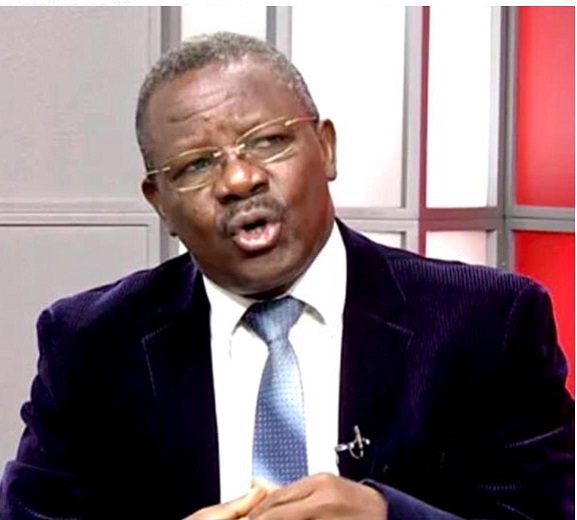
•Kunle Olawunmi, a retired Commodore, is a Professor of Global Security Studies
•Opinions, positions or thoughts expressed here are personal and strictly of the writer/author and do not represent the views of The Daily Crucible.