























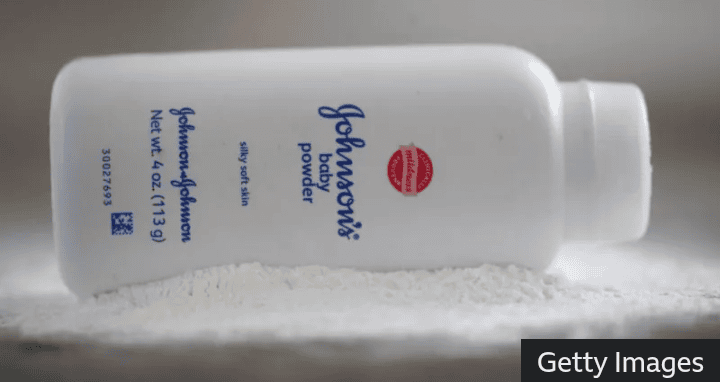
Johnson & Johnson (J&J) has offered to pay up to $5.5 billion to settle about 69,000 lawsuits alleging that its talc-based baby powder and other products caused ovarian cancer, in a move aimed at ending one of the largest product liability battles in the company’s history.
The proposed settlement, announced on Monday, seeks to resolve thousands of remaining claims that have weighed on the U.S. healthcare giant for years, according to BBC news report.
Despite the offer, J&J maintained that its talc-based products are safe and do not cause cancer.
The company’s Vice President of Litigation, Erik Haas, described the allegations as “meritless”, saying the settlement was intended to bring years of costly litigation to a close.
According to J&J, the proposed agreement would cover about 69,000 pending ovarian cancer claims. The company said it plans to pay up to $3 billion next year, with no further payments scheduled before 2028.
The settlement, however, will only take effect if legal firms representing at least 95 per cent of the ovarian cancer claimants in state and federal courts agree to the proposal.
Haas said the company remained confident it would have “ultimately prevailed with further litigation,” noting that J&J had already secured favourable outcomes in most of the cases that have gone to trial.
He added that the proposed agreement would allow the company to “put this matter behind it” and remain focused on developing medicines and medical devices.
Legal claims against J&J over its talc-based baby powder date back to 2009, with thousands of consumers alleging that prolonged use of the product caused ovarian cancer due to asbestos contamination.
Earlier this month, the company scored a significant legal victory after a U.S. federal court questioned whether individual plaintiffs could prove that talc was the direct cause of their ovarian cancer.
Talc, a naturally occurring mineral composed of magnesium, silicon, oxygen and hydrogen, has long been used in baby powder because of its soft, absorbent properties.
However, because talc deposits can occur near asbestos—a known carcinogen—claimants have argued that contamination exposed users to cancer risks.
J&J has consistently rejected those allegations, insisting that scientific evidence supports the safety of its products.
“Studies show talc is safe, does not contain asbestos and does not cause cancer,” the company said in its latest statement.
In 2022, J&J announced it would discontinue the manufacture and sale of its talc-based baby powder worldwide, more than two years after halting sales in the United States.
At the time, the company said the decision formed part of a broader portfolio review rather than an admission of liability.
“As part of a worldwide portfolio assessment, we have made the commercial decision to transition to an all cornstarch-based baby powder portfolio,” J&J said.