



















In the grand tapestry of history, those who lay down their swords to help build a city are remembered with far greater affection than those who burn down the gates trying to force their way inside
By Kunle Somorin
There is an old Yoruba folktale about a tireless hunter who spent three seasons pursuing an elusive, majestic stag through the dense thickets of the forest. Each time he drew near enough to notch his arrow, his bowstring snapped – not because he lacked skill, nor because his heart was untrue, but because he kept using old, frayed cordage that buckled under the tension of the draw.
The tragic irony was that while he wrestled in the undergrowth with his snapping bow, the season waned, the winter cold set in, and the river at the edge of the forest slowly swelled, threatening to cut off his route back to the township altogether.
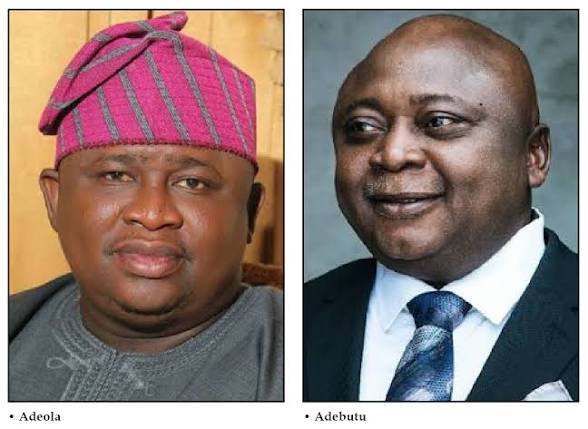
Honourable Oladipupo Adebutu today finds himself in the shoes of that dogged hunter. When the Independent National Electoral Commission quietly released its slate of cleared candidates for the upcoming governorship election in Ogun State, Adebutu’s name was conspicuously absent.
The statutory machinery had ground on, petitions had been weighed regarding his absence from the certified party register, and once again, the heavy gates of the political arena slammed shut before he could step inside. It is a scene painfully familiar to anyone who has watched Ogun State politics over the last decade. Like a recurring dream that always ends just before the morning light, Adebutu has once again arrived at the threshold of power only to find the door bolted from the inside by administrative oversights and technical technicalities.
To view his predicament with scorn would be to misunderstand the tragic nature of his trajectory. Ladi Adebutu is not an unfeeling carpetbagger; he is a man, I believe is of genuine warmth, generous spirit, and enviable pedigree.
As the scion of Sir Kesington Adebutu, the famed Baba Ijebu, he inherited not just a famous name and substantial wealth, but an innate impulse for philanthropy. Across the rolling hills of Remo and into the far corners of Ogun East, his footprints are visible in rebuilt schools, settled hospital bills, and life-changing grants for market women. His desire to govern Ogun State I feel does not stem from a desperate need for personal enrichment, but from a genuine, almost romantic yearning to serve and the dad’s quest to assume the title of Baba Gomina.
Adebutu possesses deep grassroot roots, financial weight, and immense public goodwill. Yayi possesses executive capability, state-wide momentum, and an actionable roadmap for transformation. Imagine the sheer strength of a river when two powerful tributaries cease fighting for dominance and instead merge into a single, unstoppable current
Yet, politics is an unforgiving craft where noble intent alone cannot compensate for structural fragility. In 2019, Adebutu carried the official blessing of his party’s national leadership, only to watch his ambition unravel because a subsisting court order recognised a rival factional executive led by the late Senator Buruji Kashamu.
He marched into that contest fighting on two fronts, and predictably, the house divided against itself could not stand. By 2023, he mounted another heroic campaign against his cousin, Governor Dapo Abiodun, coming within a razor-thin margin of thirteen thousand votes – a breathtakingly close finish that ultimately evaporated into months of exhausting, spirit-draining litigation up to the apex court.
Now, history threatens to repeat itself as a dark comedy. While Adebutu contends with the administrative headache of INEC’s register, an emergent faction aligned with the volatile Wike axis has produced a relatively obscure contender, Topa Olusegun Peter, threatening yet another protracted civil war within the Peoples Democratic Party. It is at this critical juncture that Adebutu must pause and listen to the sage advice recently offered by Senator Shehu Sani to politicians trapped in electoral limbo.
Sani warned that when the political tide recedes, pouring millions into endless legal wars is merely paying high fees to legal mechanics to polish a car that has no engine. It is frittering away fortune, energy, and dignity on a phantom chase, when wisdom dictates that one should preserve their strength and set their eyes on a nobler tomorrow.
The tragedy of the perpetual gladiator is the illusion that the arena will wait forever. While the opposition remains consumed by its own internal skirmishes, Ogun State continues to move, unburdened by political grief. On that same official candidate list stands Senator Solomon Olamilekan Adeola, universally known as Yayi, flying the flag of the All Progressives Congress. Yayi’s rise is not an accident of factional luck, but the outcome of a methodical, technocratic climb through the legislative ranks of Lagos and the National Assembly, culminating in his leadership of the Senate Appropriation Committee.
More importantly, Yayi approaches the governorship not as a prize to be seized, but as an engineering task to be accomplished. His ITESIWAJU blueprint – a meticulously crafted nine-pillar agenda addressing infrastructure, food security, state security, and industrial tax repatriation – is designed to fix the long-standing economic anomaly where Ogun provides the land and labour for industrial giants, while neighbouring states harvest the tax revenue.
Added to this is a profound moral imperative of political equity: Ogun West, despite its deep history and economic potential, has never produced a governor in the five-decade history of the state.
This is the moment where personal ambition must bow to statesmanship. If Adebutu’s lifelong quest has truly been about the welfare of the people of Ogun, then the ultimate question is no longer whether he wears the crown, but whether the kingdom prospers.
In the grand tapestry of history, those who lay down their swords to help build a city are remembered with far greater affection than those who burn down the gates trying to force their way inside. Buruji Kashamu eventually understood this at the twilight of his political life when he called for unity over ego, choosing reconciliation over eternal conflict.
Adebutu possesses deep grassroot roots, financial weight, and immense public goodwill. Yayi possesses executive capability, state-wide momentum, and an actionable roadmap for transformation. Imagine the sheer strength of a river when two powerful tributaries cease fighting for dominance and instead merge into a single, unstoppable current.
Adebutu would not be surrendering to an opponent; he would be aligning with a vision for progress. His intellect and resources could be deployed to high federal service, legislative leadership, or as the guiding conscience of an Ogun State Council of Elders ensuring that development reaches every village in Remo and beyond.
The door to the February ballot may have swung shut for Hon. Ladi Adebutu, but the grand archway to enduring legacy remains wide open. He stands at a historic fork in the road: he can choose to remain in the shadowy corridors of the courtroom, fighting proxy wars against the likes of Topa Peter, or he can rise above the fray, heed the lessons of history, and step aboard the Itesiwaju train to build a greater Ogun State for generations yet unborn.
•Dr. Somorin writes from Crescent University, Abeokuta
•Opinions, positions or thoughts expressed here are personal ans strictly those of the writer/author and do not represent the views of The Daily Crucible.