













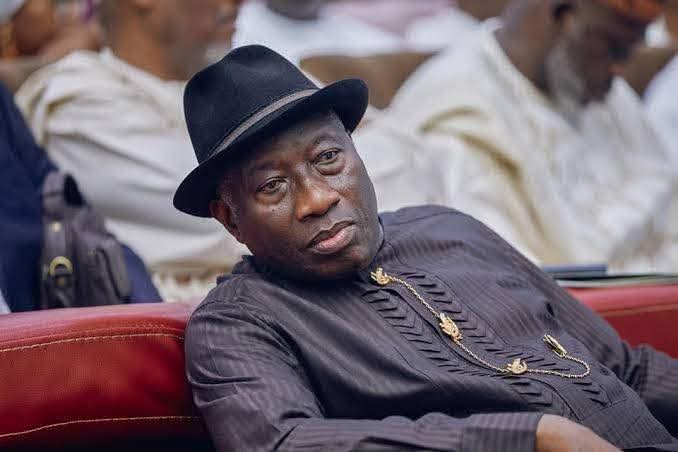
Former President Goodluck Ebele Jonathan is safe and has been evacuated from Guinea-Bissau following a military coup that sacked the country’s government, the Federal Government said.
The Ministry of Foreign Affairs spokesperson, Kimiebi Ebienfa, said
Jonathan was extracted from Guinea – Bissau with a special flight alongside members of his delegation.
Ebienfa made this known to newsmen in Abuja on Thursday.
“Former President Goodluck Ebele Jonathan is very safe and out of Guinea-Bissau. He left with a special flight with members of his delegation, including Mohamed Chambas,” he said.
The Daily Crucible reports that Jonathan had been in Guinea-Bissau leading the West African Elders Forum Election Observation Mission during last Sunday’s presidential and legislative elections when the military struck and declared that it had seized power.
Jonathan had traveled to Bissau as head of the West African Elders Forum election‑observer mission for the November 23 presidential and parliamentary polls.
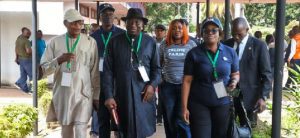
Jonathan and hundreds of foreign observers were not able to leave the francophone country where elections had taken place and results were about to be officially declared, until the federal government worked out special arrangements to extract from Guinea – Bissau.
It was learnt that a good number of foreign observers had rushed to the airport in a bid to depart the country after the coup was announced but got stranded.
The coup leaders claimed “total control” of the country on Wednesday, a day after two leading candidates – President Umaro Sissoco Embalo and Fernando Dias – each declared victory in the country’s election even though the electoral commission had not released official results.
Calling themselves the “High Military Command for the Restoration of Order”, the officers ordered the immediate suspension of the electoral process “until further notice”
They also ordered the closure of all land, air and sea borders and an overnight curfew.
“I have been deposed,” Embalo told French broadcaster France24 in a phone call, adding that he was “currently at the general staff headquarters.”
The head of the main opposition PAIGC party, Domingos Simoes Pereira, has also been arrested, Haque said.
Also, the House of Representatives had earlier urged President Bola Tinubu’s government to take urgent diplomatic action to ensure Jonathan’s safety.
Deputy Speaker, Benjamin Kalu, highlighted the matter during plenary, describing it as an “important emergency.”
House Leader, Prof. Julius Ihonvbere, briefed lawmakers, noting Jonathan’s extensive experience as an election observer in countries including Zimbabwe, Liberia, Ghana, Mozambique, Pakistan, Tanzania, and South Africa.
He said, “Currently, he is trapped in Guinea-Bissau because of the coup. From my own investigations, the government is aware and they are doing everything possible to get him back as quickly and safely as possible. Our goal is to urge the government not to relent in that effort to use all diplomatic means to get a former president, a true democrat, back to Nigeria immediately.”
Heavy gunfire was reported near the presidential palace, soldiers blocked major access routes, and a curfew was imposed.
The coup came just before the official release of results from the 23 November presidential election, after both leading candidates had claimed victory.
The military also arrested opposition leader Domingos Simões Pereira, barred from the election by the Supreme Court, as well as several senior military and government officials, including the chief of staff and the minister of the interior.
The Federal Government condemned the coup in strong terms, describing it as a serious threat to democracy and regional stability.
The Ministry of Foreign Affairs stated, “The Federal Government condemns this act of military insurrection, which undermines the democratic progress, constitutional order, and stability not only of Guinea-Bissau but of the entire West African sub-region. This represents a blatant violation of the fundamental principles of the Economic Community of West African States Protocol on Democracy and Good Governance, which explicitly rejects any ascension to power through unconstitutional means.”
Nigeria expressed solidarity with the people of Guinea-Bissau, calling for the “immediate and unconditional restoration of constitutional order, the safety and security of all those detained and the full respect for the sanctity of democratic institutions in Guinea-Bissau.”
Jonathan, together with former Mozambique President Filipe Nyusi, and Issifu Kamara, head of the ECOWAS Election Observation Mission, condemned the military’s actions in a joint statement, describing the coup as “a direct attempt to disrupt Guinea-Bissau’s democratic process.”
They appealed for calm among residents and reaffirmed their commitment to supporting Guinea-Bissau “during this sensitive period,” stressing “the importance of preserving peace, stability, and the well-being of the Bissau-Guinean people.”
On Thursday, the military appointed General Horta N’Tam, the army’s chief of staff, to lead the country for one year. N’Tam, who has served close to President Embaló, said at a press conference, “I have just been sworn in to lead the High Command. These actions are necessary to block operations that aimed to threaten our democracy. Evidence was sufficient to justify the operation, and necessary measures are urgent and important and require everyone’s participation.”
Guinea-Bissau, one of the world’s poorest nations and a major hub for drug trafficking between Latin America and Europe, has faced repeated political instability, with four successful coups and several attempted takeovers since independence in 1974.
The 2025 polls were conducted amid heightened tension, with over 6,700 security personnel, including ECOWAS Stabilisation Force members, deployed to maintain order.
The international community reacted with concern. UN Secretary-General António Guterres said he was “following the situation with deep concern,” while Portugal urged restraint and discouraged any acts of institutional or civic violence.
Reporters Without Borders warned that the suspension of media operations amounted to “a serious violation of the right to information. The population must be able to be informed about what is happening in the country, especially in this context of political crisis.”
ECOWAS and the African Union condemned the coup, reaffirming their strict zero-tolerance policy for unconstitutional changes of government.
Nigeria reaffirmed its commitment to working with regional and international partners to restore stability.
Ebienfa said, “Nigeria, as a key member of ECOWAS and the African Union, will work closely with our regional and international partners to take all necessary measures to ensure the swift return to normalcy and constitutional governance in Guinea-Bissau. We reaffirm our unwavering commitment to the promotion of democracy, peace, and stability across the African continent.”
– Additional report credit: Punch