
















By Jane Okafor, Abuja
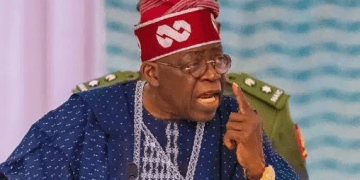
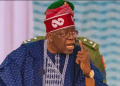
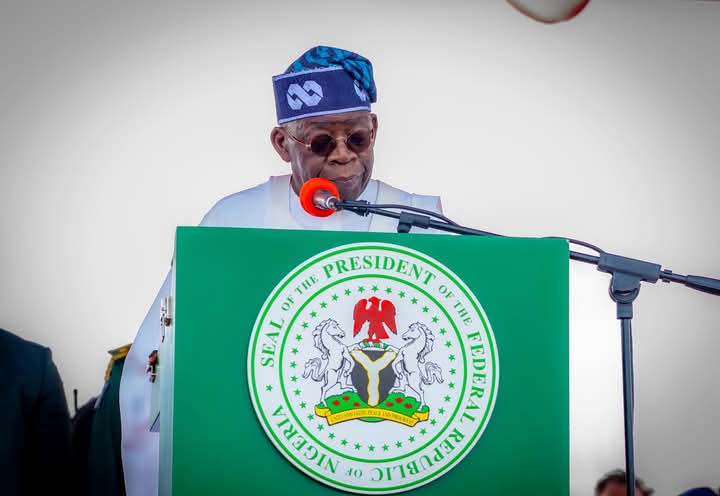
President Bola Ahmed Tinubu on Friday used his 2026 Democracy Day address to celebrate Nigeria’s 27 years of uninterrupted democratic rule, defend his administration’s economic reforms, announce fresh honours for pro-democracy activists, and issue a stern warning to terrorists, bandits and kidnappers.
Addressing the nation on June 12, Tinubu described the anniversary as a celebration of both democracy and the resilience of Nigerians, noting that the country had enjoyed its longest period of civilian governance since the return to democratic rule in 1999.
“Today, we celebrate not only democracy but also the enduring Nigerian spirit. For 27 unbroken years, since May 29, 1999, Nigerians have chosen their leaders through the ballot, witnessed peaceful transitions of power, and resolved disagreements in courtrooms and legislative chambers—not through violence,” he said.
The President called on the Independent National Electoral Commission (INEC), security agencies and political parties to ensure peaceful and credible elections in Ekiti and Osun states, warning that democracy suffers when citizens lose confidence in the electoral process.
He also urged the National Assembly, judiciary, media and civil society groups to continue playing their oversight roles, saying, “Criticise me, disagree with me, but never stop believing in Nigeria.”
Security, Terrorism and Kidnappings
Tinubu acknowledged growing concerns over insecurity, particularly the recent abduction of children in Oyo and Borno states, describing the incidents as a source of national grief.
“Though this year’s mood is dampened by the abduction of our children in Oyo and Borno, we remain hopeful for their safe return. Democracy without security is a mirage,” he said.
The President highlighted his administration’s security efforts, revealing that more than 50,000 new police officers and thousands of military recruits had been approved, while the 2026 budget allocated N5.41 trillion to defence and security—the highest in Nigeria’s history.
According to him, Nigerian security forces have recorded significant gains against insurgency and terrorism.
“We have moved from training with our allies, the United States, France and other European countries, to precision targeting. In Arege, Borno State, we degraded ISWAP’s command centre. Terror-related deaths are down by 81 per cent since 2015. Over 13,000 terrorists have been neutralised in the past year,” he stated.
Tinubu disclosed that more than 124,000 insurgents and their dependents had surrendered since 2023 through Operation Safe Corridor.
He, however, warned criminal elements to either surrender or face decisive military action.
“To bandits, kidnappers, and sponsors of terror: Surrender or face the full force of the Nigerian State. These windows of surrender will not remain open forever. No mercy will be shown to those who trade in the blood of Nigerians,” he declared.
Democracy Heroes Remembered
The President paid tribute to key figures of the June 12 struggle and Nigeria’s democratic journey, including Chief M.K.O. Abiola, Alhaja Kudirat Abiola, Chief Gani Fawehinmi, Chief Bola Ige, Chief Alfred Rewane, Pa Abraham Adesanya, Chief Anthony Enahoro, Dr Beko Ransome-Kuti, Frank Kokori and other activists who fought against military rule.
He described June 12, 1993, as a defining moment in Nigeria’s history that demonstrated the possibility of national unity beyond ethnic and religious divisions.
“June 12 revealed the possibility of a true Nigerian nation. The heroes of June 12 secured political freedom. Our challenge is to secure economic freedom,” he said.
Tinubu Defends Economic Reforms
Defending the administration’s economic policies, Tinubu argued that difficult reforms implemented since 2023 were necessary to rescue the economy from fiscal instability and declining investor confidence.
He said the reforms had increased federation revenues, improved fiscal transparency and attracted investments into critical sectors including agriculture, energy, manufacturing, mining, transportation, technology and the creative industry.
The President also pointed to improvements in domestic refining capacity, saying they had strengthened Nigeria’s energy security and reduced dependence on imported petroleum products.
Despite the gains, he admitted that many Nigerians were still struggling with rising living costs.
“Yet, many Nigerians still face economic hardship. We remain focused on reducing inflation, expanding food production, creating jobs, improving living standards, rebuilding confidence in our economy, and creating conditions for sustainable prosperity,” he said.
Power Sector and Infrastructure
Tinubu identified electricity as one of the sectors receiving urgent government attention, blaming years of underperformance on weak generation, poor transmission infrastructure, inadequate metering and accumulated debts.
He cited the implementation of the Electricity Act, which allows states to generate, transmit and distribute electricity, as a major reform aimed at transforming the sector.
The President also announced plans to raise a N4 trillion bond to settle verified legacy debts in the electricity value chain and said efforts were ongoing to bridge the country’s metering gap.
He added that the National Agricultural Development Fund had begun deploying 10,000 tractors over five years, while more than 1,000 small and medium-sized enterprises had been certified for export.
According to him, non-oil exports grew by 21 per cent in the past year.
Local Government Autonomy
Tinubu reiterated his administration’s commitment to financial autonomy for Nigeria’s 774 local government councils, arguing that weak grassroots governance had contributed significantly to insecurity and underdevelopment.
“Recognising that democracy is undermined when people do not feel its impact, my administration has sought financial autonomy for our 774 local councils,” he said.
Yar’Adua University, National Honours
In a major announcement, the President approved the renaming of the completed Institute of Petroleum Studies in Kaduna as the General Shehu Musa Yar’Adua University of Geological Sciences and Engineering Technology in honour of the late military officer and pro-democracy advocate.
He also announced national honours for dozens of journalists, activists, lawyers, academics and pro-democracy campaigners who suffered persecution, imprisonment, exile and other hardships during the struggle for democratic rule.
The list included Ayoka Lawani, Tunde Fagbenle, Oladele Alake, Olatunji Bello, Louis Odion, Segun Babatope, Sam Omatseye, Bola Bolawole, Debo Adeniran, Ayo Opadokun, Joe Okei-Odumakin, Richard Akinnola, Niran Malaolu, Femi Aborisade and several others.
Tinubu also recognised military officers who supported the June 12 struggle, including Major General M.A. Garba, Brigadier General Lawal Jaafaru Isa, Colonel Sambo Dasuki, Colonel Lawan Gwadabe and Brigadier Yahaya Abubakar, the Etsu Nupe.
He said the full honours list would be released in the coming days.
The President concluded by urging Nigerians to remain united and committed to nation-building despite current challenges.
“The road ahead is steep. But June 12 reminds us: Nigerians do not break. We bend, we bleed, but we do not break,” he said.