






















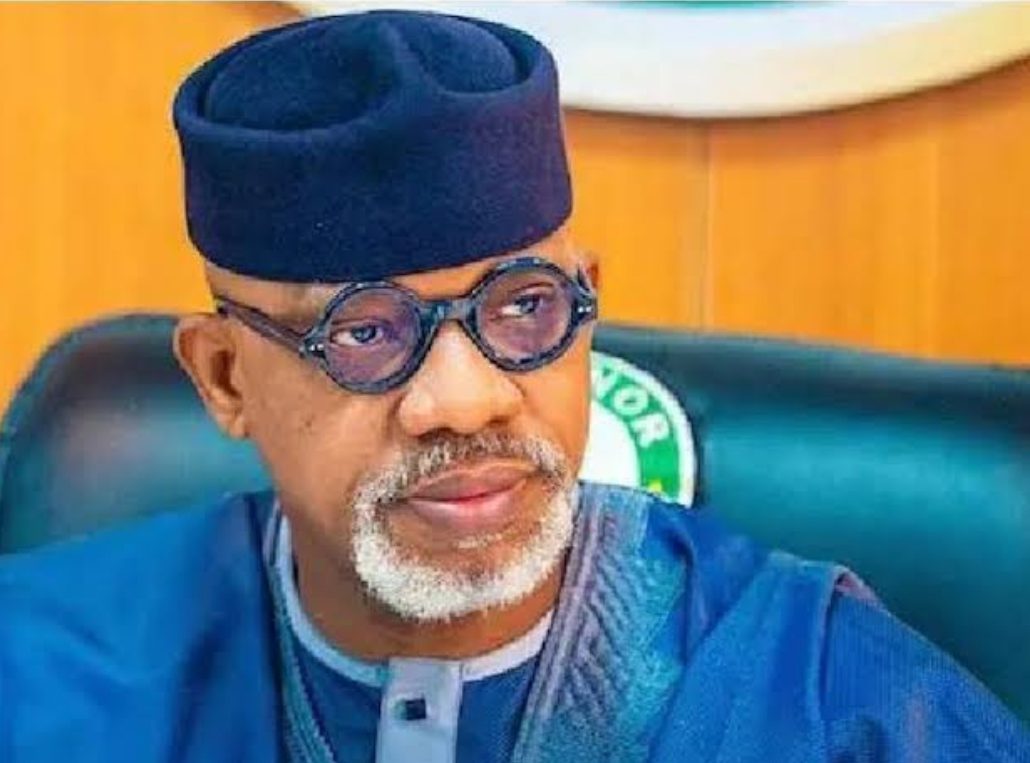
Ogun State deserves political disagreement without political degradation. It deserves arguments backed by facts, not ridicule backed by power. “Are they mad?” may win applause at a rally. But it does not answer the questions. And in a democracy, the questions remain
By Dayo DaSilva
“When the people ask questions about their money, they deserve answers not insults and when a governor descends into the language of ridicule, it is the office that suffers.”
Governor Dapo Abiodun may have intended his now-controversial question “Are they mad?” as another political attack against opposition politicians questioning the removal of petrol subsidy and demanding accountability for the funds supposedly saved from the policy to show support for his boss.
But it was more than politics. It was a troubling demonstration of how easily the language of political disagreement can descend when an occupant of an exalted public office chooses ridicule over argument to show his real personality.
The question is not whether Governor Abiodun is entitled to defend President Bola Tinubu’s subsidy-removal policy or not. Of course he can defend the person he wants to please.
The question is whether the Governor of Ogun State should describe people challenging a government policy in such language.
The answer should be no. A governor is not merely another party operative at a political rally. He is the constitutional head of a state, the number one citizen, the chief executive responsible for millions of people and the most prominent representative of the state he governs. His words therefore carry the authority of his office. Thus, when that language descends to the level of “Are they mad?”, the damage is not confined to those being attacked. It diminishes the office itself.
OGUN IS TOO GREAT FOR GUTTER POLITICS
This is Ogun State, a state that has produced some of the most influential Nigerians in politics, business, academia, law, journalism, literature and public service.
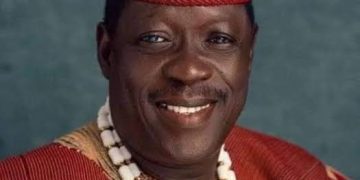
From Chief Olusegun Obasanjo and Chief Ernest Shonekan to the late Chief M.K.O. Abiola, Professor Wole Soyinka, Sir Kensington Adebukola Adebutu and numerous other accomplished sons and daughters of the state, Ogun has earned a reputation for intellectual strength, enterprise and leadership.
It is therefore difficult to reconcile that heritage with a political culture in which the governor’s response to criticism is to question the sanity of those asking questions.
The office of Governor of Ogun State has previously been occupied by people with different political philosophies and records, including Chief Olusegun Osoba, Senator Gbenga Daniel and Senator Ibikunle Amosun among others. They were not beyond criticism. None was infallible.
But the office itself demands a certain decorum.
The problem with Abiodun’s remark is therefore not simply that it was offensive to opposition politicians.
It is that it lowers the language expected from the highest political office in the state. And when the language of governance is lowered, the standard of governance is inevitably brought into question.
WHO EXACTLY IS BEING CALLED MAD?
The opposition politicians being criticised may have political motives. That is politics. But what about the ordinary citizen asking how the enormous economic consequences of subsidy removal are being addressed?
Is the worker mad? Is the trader mad? Is the manufacturer mad? Is the farmer mad? Is the transport operator mad? Is the pensioner mad? Is the parent struggling with food, school fees, rent and transportation mad? Are Nigerians who ask what became of the resources freed by subsidy removal mad?
These are not frivolous questions. They are questions that any government should expect. Indeed, a government confident about its policies should welcome scrutiny because it has the opportunity to demonstrate results.
THE REVENUE QUESTION CANNOT BE REDUCED TO OGUN
There is another problem with the political argument surrounding the additional revenue available after subsidy removal. It is misleading to frame the issue as though only state governments received additional money.
…The people want governments that can explain how public money is being spent. These demands are not madness. They are the minimum expectations of citizenship. Governor Abiodun should therefore remember that political office is temporary, but the dignity of the institution is permanent
Nigeria operates a three-tier system of government. Under the existing Federation Account revenue-sharing arrangement, 52.68 per cent is allocated to the Federal Government, 26.72 per cent to the states and 20.60 per cent to local governments. Therefore, when distributable revenue increases, the three tiers benefit according to the applicable allocation arrangements.
The Federal Government receives the largest share. The states receive their statutory share. Local governments receive theirs. There are also separate arrangements, including derivation, which affect distribution. The implication is straightforward, If Nigerians are asking what increased public revenue has achieved, the question should not be directed exclusively at governors. It should be directed at all three tiers of government.
The Federal Government must account for its share. State governments must account for theirs. Local governments must also account for theirs. The people deserve the complete picture, not selective explanations or half truths.
MORE ALLOCATIONS, WHERE IS THE IMPACT?
The fundamental question is not whether government revenues have increased. They have. The question is whether the increase has translated into a meaningful improvement in the lives of Nigerians. That is where government must provide evidence. Have citizens experienced better infrastructure?
Have roads improved significantly?
Are public hospitals more functional?
Are schools better equipped?
Has unemployment fallen?
Has purchasing power improved?
Has insecurity reduced?
Are businesses operating under better conditions?
Have vulnerable Nigerians received sufficient protection from the shock of subsidy removal?
These are the tests by which economic reforms should ultimately be judged.
It is not enough for government to announce that more money is available.
The people want to know what the money has done.
ACCOUNTABILITY IS NOT MADNESS
There is a dangerous tendency in Nigerian politics to regard criticism as hostility and accountability as opposition. That culture must end.
The opposition has a constitutional role.
The media has a role.
Civil society has a role.
Citizens have a role.
Government has a responsibility to answer them. If politicians believe subsidy should return, they should explain how it will be funded.
If the government believes subsidy removal is the right policy, it should explain why. If the government says the savings are being invested, it should publish the figures.
If states are receiving substantially more revenue, they should show what has changed. This is how democracy works. Not by asking whether critics are mad.
ABIODUN SHOULD KNOW BETTER
Governor Abiodun has occupied the Ogun governorship since 2019. He therefore knows that the words of a governor are not ordinary words. The person speaking at a political rally is also the person who represents the entire state. APC members are not the only people of Ogun State. PDP members are not outsiders. Labour Party supporters are not outsiders. Those who support no political party are not outsiders. Every resident and citizen of Ogun State is entitled to the respect of the office of governor. That is precisely why the Governor should reconsider the tone of his intervention. Political opponents may deserve rebuttal.
They do not deserve abuse from the office they are challenging.
A WORRYING PATTERN OF POLITICAL LANGUAGE
Abiodun’s remark also comes at a time when Nigeria’s political discourse is increasingly characterised by provocative language.
Senator Francis Fadahunsi, an APC lawmaker, recently faced public controversy over remarks in which he was reported as telling supporters to “kill” opposition members. Fadahunsi subsequently denied advocating physical violence, saying the video had been edited and that he meant defeating the opposition politically.
Whatever the explanation, the episode demonstrates the danger of irresponsible political language in an already polarised environment. Political leaders have a special responsibility to distinguish between political defeat and physical destruction, criticism and insult, disagreement and dehumanisation.
Once political language becomes reckless, the consequences can extend beyond the podium. Nigeria has seen enough political violence to know that leaders should be extremely careful about the words they use.
OGUN PEOPLE DESERVES AN APOLOGY
Governor Abiodun may not have intended to insult every Ogun citizen. But public office is judged not merely by intention. It is judged by conduct. The Governor can continue to defend subsidy removal. He can attack the opposition’s arguments. He can campaign for the APC. He can challenge anyone proposing a return to subsidy to produce a credible funding plan. But there is no necessity to question the sanity of those who disagree. For an office as exalted as the Governor of Ogun State, there should be room for disagreement without contempt.
The APC must also accept responsibility for the quality of political leadership it produces and presents to the public. From Senator Francis Fadahunsi’s controversial “kill” remark, to Governor Dapo Abiodun’s disturbing “Are they mad?” outburst, the party’s public conduct increasingly raises questions about the standard of screening, discipline and decorum expected of its office holders. Governor Abiodun, in particular, should be condemned for ridiculing an exalted office that represents the entire people of Ogun State, including those who do not belong to his party. Disagreement with opposition politicians is legitimate, but questioning their sanity is unbecoming of a governor and unnecessarily lowers the dignity of the office. The Governor should therefore put politics aside, acknowledge that the language was inappropriate and apologise to the people of Ogun State for diminishing the stature of an office that should command respect, responsibility and civility.
THE PEOPLE WANT RESULTS, NOT INSULTS
The real political contest should not be about who can shout the loudest at a rally.
It should be about who can produce the strongest evidence of performance. The people want roads.
They want affordable food. They want functioning hospitals.
They want quality education. They want security. They want an economy in which businesses can survive. The people want governments that can explain how public money is being spent. These demands are not madness. They are the minimum expectations of citizenship. Governor Abiodun should therefore remember that political office is temporary, but the dignity of the institution is permanent. The Governor will eventually leave Government House. The office will remain. The political parties will change. The people will remain. And the record of how the office was conducted will remain.
Ogun State deserves political disagreement without political degradation. It deserves arguments backed by facts, not ridicule backed by power. “Are they mad?” may win applause at a rally. But it does not answer the questions. And in a democracy, the questions remain.
•Dayo DaSilva is a publisher and media consultant. He has reported extensively on social development, philanthropy and nation-building. Email: dsv123ng@yahoo.com
.•Opinions, positions or thoughts expressed here are personal and strictly of the writer/author and do not represent the views of The Daily Crucible.