


























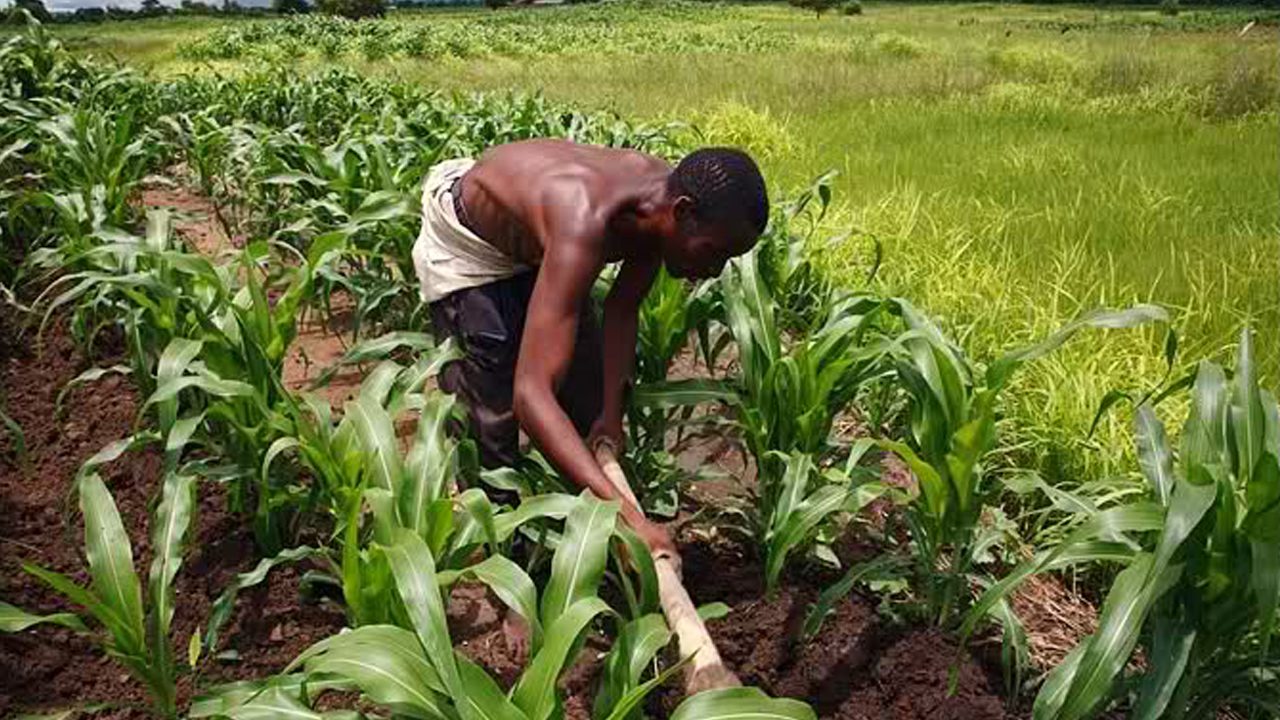
Nigeria’s gradual return to agriculture is being driven more by economic pressure than deliberate long-term planning, the Secretary General of the All Farmers Association of Nigeria (AFAN), Otunba Dr Babafemi Oke, has said.*
He noted that the country’s renewed interest in farming follows the decline in crude oil revenue, rather than a structured national development agenda rooted in food security and sustainability.
Speaking on Sabenko, a Yoruba-Speaking public affairs programme, on Eagle 102.5 FM, Ilese Ijebu, Ogun State, Oke explained that Nigeria had historically been an agrarian nation before the discovery of crude oil shifted focus away from farming.
According to him, the symbolic meaning of the green-white-green national flag reflects agriculture’s foundational role in the country’s development, a role he believes was abandoned during the oil boom years.
He stated that while there has been noticeable progress in recent years, the shift back to agriculture remains reactive rather than strategic. He added that earlier administrations, particularly during periods of high petroleum revenue, failed to sustain investments in agriculture, leaving the sector underdeveloped for decades.
The AFAN Secretary said,“We are already trying unlike before since crude oil sales is no longer moving. We’ve gone back to farming, when we were still making sales and profit in petroleum we didn’t pay attention to agriculture and if we look at Nigeria, we started with farming. The country’s flag, green white green, the color green there stands for agriculture, white for peace, the second green too is for agriculture but ever since petrol came, it seems we didn’t pay attention to it but when the fuel started fluctuating, the government had to go back to agriculture during the tenure of Buhari and thank God, we’ve been trying.”
Regional Disparities and Youth Disengagement
Oke also highlighted disparities in agricultural engagement across regions, noting that northern Nigeria continues to demonstrate stronger participation due to consistent government support, while the South-West is only recently showing signs of improvement. He attributed this shift to increasing awareness and economic necessity, which have begun to push more people toward farming.
He explained that for years, the South-West struggled with basic agricultural production, even for staple items like tomatoes and pepper. However, he noted that recent developments suggest a growing awakening among farmers in the region, particularly among women and some youth groups.
According to him, youth participation remains one of the biggest challenges facing agriculture in Nigeria, as many graduates prefer white-collar jobs over farming. He stressed that this mindset is gradually changing due to sustained advocacy by agricultural bodies and economic realities limiting employment opportunities in other sectors.
Oke said, “It’s true, if we check it here in the south west, people don’t really take agriculture serious unlike in the north where their government strongly support them. Some years ago, we were complaining here in the south west that they did not bring ordinary tomatoes and scotch bonnet but now people are waking up from their slumber and we are grateful for the farmers here taking it seriously in Yoruba land.”
He added, “But who are those doing it like you asked? Our youths are not really engaging in it but God is already helping us to change their minds. You will see youths that studied and graduated from agriculture telling you that they want to work in bank , oil companies but our association we are already campaigning and we are already talking to parents that if don’t engage our children in work that they do not know have an idea about, such work will vanish but thank God we are already seeing huge difference.”
Women and Grassroots Farmers Driving Change
The AFAN scribe emphasized that women and grassroots farmers are currently the backbone of agricultural production, particularly in the South-West. He noted that women in agriculture have continued to sustain farming activities despite limited access to resources and institutional support.
He explained that AFAN has been advocating targeted policies that prioritize women farmers, especially in access to funding, markets, and agricultural inputs. According to him, empowering women in agriculture could significantly improve food production and rural economies.
Oke stated, “Our youths are already engaging in it even the mothers and that is why when we want to make law, we put theirs first before we now add that of the youths. So those two are major ones we put aside and we are also talking to the government that what about our women, who we call ‘women in agric’ who are doing wonderful work, we have to be giving them incentives maybe they want to borrow money or they want to sell something, we should put theirs apart and we are happy that all our efforts are not wasted.”
Land Access and Agricultural Expansion
On land availability, Oke noted that access remains a major constraint but added that AFAN has adopted negotiation strategies involving government authorities and traditional institutions. He explained that unused lands are being identified and repurposed for farming through collaborative agreements.
He cited past efforts in Lagos State where large expanses of land were secured for agricultural use, noting that such initiatives have led to the development of cluster farming systems.
“We as a association, we took a step that if a land is not being used, we talk to the government and we also talk the head of the community be it baale, king or chiefs, we talk to them that let’s give the government this land or let’s borrow it and let’s be paying little by little because it is not like we want to collect it permanently and we thank God that for the past 15 years now, we’ve been seeing a huge difference.” Oke said.
Fertilizer, Subsidy and Government Support
He acknowledged ongoing government efforts to support farmers through subsidies and funding initiatives, particularly under the Nigeria Agricultural Development Fund (NADF). According to him, these interventions have improved access to fertilizers and reduced production costs.
Oke said, “For instance, if it cost #5000, they will give us for #2500 and farmers are really happy about the development.”
He added, “And I will say that President Bola Tinubu is trying under the renewed hope agenda and why i said that is because the president summoned us few days ago that he wants to give us bags of fertilizer. The government allocated 3040 to each state through the Nigeria agricultural development fund (NADF).”
Rising Food Prices and Transport Challenges
On food inflation, Oke linked rising prices directly to fuel costs and transportation challenges. He explained that high logistics expenses significantly impact market prices, making food unaffordable for many Nigerians.
He said, “Let’s start from the price of fuel now. If we don’t have vehicle to transport the harvested products and we hire vehicle and the drivers are calling our prices higher than the profit we make. Tell me, why won’t we sell at a higher price.”
He added, “See how much we are selling eggs, since they’ve given birth to me, this is the first time I’m seeing a crate of egg selling at #5000.”

















We appreciate the government’s thoughtful initiative to distribute fertilizer to farmers, and we kindly appeal that livestock feed support should also be included to benefit all agricultural sectors in Lagos.