


















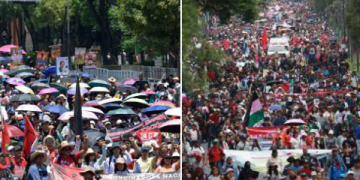






A coalition of Ghanaian youths under the banner of the Concerned Youth Alliance staged a protest in Accra on Saturday, voicing strong opposition to illegal migration and the increasing presence of foreign nationals—particularly Nigerians—in the country.
The demonstrators argued that the influx of foreigners is fuelling insecurity and worsening unemployment, alleging that non-citizens are taking up jobs meant for Ghanaians.
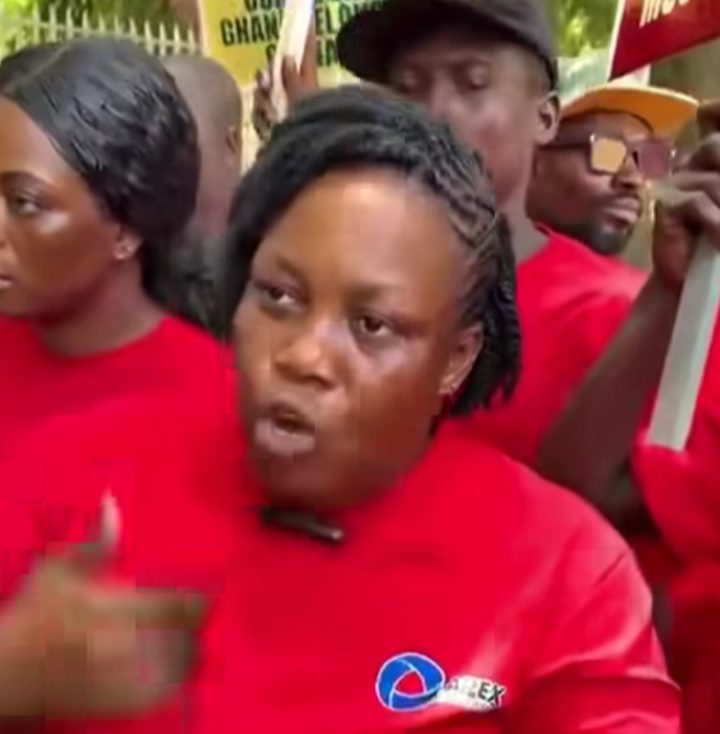
Tensions escalated during the protest when a female participant made sweeping allegations against Nigerians, accusing them of criminal activities.
Addressing fellow women at the rally, she urged them to be cautious and seek alternative means of livelihood, claiming they were being exploited.
“Our women should wise up. Nigerians are using you to destroy Ghana. Nigerians are fraudsters, ritual kíllers and organ harvesters,” she said.
A day earlier, the Concerned Youth Alliance sounded a stark warning over what it describes as mounting threats to Ghana’s sovereignty, citing failures in identity management, border security, economic regulation, and crime control.
Addressing reporters in Accra on Friday, the group’s Chairman, Leonard Brehun, unveiled an open letter addressed to citizens, state institutions, civil society, and traditional leaders, while announcing Saturday peaceful protest at Obra Spot.
“This demonstration is not merely a gathering — it is a national awakening,” Brehun declared. “It is a call to defend the sovereignty, dignity, and future of our beloved motherland.”
Feeding the group’s concerns is what it called the growing compromise of Ghana’s passport and identification systems.
According to the Alliance, hundreds of foreign nationals have been apprehended for attempting to fraudulently obtain Ghanaian travel documents and ID cards.
“Authorities have uncovered cases involving over 300 foreigners attempting to secure Ghanaian passports using illegal documentation, while additional reports suggest hundreds more have been arrested in similar schemes,” the open letter stated.
The group warned that such breaches could erode trust in Ghana’s documentation, expose the country to international scrutiny, and weaken national security.
“The passport system, which should be a symbol of Ghanaian identity, must not be infiltrated and exploited,” Brehun emphasised.
The Alliance also flagged concerns over what it described as porous borders and inadequate immigration enforcement. While acknowledging that migration itself is not inherently harmful, the group argued that systemic lapses have enabled irregular migration and unlawful activities.
It pointed to official acknowledgments of logistical and resource challenges facing border authorities, urging urgent investment in infrastructure and enforcement capacity.
“Without decisive action, Ghana risks losing control of its borders and internal security systems,” the statement warned.
Tensions over retail sector
The group expressed strong concern over the growing presence of foreign nationals in sectors legally reserved for Ghanaians, particularly small-scale retail and informal trade.
“Imagine a young Ghanaian graduate unable to start a small shop due to economic hardship, only to compete with unregulated operators who bypass licensing requirements,” the letter stated. “This is not just economic injustice — it is a systemic failure.”
It noted that similar concerns have historically triggered government crackdowns and deportations in sectors such as retail and mining.
Crime and organised networks
Referencing official figures, the Alliance said more than 184,000 criminal cases were recorded in 2024, with many still under investigation. It added that recent security operations have uncovered organised crime rings linked to human trafficking and cybercrime, including cases involving trafficked foreign nationals.
“These realities demand urgent, coordinated, and sustained responses,” the statement added.
The group argued that the convergence of these issues points to a deeper national risk.
“When identification systems are compromised, borders are weak, local businesses are overtaken, and crime networks grow — what is at stake is not just policy failure, but national sovereignty itself,” the letter read.
It warned of a future where citizenship is diluted, economic opportunities shrink for locals, and the rule of law becomes inconsistent.
The Alliance called on the Ghana Immigration Service to tighten border controls, enforce immigration laws, and restore integrity to identity systems. It also urged Parliament to strengthen and enforce laws regulating foreign participation in local commerce.
Security agencies were asked to intensify crackdowns on organised crime, while civil society groups, the media, and traditional and religious leaders were encouraged to raise awareness responsibly.
“All Ghanaians must rise above apathy and participate in shaping the future of our nation,” the letter concluded.
The group also invited citizens and stakeholders who joined the April 25 demonstration in Accra, describing it as a peaceful effort to demand accountability, strengthen national systems, and safeguard Ghanaian economic interests.
“This is not a protest against people — it is a protest against systemic failures,” Brehun stressed.
“Ghana is more than a geographical space. It is a legacy of sacrifice, resilience and hope. Let us not stand by while its systems are weakened. Let us not remain silent while its future is uncertain. Let us rise — peacefully, lawfully, and courageously — to reclaim the Ghana we deserve.”














What about Nigeria that hosts many foreigner s ?
Should we Chase them away?
Ghanaians are all over Nigeria north south east west.
Some have naturalized