





















We support Anioma, but only within Anioma’s historical context and on terms that protect our capital. Anything less is not a compromise; it is a betrayal of our past and a debt owed to our future
By Isaac Uchechukwu Okolie
I have been closely observing the debate surrounding the creation of Anioma State. This political reshuffle will either solidify Asaba’s status for generations or wipe out fifty years of progress entirely. While there is loud cheering and celebration, I feel a profound responsibility to pause the applause and pose the difficult questions.
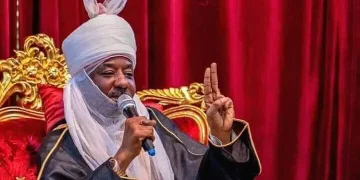
The Monarch’s stance on the above subject matter is not a matter of “for or against” Anioma State Creation; rather, it is on “what terms?” His stance reveals potential pitfalls of the project, highlighting those who support it without putting in place necessary safeguards. The Monarch’s warning evokes a strong sense of belonging and highlights the profound consequences of making poor strategic choices.
The Capital: Our Non – Negotiable Redline
Let’s be honest for a moment. Let’s put aside sentiments and consider the stark, practical economics. Asaba is no longer just a town; it is a “turnkey” capital. Since 1991, billions of Naira—both from government and private investors—have been invested in making this city a true seat of power. We have Dennis Osadebay University, the International Airport, the Government House, and the Secretariat.
So, when people whisper or openly suggest that the capital of a new Anioma State should be relocated elsewhere to spread development, it is not only disrespectful; it is economic folly for the new state. Why would a new state, emerging amidst a struggling national economy, opt to abandon a fully functional capital to start building a new one from scratch in the wilderness? It defies logic. But for us in Asaba, this is an existential threat. Our local economy depends heavily on our status as the capital. Take that away, and our real estate market collapses, hotels empty, and businesses die. This will not only affect the indigenous people of Asaba but it would affect all those who own properties and businesses within Asaba.
We must also have the courage to address the elephant in the room: the geopolitical alignment. There is a rush to push Anioma into the South East zone to “balance the numbers.”
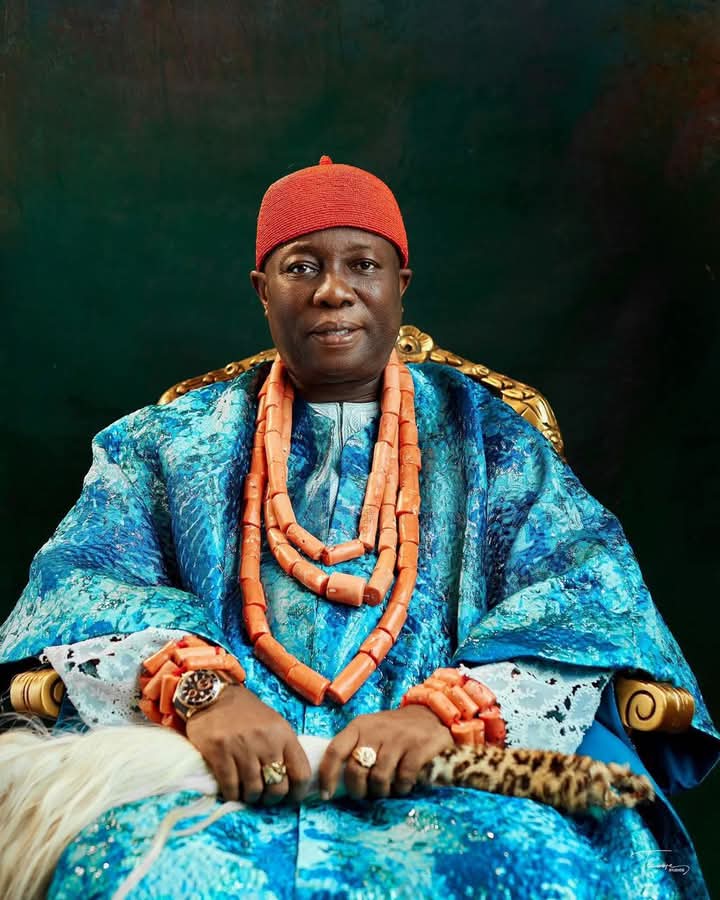
I stand firmly with the wisdom of our revered Monarch, His Royal Majesty, the Asagba of Asaba, Prof. Epiphany Azinge (SAN). We are fortunate to have a Monarch who is a legal expert and a scholar of the highest calibre. He understands the constitution and the workings of this federation better than most.
The Historical Context: The Case for Midwest Identity
The claim that Anioma State creation is about rectifying the geopolitical imbalance of the South East is a recent political strategy, not the original historical intention. The movement’s foundation was rooted in achieving a distinct identity and political autonomy within the former Western Region and its successor, the Mid-Western Region/Bendel State.
Political Designation: Historically, the areas that constitute Anioma (Delta North) were part of the Benin and Delta Provinces of the Western Region before and immediately after independence. The clear and distinct political/administrative boundary (The River Niger) separated the Anioma people from the Eastern Region.
The Struggle for the Midwest: The earliest political push by Anioma leaders (dating back to the 1950s), exemplified by Chief Dennis Osadebay, was for the creation of the Mid-Western Region (1963). This was a deliberate move for self-determination to escape the political dominance of both the West (Yoruba) and the East (Igbo proper) and form an inclusive state with our immediate neighbours.
No Original Call to Join the East: The core objective was to create a Midwest/Bendel/Delta identity, not to join the Eastern Region. While ethnically and linguistically Igbo-speaking (Delta Igbos), our history and administrative antecedents place us firmly in the line of the South-South Geopolitical Zone. The decision to attach Anioma to the South East is thus a recent political move, not a historical goal.
The Strategic Foresight
His reluctance to join the Southeast is not due to isolation; it is because of strategic foresight. Anioma is not merely an extension of the East. The very term “Anioma” was coined by Chief Dennis Osadebay and his people during the 1950s for political reasons, and at no point in time was the East under consideration for alignment. We are the Western Igbo, with a unique history shaped by the Midwest and the Benin Kingdom. We have always served as the bridge. Rushing into the South East could turn us into a minority within a majority. We’d become just “one of them,” swallowed by a region that already has established political hierarchies in Anambra, Imo, and Enugu. Have we thought of the security threats? Specifically, the proximity to cities like Onitsha, the activities of unknown gunmen, and several other security threats from the East will affect us.
Conversely, the South–South framework actually offers an advantage because it lacks a clear, dominant ethnic group. By maintaining our position within the South–South, Anioma remains a distinct and influential bloc, preserving its seniority and bargaining power on the national level. Asagba Azinge understands this, and his stance defends our political future.
The argument that moving Anioma to the South East will “balance the numbers” is also mathematically flawed. The North West has seven states. The South East has five. If you move Anioma to the East, the East would have six. Does six equal seven? Certainly not. The imbalance persists. We are being asked to sacrifice our distinctive identity and strategic position in the South–South to solve a mathematical equation that our movement cannot even fully fix. That’s a poor deal.
We Need Negotiators, Not Just Supporters
This brings me to my final point. Our backing for Anioma State must be conditional. We do not need cheerleaders right now; we need negotiators. We need leaders with the courage to tell the federal authorities: “Asaba is the Capital, or there is no State.”
This cannot be a “gentleman’s agreement.” It must be explicitly stated in the Act of Parliament, not left to a committee after the state is established.
We support Anioma, but only within Anioma’s historical context and on terms that protect our capital. Anything less is not a compromise; it is a betrayal of our past and a debt owed to our future.
•Opinions, positions or thoughts expressed here are personal and strictly of the writer/author and do not represent the views of The Daily Crucible.