





















A democracy is not judged solely by whether it prosecutes powerful individuals. It is also judged by whether it can do so fairly, consistently and without allowing political power to determine the outcome
By Adekunle Alaye, PhD.
A critical analysis of political power, alleged surveillance and the limits of state authority in Nigeria
The central question here is both political and constitutional: Can a government use a former political ally’s own public admission to justify legal action against him, and how can Nigerians distinguish legitimate law enforcement from political persecution?
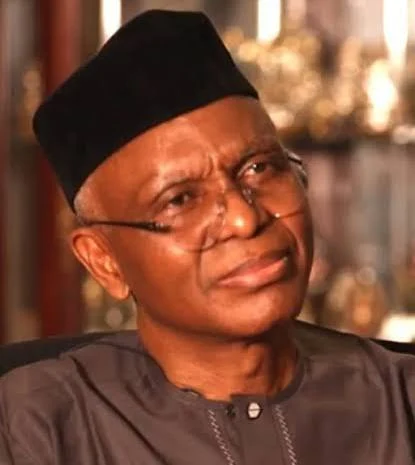
The controversy surrounding former Kaduna State Governor Nasir Ahmad El-Rufai raises important questions about the relationship between political rivalry, national security, individual accountability and the rule of law. It also presents a broader dilemma for Nigerian democracy: when a prominent political figure falls out with the government he once supported, should subsequent investigations be viewed as the ordinary operation of justice, or examined for signs of selective prosecution?
A credible analysis must resist two easy conclusions. The first is that El-Rufai is necessarily a victim of political vendetta because of his disagreements with the Federal Government. The second is that any controversial statement he made automatically validates every action subsequently taken against him.
Neither political disagreement nor a public admission, standing alone, settles the legal question. The decisive issues are the evidence, the applicable law, the circumstances of any alleged offence, the fairness of the investigative process and the independence of the courts.
1. The political background: From alliance to confrontation
The political context is essential to understanding why the case has generated intense public debate.
If El-Rufai committed an offence, his former position, political influence and opposition status should not shield him. If the authorities have abused their powers, the seriousness of the allegations against him should not shield them from scrutiny either.
El-Rufai was once a prominent ally of President Bola Ahmed Tinubu and a supporter of the political movement that brought the All Progressives Congress (APC) to power. Following his departure from the APC and his emergence as a critic of the administration, the relationship changed significantly. In February 2026, the Presidency called for an investigation after El-Rufai made televised remarks about intercepted conversations involving National Security Adviser Nuhu Ribadu. The Federal Government subsequently filed charges through the Department of State Services (DSS).
This sequence of events provides a legitimate basis for public scrutiny. However, the chronology alone does not establish that the prosecution was politically motivated.
Two competing interpretations deserve examination.
* The political-vendetta argument: Critics may argue that the timing of the investigation, coming amid a political falling-out and ahead of the 2027 general elections, raises concerns about whether state institutions are being used against a prominent opposition figure.
* The accountability argument: The government may contend that allegations of unlawful interception of the National Security Adviser’s communications are serious enough to warrant investigation, regardless of the suspect’s political affiliations.
Both arguments must ultimately be tested against verifiable evidence. The question is not simply whether El-Rufai has become a political opponent of the government, but whether the authorities can demonstrate that their actions are lawful, necessary and consistent with the treatment of other persons suspected of similar offences.
2 Did El-Rufai hand the government a legal weapon?
This is the central issue and the most important part of the article.
During a televised interview in February 2026, El-Rufai said that he and others had listened to conversations involving the NSA. He also suggested that another person had intercepted the phone communications and relayed the information to him. The Presidency interpreted his remarks as grounds for investigation, and the DSS subsequently brought charges alleging unlawful interception and related offences under Nigerian law.
His statements created a potential evidentiary opening for the prosecution. But there is an important distinction between an incriminating public statement and proof of every element of a criminal offence.
The prosecution must establish the relevant facts under the applicable law. Among the questions requiring examination are:
* Did El-Rufai personally participate in, facilitate or procure unlawful interception, or was he merely describing information allegedly obtained by another person?
* What exactly did he know about the method used to obtain the conversations?
* What evidence establishes his alleged involvement beyond the televised remarks?
* Do the statements and other evidence satisfy the legal requirements of each charge?
* Were the statements accurately interpreted in their full context?
These questions matter because criminal responsibility depends on the facts and the applicable statutory provisions, not simply on the political implications of a statement.
El-Rufai’s remarks may have given investigators a reason to examine the alleged interception. They do not, by themselves, resolve every question about his individual responsibility.
The most defensible conclusion is that his public comments created a legal vulnerability, but whether that vulnerability establishes criminal liability is a question for the court.
3. What does the court’s latest decision mean?
As of 27 October 2026, an important development has occurred.
On 26 October, the Federal High Court in Abuja dismissed El-Rufai’s no-case submission in the alleged phone-tapping case. The court held that the prosecution had presented sufficient evidence for him to be called upon to enter his defence. The case was adjourned until 25 November for the defence stage.
This development must be reported accurately.
A no-case submission asks the court to determine whether the prosecution has presented enough evidence to require the defendant to respond. Dismissing that submission does not amount to a conviction or a final finding of guilt. It means the proceedings should continue, allowing the defence to challenge the prosecution’s evidence and present its own case.
For the government, the ruling means that the prosecution has survived this particular procedural challenge. For El-Rufai, it means that his defence remains to be heard.
For Nigerians assessing the case, the distinction is fundamental. If the court eventually finds the allegations proved in accordance with the law, accountability would be justified on the evidence. If the prosecution fails to establish guilt to the required standard, the consequences must follow accordingly.
Neither political sympathy nor political hostility should substitute for that process.
4 Political vendetta or legitimate prosecution?
The strongest way to analyse the allegation of political persecution is to distinguish suspicion arising from political circumstances from evidence establishing an improper motive.
The timing of the investigation is relevant. So is the deterioration in relations between El-Rufai and the administration. His political opposition ahead of the 2027 elections provides context for questions about whether the case is being pursued impartially. However, neither political hostility nor the seriousness of the allegations independently proves the government’s motive.
A more rigorous assessment would examine four indicators.
First, consistency of enforcement. Have other individuals accused of comparable unlawful surveillance been investigated under similar legal standards? Selective enforcement, if demonstrated, could strengthen concerns about political targeting.
Second, procedural fairness. Were investigative powers exercised lawfully? Was El-Rufai afforded the constitutional protections available to every defendant? Were the charges supported by admissible evidence?
Third, prosecutorial independence. Did the investigation arise from evidence of a possible offence, or did political considerations improperly determine the decision to prosecute? Establishing the answer requires evidence of the decision-making process, not speculation about relationships between political actors.
Fourth, judicial independence. Can the courts examine the evidence without pressure from the executive, opposition politicians or public opinion?
These considerations provide a more reliable framework than assuming that prosecution automatically proves guilt or that political rivalry automatically proves persecution.
5. The rule of law must apply to both the powerful and the government
There is a deeper constitutional issue beyond El-Rufai himself.
If private individuals unlawfully intercept telephone communications, the state has a legitimate interest in investigating the conduct. The office of a victim does not make unlawful surveillance permissible, and the political status of a suspect should not confer immunity.
However, the same principle imposes limits on the government. National security cannot become a universal justification for arbitrary detention, selective prosecution or the suppression of legitimate political opposition.
Under Nigeria’s constitutional framework, the relevant protections include the right to personal liberty under Section 35, the right to a fair hearing under Section 36 and the presumption of innocence under Section 36(5) of the Constitution of the Federal Republic of Nigeria, 1999, as amended.
These protections do not prevent lawful investigation or prosecution. Rather, they require the state to exercise its powers within the law.
The constitutional test is therefore two-sided: the government must be able to investigate credible allegations of wrongdoing, while the accused must be protected from punishment without a fair and lawful determination of guilt.
If El-Rufai committed an offence, his former position, political influence and opposition status should not shield him. If the authorities have abused their powers, the seriousness of the allegations against him should not shield them from scrutiny either.
6. The danger of turning public statements into political traps
The case also raises questions about how political figures communicate in an era of televised interviews, viral clips and intense political rivalry.
Public statements can become evidence in criminal proceedings. A politician who makes claims about sensitive security operations may create legal exposure if those claims suggest personal participation in unlawful conduct. Yet investigators and prosecutors must still establish what the statements actually mean and how they relate to the specific offences charged.
The danger lies in treating a politician’s words as a substitute for a complete investigation.
A statement can justify further inquiry without conclusively establishing guilt. It can be ambiguous, incomplete or contradicted by other evidence. Its meaning must be evaluated in context, and the defence must have an opportunity to challenge the prosecution’s interpretation.
This is particularly important where national security and political competition intersect. A system that treats every controversial statement by an opposition figure as proof of criminality risks discouraging legitimate public scrutiny. Conversely, a system that dismisses credible evidence merely because the accused is politically influential risks undermining accountability.
The objective should be neither immunity for politicians nor criminal liability by political declaration.
7. What this case means for Nigeria’s democracy ahead of 2027
The El-Rufai case has implications beyond one politician’s legal difficulties.
As Nigeria approaches another general election, public confidence in the neutrality of law enforcement institutions will be an important component of democratic stability. Investigations involving prominent opposition figures will naturally attract scrutiny, particularly when they follow highly publicised political disagreements.
The government can strengthen confidence in the process by ensuring that its case is supported by credible evidence, that its actions comply with constitutional requirements and that the proceedings remain open to appropriate judicial scrutiny.
Opposition politicians, in turn, must recognise that political criticism does not exempt anyone from generally applicable laws. They also have legitimate grounds to challenge alleged procedural abuses through the courts and other lawful institutions.
Civil society and the media have a corresponding responsibility to distinguish verified developments from partisan interpretations. Reporting that a court has ordered a defendant to enter a defence is not the same as reporting a conviction. Reporting an allegation of political persecution is not the same as proving it.
The public deserves a process in which the law is applied consistently and the evidence, rather than political allegiance, determines the outcome.
Conclusion: Did El-Rufai give the government a weapon, or did the government find an opportunity?
The controversy presents two questions that should not be confused.
The first is whether El-Rufai’s televised comments provided investigators with material that could support a criminal prosecution. The available reporting indicates that his remarks became a central part of the prosecution’s case.
The second is whether the government has used that material impartially or exploited it for political purposes. That question requires a broader assessment of the evidence, the circumstances of the investigation, the consistency of enforcement and the conduct of the proceedings.
The Federal High Court’s decision on 26 October 2026 to dismiss El-Rufai’s no-case submission means that he must now respond to the prosecution’s evidence. It does not settle the question of guilt or resolve the broader debate about political motivation.
Ultimately, El-Rufai’s words may have created a legal opening for the government, but a legal opening is not a licence for arbitrary prosecution. Equally, allegations of political vendetta cannot by themselves invalidate a prosecution supported by sufficient evidence and conducted in accordance with the law.
The enduring test for Nigeria is whether the same legal standards would apply if the accused were still a powerful ally of the government rather than a political opponent.
A democracy is not judged solely by whether it prosecutes powerful individuals. It is also judged by whether it can do so fairly, consistently and without allowing political power to determine the outcome.
•Adekunle Alaye, PhD, is a Senior Research Associate of Political Science and Visiting Scholar, Humboldt University Berlin, Germany.
Telephone:+4915201847389.
Email: skalaye2005@yahoo.com
•Opinions, positions or thoughts expressed here are personal and strictly those of the writer/author and do not represent the views of The Daily Crucible.