





















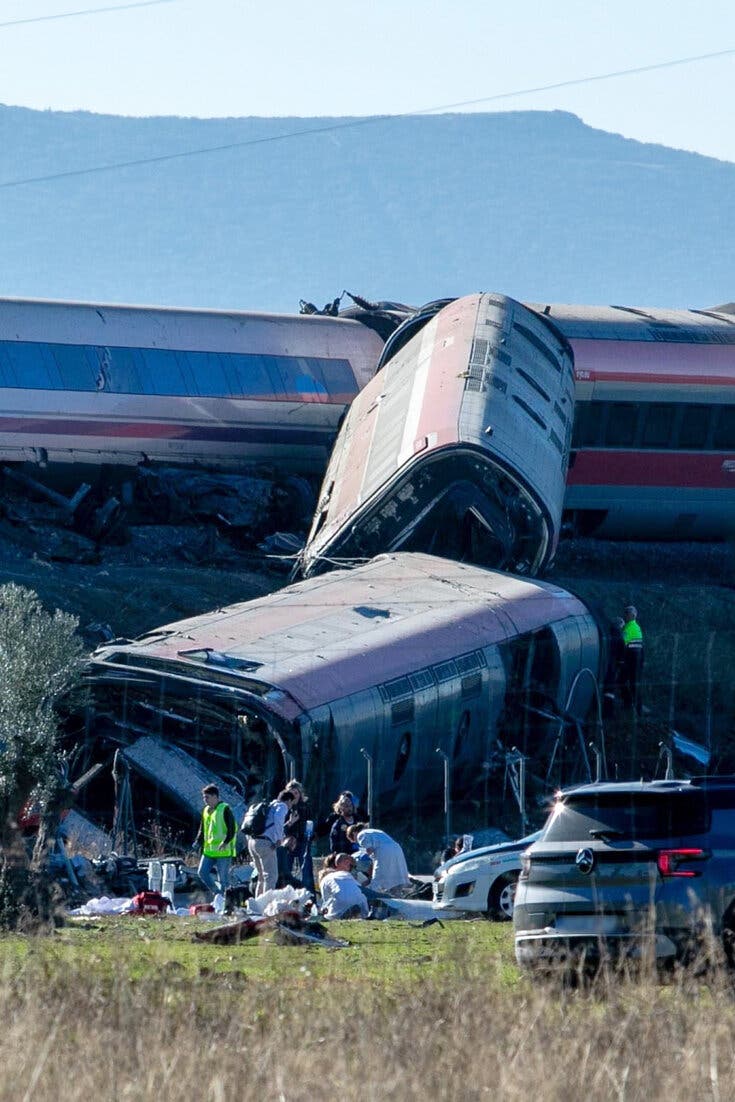
At least 64 people have been killed and more than 100 others injured in a high-speed train collision south of Madrid, Spain, on Wednesday, with authorities warning that the death toll could rise further.
The crash, one of Europe’s deadliest rail disasters in recent years, occurred in the central region of Castilla-La Mancha and involved services operated by state-owned railway company Renfe and private operator Iryo.
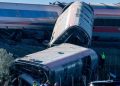
Reporters from Agence France-Presse (AFP) at the scene saw one train lodged into another, while several carriages lay overturned at the bottom of an embankment amid twisted metal and scattered debris.
Emergency response teams rushed to the site as helicopters hovered overhead in a desperate search for survivors. Dozens of emergency vehicles were also seen moving in and out of the crash site, while several vans from a funeral service arrived.
Castilla-La Mancha regional leader Emiliano García-Page confirmed the rising death toll, saying approximately 64 people had died, although he warned that the figure could increase.
A spokeswoman for the regional government told AFP that more than 100 people had been injured, with 58 taken to hospital. Of those hospitalised, 15 were reported to be in critical condition.
Renfe confirmed that the main high-speed rail line connecting Madrid to southern Spain had been suspended following the collision involving one of its services and an Iryo train.
In a statement, Iryo said its train, which was carrying 147 passengers and five staff members, including the driver, had been struck from behind by the Renfe service.
Manuel Ortiz, a 49-year-old resident of the nearby village of Urda, about 130 kilometres south of Madrid, told AFP that he had spent the morning transporting survivors in his car.
Ortiz said passengers aboard the Iryo train told him their train had been stationary when the collision occurred, describing the scene as horrific and saying the area smelled of metal.
The cause of the collision remained unknown as investigators examined the site. AFP reporters observed five people wearing white overalls inspecting the tracks and taking photographs.
Government, Royal Family React
Spanish Prime Minister Pedro Sánchez expressed shock over the disaster and sent condolences to the victims and their families.
His office said he was travelling to the scene of the collision.
In a message posted on X, Sánchez expressed solidarity and support for those affected by the tragedy.
The Spanish royal household also expressed concern over the incident, offering condolences to the victims, their loved ones and emergency responders.
Across Europe, officials conveyed their sympathies. A European Union spokeswoman said the bloc was ready to assist Spain if necessary, while European Commission President Ursula von der Leyen said Europe mourned with the victims following the devastating news.
The Spanish Football Federation also postponed 24 matches in the opening round of the Copa del Rey as a mark of respect and solidarity with those affected.
The latest disaster has renewed concerns about safety on Spain’s extensive high-speed rail network, which has benefited from significant investment over the years and is the second-largest in the world after China’s.
The collision comes after another serious rail disaster earlier this year, when a crash involving two high-speed trains near Adamuz, in southern Spain, reportedly killed 46 people and raised questions about railway safety.
That incident was Spain’s deadliest train accident since 2013, when 80 people died after a train derailed on a curved section of track near Santiago de Compostela in the country’s northwest.
Both major rail disasters reported this year occurred along the line connecting Madrid to the southern city of Seville.
Wednesday’s collision happened on a straight stretch of track under sunny, dry weather conditions, according to initial reports. Authorities had yet to establish what caused the crash.
The affected route is among Spain’s busiest rail corridors and was the country’s first high-speed railway line when it opened in 1992, coinciding with the Seville Universal Exposition.