

















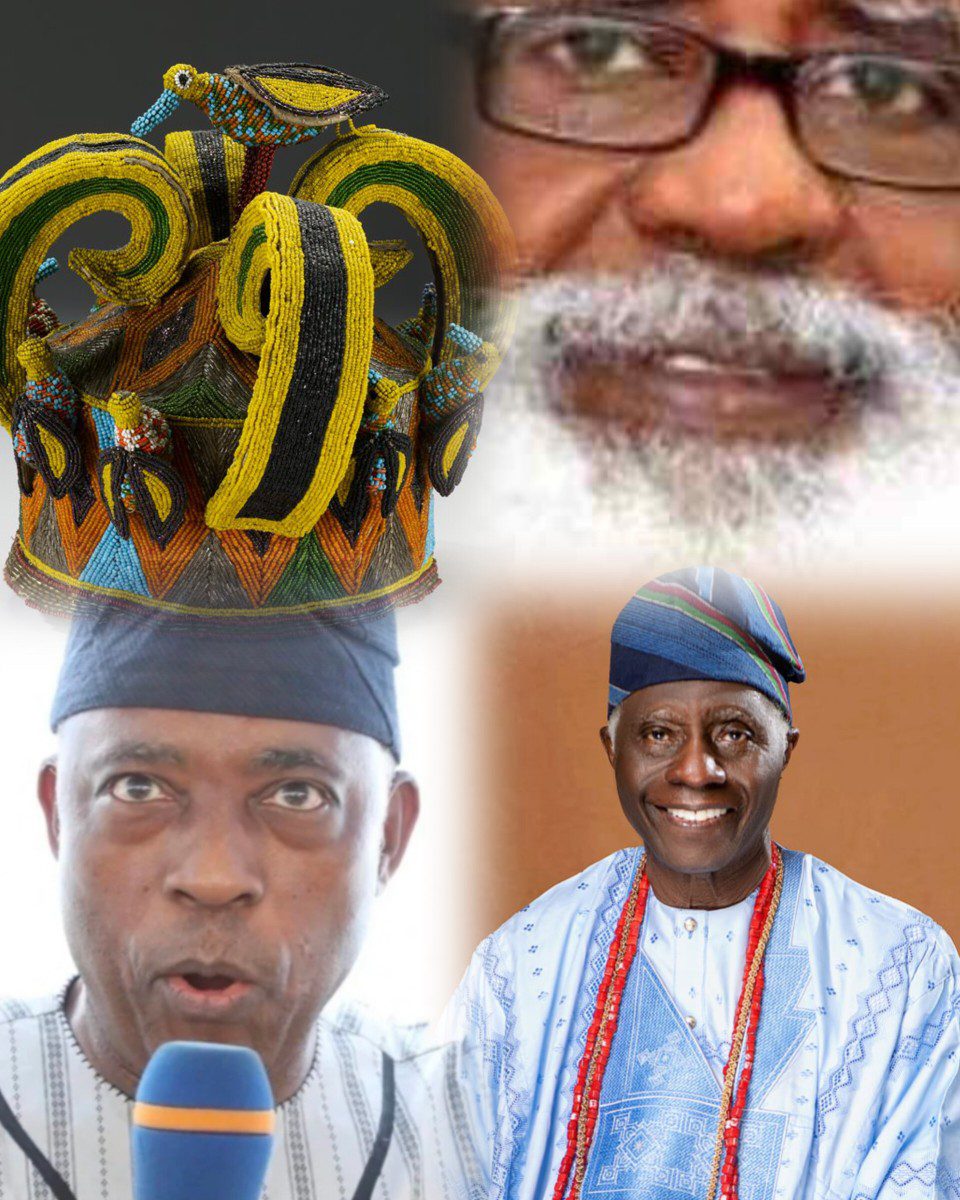
With the build up to the much awaited 49th edition of the popular monthly interview discourse, Boiling Point Arena, billed to hold next Sunday, November 8, 2026, questions are mounting over the responsibility of traditional rulers to preserve ancestral customs while navigating the demands of modern society.
For centuries, the institution of traditional kingship has occupied a special place in Yoruba society, embodying not merely political authority but also the history, identity, spiritual heritage and collective aspirations of communities.
The Yoruba Oba is traditionally regarded as much more than an occupant of a throne. He is a symbol of communal identity, a custodian of ancestral heritage, a repository of historical memory and an embodiment of customs and traditions handed down through generations.
From the elaborate processes surrounding the installation of monarchs to palace protocols, royal regalia, ceremonial obligations and customary restrictions, the institution of kingship has historically been governed by practices that distinguish the occupant of a throne from ordinary members of society.
Yet, as Yoruba society increasingly encounters the forces of modernisation, globalisation, social media and changing social values, an important question is emerging: Are contemporary Yoruba monarchs preserving the cultural essence of the institution they represent, or are some of their actions contributing to the erosion of the traditions that confer dignity and legitimacy on the throne?
This question forms the centrepiece of the forthcoming edition of Boiling Point Arena, scheduled for Sunday, November 8, 2026, at 8pm.
The discourse, themed “Yoruba Obas, Cultural Desecration and the Crisis of Royal Authority: The Dividing Line Between Cultural Change and Cultural Disrespect,” will bring together three distinguished personalities to interrogate the changing relationship between Yoruba traditional institutions and the cultural values they are expected to protect.
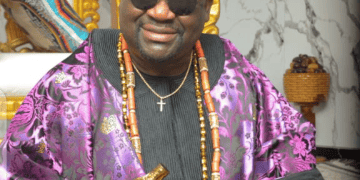
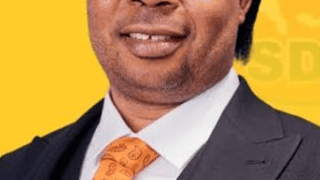
The guests are Dr Yemi Farounbi, a cultural icon and former Nigeria’s Ambassador to Phillipines and the Kingdom of Cambodia; Chief Dare Babarinsa, a media icon; and Chief Bode Mustapha, an Egba high chief and businessman.
Their participation is expected to provide historical, cultural, media and traditional perspectives on an issue that has generated considerable public interest, particularly amid controversies surrounding the public conduct of some contemporary monarchs.
To be transmitted via Zoom, the discourse, over a two-hour duration starting from 8pm, will be broadcast live on seven partner radio stations across Lagos, Ogun and Delta States.
Boiling Point Arena, the once-in-a-month current affairs programme which debuted four years ago, is hosted by a veteran journalist and communication strategy expert, Ayo Arowojolu.
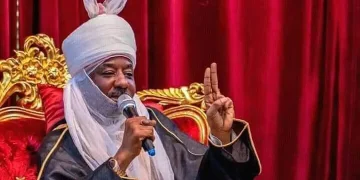
Frontline traditional ruler, the Olowu of Owu Kingdom, Oba Prof Saka Matemilola will Chair the session and herald the discourse with a keynote address.
Among the partner radio stations are; WASH 94.9FM, Lagos, Sweet 107.1FM, Abeokuta, Roots 97.1FM, Abeokuta, Erimbe 94.7FM, Shagamu, Women Radio 91.7FM, Mowe, Opera Tune 106.3FM, Abeokuta, and Kruzz 92.9FM, Asaba, Delta State alongside a cable television station, NSTV, on GOtv Channel.
One of the fundamental arguments underpinning the debate is that traditional kingship is an institution that transcends the individual who occupies the throne.
An Oba may have personal preferences, individual convictions and a contemporary outlook on life. However, the office he occupies carries historical and cultural responsibilities that are not necessarily subject to his personal preferences.
This distinction raises a difficult question about the extent to which a monarch can exercise personal freedom without compromising the collective expectations associated with his office.
In traditional Yoruba society, the authority of an Oba was historically intertwined with religious beliefs, ancestral practices, communal values and established systems of governance.
Royal symbols, including crowns, beads, ceremonial clothing and other regalia, were not simply decorative accessories. They carried meanings associated with legitimacy, status, spiritual authority and the history of the community.
Certain palace practices and customary restrictions also reinforced the special position of the monarch.
Consequently, conduct that might be regarded as an ordinary personal choice when undertaken by a private individual could attract a different interpretation when displayed by an occupant of a traditional throne.
This is where the debate over cultural desecration becomes particularly significant. At what point does a monarch’s personal expression become an affront to the cultural institution he represents?
Should an Oba be free to disregard inherited customs simply because he believes they are outdated? Or does the throne impose obligations that must be respected regardless of the occupant’s personal inclinations?
These are questions that the November 8 discourse is expected to confront.
Recent public conversations surrounding the conduct and unconventional public presentations of some Yoruba monarchs have brought these questions into sharper focus.
The broader issue, however, extends beyond one monarch or a particular item of royal attire. It touches on the fundamental question of whether the institution of Yoruba kingship is undergoing a legitimate process of cultural adaptation or witnessing a gradual departure from practices that have historically defined its identity.
For some cultural conservatives, the argument is that certain customs are not arbitrary conventions that can be discarded at the discretion of individual monarchs. They represent the collective heritage of communities and deserve protection.
Others may contend that culture is dynamic and that traditional institutions cannot remain insulated from changing social realities. Practices that were considered appropriate in previous generations may require reconsideration in contemporary society.
There is also the argument that monarchs, as living individuals, should not be denied reasonable personal expression merely because they occupy traditional positions.
The tension between tradition and modernity is not peculiar to Yoruba society.
Across the world, traditional institutions are grappling with the implications of changing lifestyles, technology, democratic values, religious diversity and global cultural influences.
Today’s Obas operate in a society in which traditional authority exists alongside constitutional governance, modern education, religious institutions, popular culture and increasingly vocal public opinion.
Unlike in earlier times when palace activities were largely interpreted within the immediate community, social media has transformed the relationship between monarchs and the public.
This development raises another important question: Should traditional rulers modify their public conduct to accommodate contemporary sensibilities, or should they insist on the preservation of established protocols even when such practices appear out of step with modern expectations?
There is also the danger of confusing cultural preservation with cultural rigidity. No society remains culturally static. Yoruba history itself reflects centuries of interaction, adaptation, migration, religious encounters and institutional transformation.
Beyond the controversy over royal attire, public appearances and customary taboos lies a more fundamental issue: the responsibility of traditional rulers as custodians of cultural heritage.
The November 8 conversation will therefore offer an opportunity to examine whether Yoruba society has sufficiently documented and institutionalised its cultural heritage to protect it from arbitrary interpretation or gradual erosion.
The 49th edition of Boiling Point Arena brings together three personalities whose different backgrounds are expected to enrich the conversation.
Ambassador Yemi Farounbi, recognised as a cultural icon, is expected to bring his wealth of experience and understanding of Yoruba heritage to bear on questions surrounding the preservation of ancestral values and the responsibilities of traditional institutions.
Veteran journalist and media icon Dare Babarinsa is expected to contribute perspectives on the changing public image of Yoruba monarchs, the media’s treatment of traditional institutions and the implications of controversial royal conduct in the age of social media.
For his part, Chief Bode Mustapha, an Egba high chief and businessman, is expected to provide insights from the standpoint of traditional chieftaincy, customary expectations and the relationship between royal authority and the cultural values of the people.
Their combined perspectives are expected to generate a robust conversation on the place of tradition in contemporary Yoruba society.