












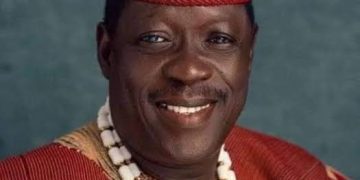










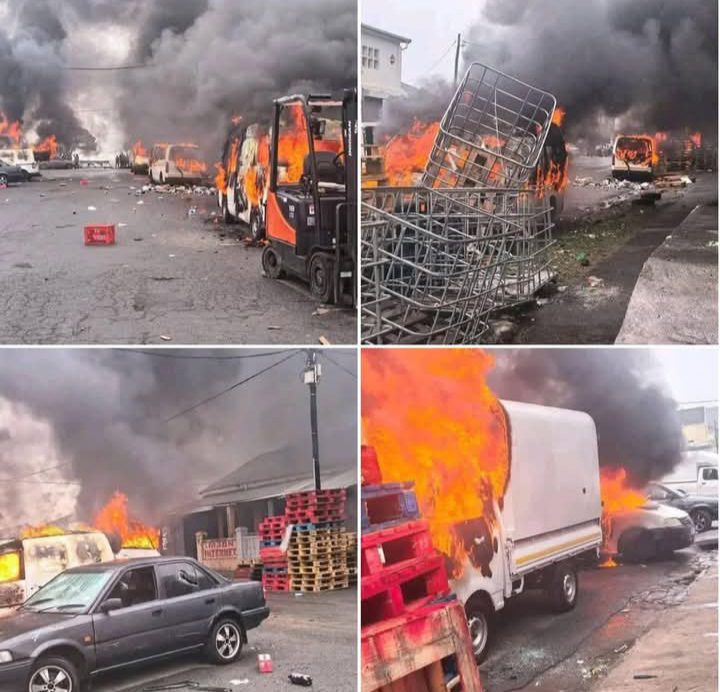
Tension erupted into violence in parts of South Africa following the controversial coronation of an Igbo traditional leader, as protests against the development spiralled into chaos, leaving vehicles torched and properties vandalised. 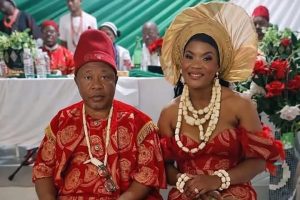 The unrest, which broke out in East London in the Eastern Cape, was sparked by the installation of Chief Solomon Ogbonna Eziko as Eze Ndigbo Na East London—a position recognised within Nigeria’s Igbo diaspora as a cultural and community leadership role.
The Daily Crucible reports that the Monday incident is not an isolated event. Violence linked to the coronation or activities of Eze Ndigbo (leaders representing Igbo communities in the diaspora) has been recorded in some countries outside Nigeria, though the scale, causes, and contexts vary.
Earlier in Johannesburg and Durban in South Africa, tensions have erupted around the recognition and coronation of Eze Ndigbo, setting – off fierce xenophobic attacks on Nigerian/Igbo-owned businesses, looting and destruction of property as well as clashes between locals and members of the Nigerian community
One of such flashpoints occurred in 2019 following the coronation of an Eze Ndigbo in Johannesburg, which triggered backlash from some South Africans who viewed it as an attempt to establish parallel traditional authority.
In Accra, Ghana, tensions have occasionally surfaced within the Nigerian community over leadership disputes tied to Eze Ndigbo positions while in Canada, cities like Toronto, witnessed disagreements over Eze Ndigbo leadership, leading to community splits and protracted legal tussles.
Also, in the United States, places such as Houston and New York City, disputes have emerged over who should be recognised as Eze Ndigbo but the latest incident in South Africa stands out as the only country where Eze Ndigbo coronation-related tensions have escalated and morphed into large-scale violence and destruction.
However, the coronation of Chief Solomon Ogbonna Eziko as Eze Ndigbo Na East London, which was intended as a unifying cultural matters quickly drew the ire of some South African groups, who viewed the coronation as an attempt by foreign nationals to establish parallel traditional authority within the country.
The mounting anger boiled over on Monday as protesters took to the streets, initially in a peaceful demonstration, demanding the reversal of the coronation. The situation escalated after an altercation reportedly left one protester injured, triggering widespread panic and retaliation.
Eyewitnesses accounts and trending videos on social media and the Internet revealed frightening scenes where mobs went on a rampage, setting several vehicles ablaze and attacking properties believed to be linked to foreign nationals.
Commercial activities were abruptly halted as shop owners shut their doors amid fears of further attacks as the mobs scaled – up violence against properties of foreigners.
Security operatives were swiftly deployed but had a hectic time trying to restore order- they fired tear gas and rubber bullets to disperse the crowd. Several arrests were reportedly made, while patrols were intensified to prevent the violence from a country – wide dimension.
The incident has once again brought to the fore simmering tensions over immigration in South Africa, where foreign nationals—particularly Africans—have frequently been targets of xenophobic attacks.
Analysts say the backlash reflects a deep misunderstanding of the Eze Ndigbo institution, which holds no political authority but serves as a cultural and administrative structure for Igbo communities abroad.
“This is less about the coronation and more about underlying frustrations—economic hardship, unemployment, and long-standing resentment toward migrants,” a local observer noted.
The development has raised concerns among Nigerians living in South Africa, many of whom now fear possible reprisals. It also poses fresh challenges for diplomatic relations between both countries, with calls mounting for urgent engagement to douse tensions.
As calm gradually returns, authorities face the delicate task of balancing law enforcement with addressing the deeper grievances that turned a ceremonial event into a flashpoint for violence.