






















As political party chairmen gear up to make their leadership decisions, political analysts have indicated that the key should lie in service-oriented leadership that is able to ensure fairness, accountability, and development for all
By Ayobami Adebayo
As politics begin to gain momentum in preparation for the 2026 leadership election in the Inter-Party Advisory Council, it has become increasingly important for stakeholders in Ogun State to call attention to the need for leadership that is characterised by integrity, vision, accountability, and service to democratic development.
The IPAC election is considered a very important internal democratic process among registered political parties. It is a platform that gives leaders of political parties the opportunity to elect a coordinating chairman and executives who are responsible for managing inter-party relations and offering advisory support to governance structures. Due to its importance, the leadership of IPAC has been described as a bridge between political institutions and grassroots democratic participation in Nigeria by political analysts.
It has been observed that the credibility of IPAC leadership has a significant effect on electoral conduct, party cooperation, and public confidence in democratic processes. Therefore, it has been emphasised that the election must be characterised by competence, transparency, and a commitment to public interest rather than personal ambition or political manipulation.
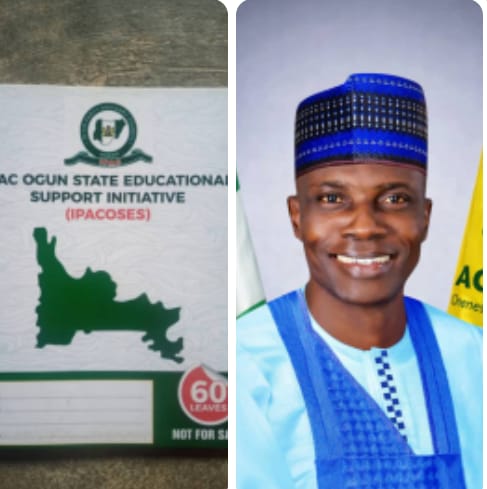
With mounting demands, one of the hopefuls for the 2026 IPAC chairmanship, Hon. Oke Rotimi Michael, who is at present the State Chairman of ACCORD in Ogun State, has proposed an agenda that aims to build stronger democratic institutions and develop grassroots.
As he explains, his motivation for running for the position is, to support the efforts of the government by utilising the unique position of political party chairmen, who are known to have closer ties with the grassroots.
His Major Policy Agendas are as follows;
Education Support Programme:
He humbly said, starting from the 2026/2027 academic year, the new administration has proposed the distribution of free exercise books and higher-level and educational materials to students in the three senatorial districts of Ogun State. The aim of this programme is to promote equality in education and foster academic development.
2026/2027 Election Monitoring Initiative:
The proposed agenda includes the participation of state party chairmen in election monitoring in the 20 local government areas of the state as legal observers.
Democracy Celebration – Democracy Award 2026:
The proposal also entails the organization of a Democracy Award on June 12, 2026, to mark the celebration of Democracy Day, by recognising those who have made significant contributions to the growth of democracy in Ogun State, from independence to date.
Statewide Social Amenities Assessment Tour:
Another strategic plan entails the organisation of a statewide social amenities assessment tour to identify abandoned and dilapidated infrastructure while engaging with community stakeholders. The information obtained would be used to develop governance blueprints for potential gubernatorial candidates.
Economic Development and Employment Advocacy:
The agenda also entails working with public and private stakeholders to facilitate employment creation through mechanised agriculture, entrepreneurship, and youth empowerment.
Establishment of an IPAC Library:
The proposal aims at the establishment of a library at the IPAC secretariat to facilitate political education, research, documentation, and institutional memory.
Training and Capacity Building for Leadership:
Training sessions, both local and foreign, are designed to improve leadership skills for party executives and stakeholders.
Engagement of Candidates and Public Debates:
The manifesto focuses on holding town hall meetings and candidate debates to promote issue-based campaigns and allow voters to make well-informed choices.
Encouraging Peaceful Political Coexistence:
A promise has also been made to promote peaceful coexistence among political parties and refrain from using inflammatory political language.
Establishment of IPAC State Elders Council:
The proposal involves establishing an advisory council that will consist of past leaders of IPAC, former Chairmen of deregistered political parties and key political stakeholders to offer guidance and much-needed stability in decision-making.
Political analysts have indicated that the results of the IPAC election may have a very important role to play in influencing the preparations for the 2027 general elections. This is because effective and credible leadership within the council is likely to improve democratic stability, inter-party cooperation, and governance outcomes.
As political party chairmen gear up to make their leadership decisions, political analysts have indicated that the key should lie in service-oriented leadership that is able to ensure fairness, accountability, and development for all.
It is, therefore, clear that the success of democratic processes is largely dependent on the integrity of those who are given the responsibility of leadership. The 2026 IPAC election results may, therefore, have far-reaching implications for governance in the years to come.
•Opinions, positions or thoughts expressed here are personal and strictly of the writer/author and do not represent the views of The Daily Crucible.