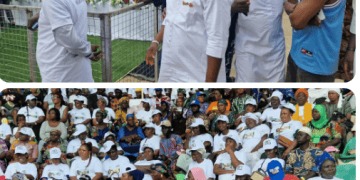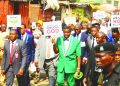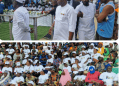



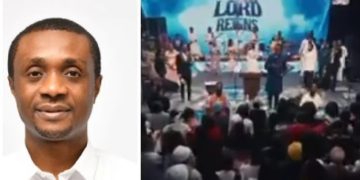



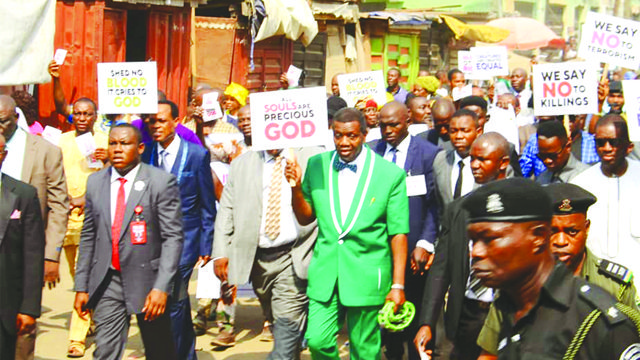
•Pastor E.A.Adeboye and some RCCG members during the prayer walk in 2020
The General Overseer of the Redeemed Christian Church of God, RCCG, Pastor Enoch Adejare Adeboye, has denied ever leading a protest against former President Goodluck Jonathan, saying reports that he carried a placard against the former leader were deliberately twisted.
Pastor Adeboye spoke on Sunday during the church’s November Thanksgiving Service at the RCCG headquarters, where he reacted to a media report that branded him “a very wicked man” for allegedly carrying a placard against Jonathan.
Recounting the report, the revered cleric said he was initially amused.
“Recently, somebody wrote in the papers, or said somehow, ‘Pastor Adeboye is a very wicked man. After all, we know that not too long ago, he carried a placard against President Goodluck Jonathan,'” Adeboye said.
Admitting that he did carry a placard, Adeboye clarified that it was for a prayer walk and not a political protest.
“True, I carried a placard. I can’t deny that. It was important. It was a prayer walk. We wanted to pray,” he stated.
He explained that the exercise was in compliance with a directive from the Christian Association of Nigeria, CAN, asking all churches to organise prayer walks around their premises to pray for the nation.
“The chairman said all churches should do a prayer walk near their churches. That’s what I did,” he said.
Adeboye faulted the timeline pushed by the report, noting that it was factually impossible for him to have protested against Jonathan as president when the prayer walk took place years after Jonathan left office.
“But I carried the placard in 2020. Jonathan ceased to be president in 2015. I carried the placard five years in the second term of Buhari,” he said.
He accused the journalist responsible for the report of mischief and poor professionalism for failing to verify facts before publication.
“But a journalist twisted it. I said, I did what I did in 2015. And everybody swallowed it,” Adeboye lamented.
The RCCG leader recalled his background in journalism studies in the 1960s, stressing the core principle of investigative journalism – verification.
“I remember in those days in the Department of Journalism, when you go there and you take a course, they talked about something called investigative journalism. That things don’t appear as they may seem. Investigate, if you have a story, before you take it to the press,” he said.