


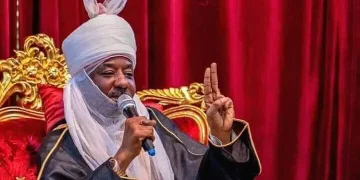





















The Asiwaju Bamofin of Egbaland, Chief Sunday Oduntan, has rejected the perception that the Ogboni institution is a secret cult or ritual society, saying the Egba Ogboni is a traditional administrative institution founded on truth, justice and responsible governance.
Oduntan spoke while presenting a paper titled “Strengthening Relationship Between Egba Ogboni and Other Traditional Institutions in Egbaland” at a workshop organised to educate the public on the history, structure, functions and responsibilities of Ogboni chiefs in Egbaland.
The Asiwaju Bamofin said the Egba Ogboni must be distinguished from other organisations that use the name Ogboni, stressing that the traditional institution in Egbaland has a specific administrative and legislative role within the indigenous governance structure of the Egba people.
According to him, the workshop was designed to clarify the meaning of Ogboni chieftaincy, explain the rights and responsibilities attached to the titles, and promote a better understanding of the relationship between Ogboni chiefs and other traditional institutions.
He explained that the Egba traditional system comprises different categories of chiefs with distinct responsibilities, including the Ogboni, Olorogun, Parakoyi and Iyaloja.
“In Egbaland, we have Ogboni chiefs, Olorogun chiefs, the Parakoyi and the Iyaloja. The Ogboni are the administrators. The Olorogun are the warrior chiefs; they are the ones who go out to fight wars,” he said.
Oduntan noted that the distinction between the various traditional institutions is also reflected during ceremonial processions involving the Alake of Egbaland.
He said warrior chiefs traditionally take positions ahead of the monarch to provide protection, while Ogboni chiefs follow behind the Alake according to their established order of seniority.
The traditional chief further highlighted the central role of the Ogboni in the selection and installation of the Alake, saying the institution forms the core of the traditional kingmaking process in Egbaland.
He explained that the five senior Egba townships — Ake, Ijeun, Iporo, Kemta and Itoku — are regarded as the owners of the Alake crown.
According to him, each of the five townships provides six representatives, producing a total of 30 traditional kingmakers responsible for electing the Alake.
Oduntan also addressed misconceptions surrounding the traditional beads worn by some Egba chiefs, particularly the positioning of beads on the right shoulder.
He said the placement has a specific traditional and administrative meaning in Egbaland and should not be interpreted as evidence that the wearer belongs to a secret society.
“The one on the right shoulder does not mean that they belong to any other group. It is a purely administrative position,” he said.
Describing the Ile Ogboni as a key institution in the traditional governance of Egbaland, Oduntan likened it to a parliament where matters affecting the community are deliberated upon and decisions are taken.
He stressed that the institution existed long before the arrival of European colonial and missionary influences.
“Ile Ogboni in Egbaland is the House of Parliament. Before the Europeans came, we already had an institution that was very robust,” he said.
The Asiwaju Bamofin also dismissed allegations that meetings at the Ile Ogboni involve blood rituals, describing such claims as misconceptions arising from ignorance of the institution’s history and functions.
He specifically differentiated the traditional Egba Ogboni institution from other groups such as Ogboni Aborigine and the Reformed Ogboni Fraternity, insisting that they are separate organisations and should not be conflated with the indigenous administrative institution of Egbaland.
Oduntan said the word Ogboni, in its traditional context, essentially refers to elders and an elders’ council committed to truth, justice and good governance.
He also warned against the growing tendency among some traditional title holders to disregard established hierarchy and protocols because of their wealth or social status.
The chief said the workshop was partly intended to address what he described as misconceptions and “superiority complexes” among traditional chiefs.
“Some people think once you have money, money is equal to everything. No. In my township, I’m number four. That’s why I’m the Ekerin of Ijeun. There are seniors ahead of me,” he said.
He disclosed that a separate workshop would be organised for the warrior chiefs, after which both groups would be brought together to foster greater understanding, cooperation and harmony within the traditional system.
Oduntan also expressed concern over what he described as the gradual erosion of Yoruba cultural identity among younger generations.
He urged Nigerians, particularly young people, to undertake more research into indigenous institutions and traditions rather than rely on stereotypes or accounts that fail to reflect the historical realities of Yoruba society.
According to him, preserving indigenous culture is not incompatible with education, Christianity, Islam or modern civilisation, noting that the Yoruba had developed systems of governance, justice and social organisation long before the arrival of foreign influences.
He therefore called for increased documentation and teaching of Yoruba history and traditional institutions, with particular attention to systems peculiar to Egbaland.

•A section of the participants
…Ogboni must uphold justice, unity — Apena of Egbaland
Also speaking at the workshop, the Apena of Egbaland, Chief Alani Bankole, urged Ogboni chiefs to restore and protect the values upon which the traditional institution was founded.
Bankole, who spoke on “Preserving the Core Value and Tradition of Egba Ogboni in a Changing Society,” cautioned Ogboni chiefs against land grabbing, oppression, enmity and abuse of traditional authority.
He stressed that seniority within the Ogboni institution comes with responsibility, saying those occupying influential traditional positions should deploy their authority to promote peace, stability and justice rather than use it to intimidate or oppress others.
The Apena maintained that the Ogboni institution occupies a prominent position within the Egba traditional system and must therefore be guided by unity, truth, justice, wisdom, discipline and a strong sense of responsibility.

•Another section of participants and leaders, including Ade – Adeniji Adeleke and Apena, Chief Alani Bankole.
Bankole, who is also the Oluwo of Iporo Ake, claimed that the British colonial administration drew inspiration from the Egba Ogboni system in establishing the House of Lords, while lamenting what he described as the deterioration of some of the institution’s traditional values over the years.
He said the Egba Ogboni was established on a structured system built around four pillars, urging contemporary Ogboni chiefs to rediscover and uphold the principles associated with those foundations.
Bankole also traced the historical movement of the Igbo Ake, saying its history began from Iragbiji and extended to Ebute Metta, which, he said, further demonstrated the historical depth and reach of the institution.
He urged Ogboni chiefs to use their positions to strengthen justice, unity, peace and responsible leadership in their communities.
The Apena further warned chiefs against deploying their traditional positions to intimidate members of the public or undermine holders of other chieftaincy titles.
He called for the restoration of the administrative and legislative functions of the Ogboni institution, arguing that the Ile Ogboni was historically not a shrine but a centre of community governance.
According to him, before colonial rule, the Oluwo served as the community administrator, while the Ile Ogboni functioned as an indigenous equivalent of a parliament where important communal matters were considered.

•A section of the participants at the workshop
Earlier in his welcome address, the Chairman of the Planning Committee and Baasala of Egbaland, Chief Ade Adeniji Adeleke, said the workshop was organised to dispel myths and misconceptions surrounding the Ogboni traditional institution in contemporary society.
He said greater public understanding of the institution’s history, functions and values would help preserve the cultural heritage of Egbaland while strengthening relationships among its various traditional institutions.
Speaking on the significance of the programme, Chief Ade-Adeniji A said the workshop was conceived to encourage responsible participation in community affairs while promoting values that can contribute to the advancement of Egbaland.
He said the event has strengthened collaboration among members and stakeholders while also encouraging a shared commitment to justice, peace, cultural preservation and sustainable development.
According to him, it provided an opportunity for participants to examine the prospects and challenges confronting the Egba Ogboni institution and explore practical ways of ensuring that its values remain relevant in a changing society.


















The Egba Ogboni role in the Egba Chieftaincy institution and kingship succession is an historical value that should be entrenched and taught in secondary school to ensure that the Egha values and culture are passed down for generation to generation to avoid the hiccups usually associated with oral tradition. By teaching it in school it brings the culture and tradition to an enduring sphere devoid of manipulation and misinformation.