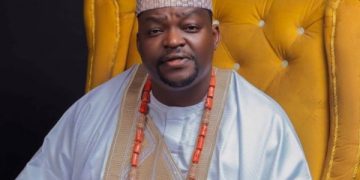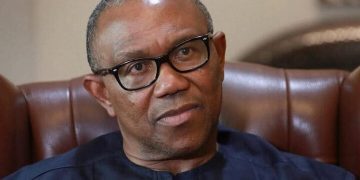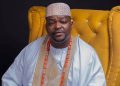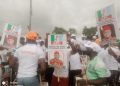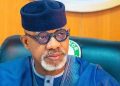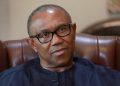



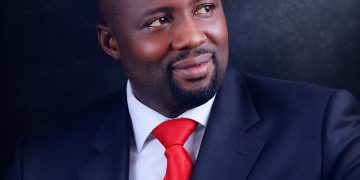










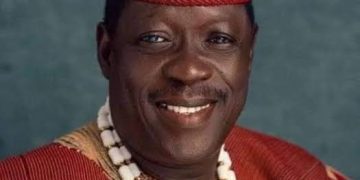

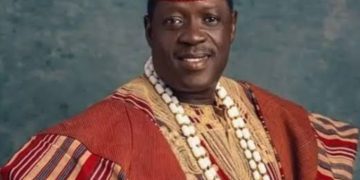







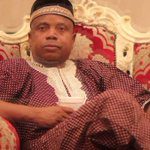
Names of some high-profile senatorial candidates in the January 16, 2027 elections have been omitted by the Independent National Electoral Commission (INEC).
Although the reason for their omission is unknown, it is strongly believed that it would not be unconnected with administrative procedure.
The Delta South African Democratic Congress (NDC) candidate, Dr. Austin Orette, is however not happy and he told party faithful and journalists who gathered at Ozoro, headquarters of Isoko North Local Government Area on Thursday in clear terms.
‘’My concern with INEC is not simply that my name was omitted from a published candidate list. My concern is how such an omission could occur and what institutional safeguards exist to prevent a candidate’s democratic rights from being affected by an administrative failure’’.
Orette said he was baffled and felt sad at the news of the omission.
‘’My political party submitted my candidacy. Yet my name was subsequently omitted from the list published by INEC. That raises legitimate questions. Was my nomination properly received? Was the information submitted correctly? At what stage did the omission occur? What verification procedure was applied before the list was published? If the omission was an administrative error, what mechanism exists for identifying and correcting it promptly? These questions matter because the Electoral Act provides a specific framework for candidate nominations and publication. Section 29 deals with submission of candidate lists, while Section 32 requires the Commission to publish the names and addresses of candidates standing nominated. The Act also specifically provides a mechanism for a political party to notify the Commission if its candidate’s name is missing from the published list’’.
He stressed the need for the law and the established process to be applied correctly.
‘’INEC’s own records demonstrate that candidate lists can subsequently be amended pursuant to court orders and corrections. Therefore, my position is straightforward: I am not asking INEC for a favour. I am asking for the law and the established process to be applied correctly. If there was an error, it should be identified and corrected through the proper procedure. If there was no error, INEC should explain clearly why my name was omitted despite my party’s submission. And if anyone interfered unlawfully with the process, that matter should be investigated by the appropriate authorities. My grievance is therefore not merely personal. It is about protecting the integrity of the electoral process for every Nigerian candidate and voter. Today it may be my name. Tomorrow it could be someone else. INEC has a constitutional responsibility to organize, undertake and supervise elections to the Senate and other elective offices. It also has responsibilities relating to political parties and their operations. That responsibility demands institutional neutrality. An electoral umpire must not determine the political outcome. Its responsibility is to administer the rules so that the people can make the choice. The people of Delta South must therefore be able to trust that every qualified candidate who has fulfilled the legal requirements will receive fair treatment. The ballot belongs to the people. It must never become the property of an institution, a political godfather or an administrative process’’.
The renowned medical doctor noted with sadness the preservation of opaque procedures.
‘’Where aspirants pay for nomination forms, the process must be transparent. Where primaries are conducted, results must be properly recorded. Where disputes arise, there must be credible mechanisms for resolution. The controversy surrounding the 2026 NDC primaries illustrates why internal party democracy matters. Senator Seriake Dickson publicly acknowledged irregularities surrounding aspects of the exercise and expressed sympathy to affected aspirants. The lesson is larger than one political party. A democracy cannot be stronger than the democratic culture of the organizations competing to control government. We cannot build a new Nigeria by changing political actors while preserving opaque procedures’’
He reiterated his intentions and motivation for entering into the political terrain.
‘’This is where my candidacy must be different. I am not seeking a seat in the Senate simply to occupy an office or make speeches. I want to use the Senate to pursue specific institutional reforms with measurable outcomes. I will support reforms that strengthen the legal protection of candidates throughout the nomination and publication process. This should include: A transparent, auditable digital trail from party nomination to INEC publication, mandatory acknowledgement of candidate submissions by the electoral commission, a rapid correction mechanism where a candidate’s name is wrongly omitted, clear responsibility for officials who negligently or unlawfully mishandle candidate information, stronger legal safeguards against arbitrary alteration or omission of candidates and improved public access to official nomination records. The objective is simple: No Nigerian should lose a democratic opportunity because of an unexplained administrative failure’’.
Orette confessed that he had an enormous task before him.
‘’I will advocate stronger legislative scrutiny of electoral administration, including timely reporting on candidate-list changes, election preparation, procurement, logistics and the implementation of electoral reforms. Public institutions must be answerable to the public institutions constitutionally empowered to oversee them. I will support reforms that strengthen transparency in political-party primaries. Political parties should maintain verifiable records of nomination fees, accredited delegates, primary-election procedures, results, appeals and dispute-resolution processes. Citizens should not have to enter political contests blindly or rely solely on the goodwill of party officials. Citizens who expose wrongdoing should not become victims because they spoke up. I will support stronger statutory protection for whistleblowers and individuals who make good-faith reports of corruption, electoral malpractice and abuse of public authority’’.
He promised stronger legislative measures against kidnapping, organized criminal networks, illegal arms trafficking and the financing of criminal enterprises.
‘’Security policy must also address the conditions that allow criminality to flourish—including youth unemployment, institutional weakness, poor intelligence coordination and the lack of economic opportunity. Delta South contributes enormously to Nigeria’s economic life. Our communities should not remain trapped between enormous natural resources and inadequate infrastructure. My legislative agenda will focus on better protection and development of oil-producing communities, environmental remediation, improved roads and waterways, access to healthcare, youth employment and technical training, support for small and medium-sized enterprises, transparent utilisation of development funds and stronger oversight of agencies responsible for Niger Delta development’’.
On the health sector, Orette promised legislation and budgetary priorities that strengthen primary healthcare, improve rural medical access, support healthcare workers and expand emergency medical services.
‘’As a medical doctor, I understand that healthcare is not merely a budgetary issue. It is a question of whether people live or die. Delta South should not require citizens to travel hundreds of kilometres for basic specialist care’’.
He advised politicians not to treat young people as campaign crowds.
‘’They are the productive force of tomorrow. I will support policies that connect young Nigerians to vocational training, technology, entrepreneurship, agriculture, maritime opportunities and other sectors capable of creating sustainable employment. A young person with meaningful economic opportunity is less vulnerable to criminal recruitment and political manipulation’’.
According to Orette, these are not promises of miracles but legislative priorities.
‘’The Senate cannot solve every problem in Nigeria by itself. But a senator can introduce bills, sponsor amendments, influence appropriations, conduct oversight, demand explanations from agencies and bring the concerns of constituents directly into national policy. That is the kind of representation I want to provide. Not representation by noise, but representation by substance. Not politics as personal entitlement, but public office as public service. The election before us is bigger than one candidate. It is about the standard we establish for representation. I ask the people of Delta South to examine every candidate carefully. Ask us what we intend to legislate. Ask us how we intend to use oversight powers. Ask us how we will protect the interests of our communities. Ask us what we will do about insecurity, unemployment, healthcare, infrastructure and environmental degradation. Ask us whether we are prepared to defend the rights of citizens when doing so is politically inconvenient. And then judge us by our answers’’.
He called on the good people of Delta South to support his senatorial ambition.
‘’I am offering myself to Delta South with a clear proposition: Give me the mandate, and I will take the concerns of our people into the Senate—not as a spectator, but as an active legislator and advocate for institutional reform and development. Nigeria does not need another generation of leaders who merely inherit broken systems and learn how to benefit from them. We need leaders prepared to repair them. We need institutions that work. We need electoral processes that citizens can trust. We need political parties that respect their own rules. We need security institutions capable of protecting communities. We need legislation that responds to the realities of ordinary Nigerians. And we need representatives who understand that a Senate seat is not a throne. It is a mandate. The people of Delta South deserve to know that their senator will be answerable to them. That is the standard I am setting for myself. I am asking you to join me—not merely in supporting a candidate, but in demanding a higher standard of representation. Let us make this election about what we will build, not merely who will occupy office. Let us demand institutions that work. Let us demand representation that delivers. Let us demand a Senate agenda that speaks directly to the realities of Delta South. And let us build a political culture in which no citizen is too small to matter and no public official is too powerful to answer legitimate questions. Nigeria has a long way to go. How far? I do not know. But I know where we must begin. We begin by restoring faith in the law. We continue by strengthening our institutions. And we move forward by electing representatives prepared to turn those principles into legislation, oversight and measurable action. That is the Nigeria I believe in. That is the Delta South I want to represent. And that is the work I am asking for your mandate to undertake’’.
Orette further spoke on a new template for national existence
‘’We have a long way to go. How far? I do not know. What I know is that the Nigerian system is so deeply weakened that we must begin to imagine—and deliberately construct—a new template for our national existence. Our society has become accustomed to a level of impunity that should trouble every responsible citizen. Too often, people entrusted with public authority appear to forget that power is a trust and that public office carries obligations to truth, justice and good conduct. Institutions are weakened when those who control them begin to believe that they are stronger than the rules they are supposed to enforce. This mentality, so contrary to the principles of a civilized society, has become too familiar in Nigeria. We have created a political culture in which the word of the powerful can sometimes carry more weight than the law itself. That must change’’.
He suggested same legal standards for everyone.
‘’In Nigeria, we have witnessed situations in which powerful individuals appear able to disregard rules while ordinary citizens bear the full weight of enforcement. A senator assaults a citizen in a public place—nothing happens. His subordinates assault a journalist—nothing happens. He returns to the Senate and participates in making laws against violence. What kind of society are we building when those who make laws can appear insulated from the standards they impose on others? For Nigeria to develop, the wealthy and politically influential must be subject to the same legal standards as everyone else. Privilege must carry responsibility. Office must carry consequences. Influence must never become immunity. One of Nigeria’s most destructive political habits is the belief that status confers protection from consequences. The irony is that some people who disregard rules in Nigeria become extremely respectful of the law when they travel to countries where institutions are strong enough to enforce it. There, political connections cannot simply override procedure. There, public office does not automatically confer immunity. There, the law does not first ask whether a person is a senator, governor, businessman or ordinary citizen. That is the institutional culture we must build in Nigeria. A civilized country is not one where powerful people are worshipped. It is one where institutions are strong enough to restrain power.
The Nigerian American family medicine physician and politician from Owhelogbo in Isoko North Local Government Area, Delta State recollected the experience of former Senator Ike Ekweremadu.
‘’In 2023, a United Kingdom court convicted Ike Ekweremadu, Beatrice Ekweremadu and Obinna Obeta in connection with a proposed kidney donation. The case demonstrated that political status does not automatically place an individual beyond judicial process. Whatever one’s political affiliation or personal view of the case, the institutional principle is clear: No public office should confer immunity from lawful process. Nigeria must reach the point where the same principle is unquestionable here. When powerful people violate rules without consequences, others learn that rules are negotiable. When corruption is tolerated, it becomes institutionalized. When institutions lose credibility, citizens lose confidence. And when citizens lose confidence in lawful institutions, society becomes increasingly vulnerable to disorder. Our security crisis makes this particularly urgent. Kidnapping, terrorism and organized criminality have destroyed lives and communities across Nigeria. Where credible evidence exists that individuals are sponsoring, financing, protecting or facilitating criminal activity, the appropriate authorities must investigate and prosecute where the evidence warrants it. No political position should provide a shield against legitimate investigation. The objective is not revenge. It is the restoration of order.’’