

















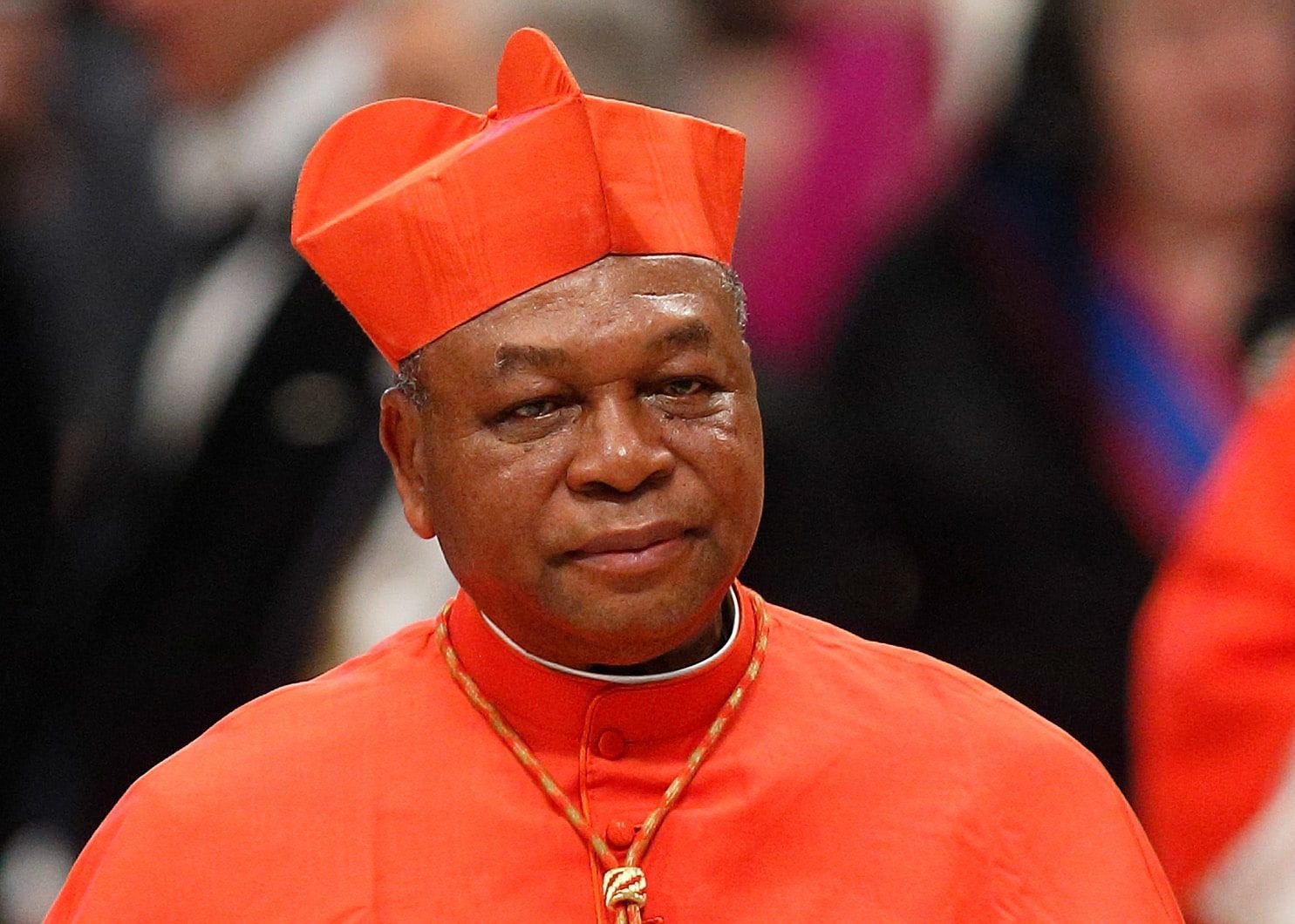
The Archbishop Emeritus of Abuja, John Cardinal Onaiyekan, has warned that voter turnout in the 2027 general elections could decline significantly if Nigerians believe the outcome is predetermined in favour of the ruling All Progressives Congress (APC).
Speaking on Monday during an interview on Frontline, a current affairs programme on Eagle 102.5 FM, Ilese-Ijebu, Ogun State, Onaiyekan warned that any perception that the ruling party is guaranteed victory would discourage voter participation and ultimately weaken the legitimacy of the government that emerges from the polls.
“My fear is that if it becomes very clear to Nigerians that, no matter what happens, the APC will win, then most people won’t even bother to go to the election. And even if the government, the real power, wins, it will not bring a real victory, actually. And it is not going to be possible to deliver good government,” he said.
The Cardinal said restoring public confidence in the electoral process is essential to improving governance, insisting that democracy can only thrive where elections are genuinely free, fair, and credible.
According to him, voter apathy in recent elections reflects growing distrust in the electoral system, a situation he said must be urgently addressed before the next general election.
He said: “Genuine democracy is built on free and fair elections. Any democracy that cannot conduct free, fair, and credible elections cannot produce good governance. Elections have consequences. Bad elections lead to bad governance, and bad governance leads to misery among the people.”
The cleric maintained that Nigeria has yet to conduct a truly free and fair election, linking low voter turnout to widespread public disillusionment with the electoral process.
“I think it is in our interest, and in the interest of the government, which has all the powers, to make sure that the trust of the people in the electoral process is restored so that we can get at least 50 per cent of Nigerians voting. If the electoral field is seen to be fair and equal for everybody, then people will know that their votes will count,” he said.
Onaiyekan explained that, unlike during military rule, elected governments derive their legitimacy from the people and must therefore remain accountable to them through periodic elections.
“When we were under military rule, we didn’t talk about elections, and the military boys who were ruling us didn’t claim to be ruling in our name. Now we are under democracy, and the rulers say they are governing in our name. We can’t keep quiet when people claiming to be working in our name are not.”
Drawing comparisons with established democracies such as the United Kingdom, the Cardinal argued that the regular alternation of power strengthens democratic institutions and national development.
“It is the rule of democracy everywhere. You will notice that, for example, in England, there are only two major parties. The Conservatives will govern for their term. When elections come, they have a tough time winning again, and they often lose, with Labour taking over. Right now, Labour is in power in England, and the Conservatives are preparing to return next time. When that happens, the nation moves forward,” he explained.
Responding to remarks that the President had defended the neutrality of the Independent National Electoral Commission (INEC), Onaiyekan argued that credible elections involve much more than the electoral umpire alone.
He stressed that the conduct of security agencies during elections also significantly influences electoral credibility.
“Even if INEC is neutral, as you know, the election outcome is also affected by the activities and performance of the security agents who claim to be securing the election but often end up intimidating people with sirens all over the place, which doesn’t happen in decent democracies.”
The Cardinal also renewed his call for comprehensive electoral reforms, particularly regarding the appointment of INEC’s leadership.
“We are also talking about why it is always difficult for INEC to perform well, even with the best intentions. The rules that guide these activities leave a lot of room for improvement. We have been talking about reforming the electoral rules.”
He further argued that strengthening the independence of the Independent National Electoral Commission (INEC) is critical to ensuring credible elections. He maintained that the current process for appointing the electoral body’s leadership raises concerns about impartiality and should be reviewed to reinforce public confidence in the electoral system.
“We know that the government in power appoints INEC. We have to figure a way around that because if the government in power appoints INEC, then it is difficult to have a fair contest unless you have a very strong INEC chairman who decides to stand up against all pressures.”
Speaking on the forthcoming August 15 Osun State governorship election, during which he recently led the National Peace Committee in facilitating the signing of a peace accord by participating political parties, Onaiyekan admitted that such agreements have often failed to prevent violence but said they remain necessary moral commitments.
“From the very beginning, the first attempt at signing these accords that the National Peace Committee has always facilitated has been an act of faith. You simply hope that what you are doing will make sense, but every time we have been disappointed because the reality on the ground goes contrary to the accord they signed.”
The Cardinal also cited the unique political configuration in the state and allegations of intimidation among the major contenders, saying such developments underscore the need for restraint and a peaceful electoral environment.
“The governor is in a small party called the Accord Party, but he has the advantage of rallying a good number of people around him. The APC government at the centre is also flexing its muscles, and there are accusations and counter-accusations of intimidation, which should not be.”
He appealed to political actors to allow voters to exercise their democratic rights peacefully while reminding politicians that public service, not the acquisition of power, should be the essence of politics.
“We are only praying and hoping that peace will prevail and that the ordinary people will be allowed to cast their votes while politicians hold back and do not destroy the entire process because of their own political ambitions,” he said.