




















By Our Reporter
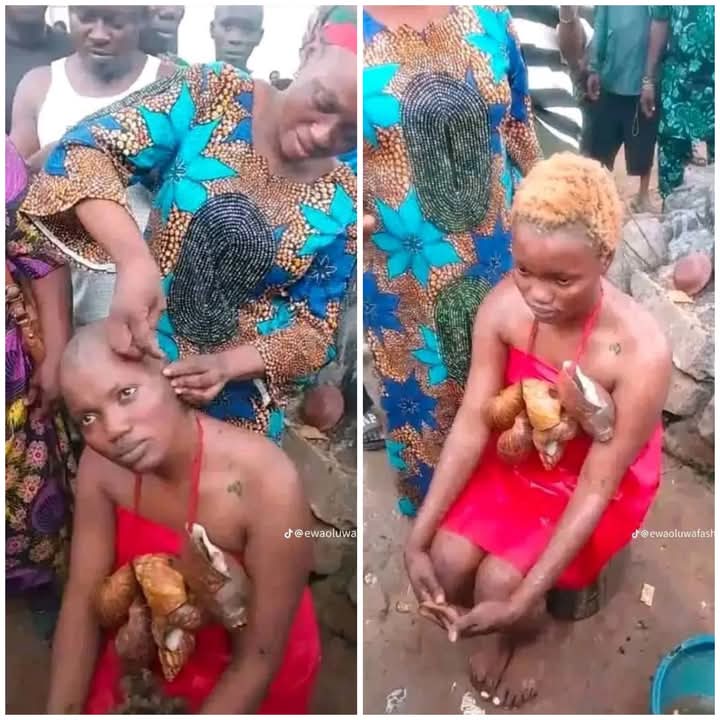
A female TikToker identified as Wasilat has reportedly undergone a traditional cleansing ritual after filming a figure associated with the revered Oloolu masquerade during the annual festival in Ibadan, Oyo State.
The incident occurred during the Oloolu celebration, held between July 27 and July 30, amid claims that the young woman secretly recorded the procession despite longstanding traditional restrictions prohibiting women from seeing or recording the sacred masquerade.
Reports circulating on social media alleged that Wasilat disguised herself as a man to capture the footage. The claims further stated that she later began experiencing unexplained bleeding and emotional distress, prompting her family to seek the intervention of custodians of the Oloolu shrine.
Videos that surfaced online showed traditional custodians conducting a cleansing ceremony during which the young woman’s hair was shaved as part of the ritual.
However, the spokesperson to the Olubadan of Ibadan, Oba Rashidi Ladoja, clarified that the TikToker did not film the sacred Oloolu masquerade itself but rather Alawo Oloolu, a figure associated with the Oloolu tradition.
Speaking with The Punch, Ladoja said the matter was verified with the Mogaji of the Oloolu compound.
“She did not capture Oloolu; she mistook it for Alawo. We contacted the Mogaji of the Oloolu compound, and he confirmed that a woman who mistook Alawo of Oloolu for the real Oloolu masquerade captured it on the street.
“After posting it, she realised the blood in her body began to dry. So her family reached out to the Oloolu people immediately, and they attended to her in accordance with the tradition of the land.
“We have told people to obey simple instructions; women are not supposed to see Oloolu, but out of curiosity, she disobeyed.
“I cannot confirm she disguised herself as a man. Those are accounts on social media. But she took the footage or photo on the street.”
The incident has sparked widespread reactions online, reigniting discussions over the place of traditional beliefs and cultural practices in contemporary society, as well as the growing influence of social media on the preservation of sacred customs.