



















By Hadiza Mohammed, Abuja
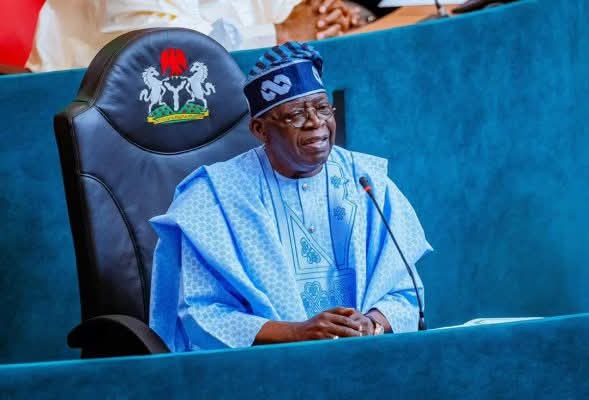
ABUJA — President Bola Ahmed Tinubu on Friday marked the third anniversary of his administration with a sweeping defence of his economic reforms, declaring that Nigeria has “stabilised and is moving forward again” after what he described as years of fiscal mismanagement and structural decline.
In a nationwide address commemorating May 29, 2026, Tinubu acknowledged the severe hardship caused by his government’s reforms but insisted the painful measures were necessary to avert economic collapse.
“Together, we chose reform over ruin and decisiveness over hesitation,” the President said. “Your sacrifice has not been in vain.”
Tinubu highlighted the removal of fuel subsidies and the unification of foreign exchange windows as key decisions that helped rescue the economy from what he called mounting fiscal pressures, unsustainable spending, and widespread forex distortions.
According to the President, Nigeria previously spent as much as ₦18.4 billion daily on petrol subsidies, while multiple exchange-rate systems allegedly enabled over ₦8 trillion in losses through speculative practices and rent-seeking over three years.
The President pointed to improvements in public finances, rising investor confidence, and record performance on the Nigerian stock market as evidence that the reforms are yielding results. He noted that the All Share Index rose from 53,000 points in 2023 to 250,000 in 2026, while market capitalisation reportedly climbed from ₦30 trillion to ₦160 trillion.
Tinubu also outlined major infrastructure projects underway across the country, including the Lagos-Calabar Coastal Highway, the Sokoto-Badagry Super Highway, the Abuja-Kaduna-Zaria-Kano Road, and the East-West Road.
He said more than 2,700 kilometres of roads are under construction, reconstruction, or rehabilitation nationwide.
In the energy sector, the President said reforms have attracted billions of dollars in fresh investments and boosted local refining capacity, reducing Nigeria’s dependence on imported petroleum products. He added that the $5 billion NLNG Train 7 project is nearing completion.
On power supply, Tinubu admitted the sector still faces major challenges but said his administration is investing heavily in transmission infrastructure, renewable energy, and grid expansion.
“No modern economy can grow in darkness,” he stated.
The President also highlighted achievements in education, housing, healthcare, and digital technology. He disclosed that over 1.5 million students have benefited from the Nigerian Education Loan Fund, with more than ₦282 billion disbursed so far.
Tinubu said the Renewed Hope Housing Programme is delivering over 10,000 housing units across 14 states and the Federal Capital Territory, while telecom operators are expanding digital infrastructure and creating more opportunities for young Nigerians.
Addressing security concerns, the President said military and security agencies have intensified operations against terrorism, banditry, kidnapping, and oil theft, adding that several communities and highways are becoming safer.
While admitting that many Nigerians are still struggling with high living costs, Tinubu promised that his government would continue working to reduce food and transportation costs, partly through investments in compressed natural gas (CNG) transportation systems and electric vehicles.
The President called for national unity and patience, urging Nigerians not to lose faith in the country’s future.
“History tests nations before it elevates them,” he said. “Nigeria is passing through such a test. But I believe with all my heart that we shall emerge stronger, fairer, more united, and more prosperous than ever before.”
Tinubu concluded by reaffirming his administration’s commitment to economic reform, democratic governance, and national development, insisting that Nigeria is once again attracting global attention for its recovery efforts and growth potential.