

















The current federal government has made local-government financial autonomy a significant part of its reform agenda. President Tinubu argued in his 2026 Democracy Day address that ineffective local administration has become a fundamental obstacle to national development
By Adekunle Alaye, PhD.
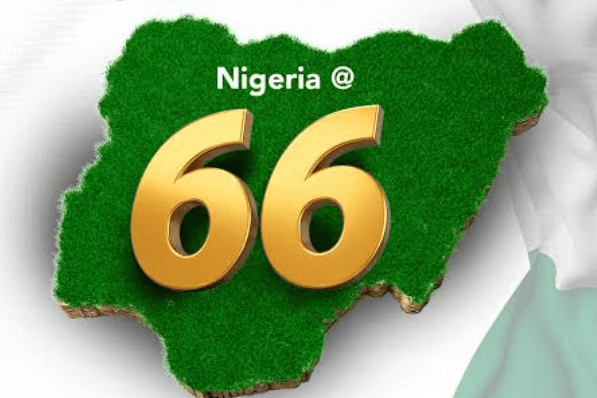
By 1st of October 2026, Nigeria marks 66 years of independence and 27 years of uninterrupted civilian democratic rule.
The coincidence invites two different but connected questions: What has Nigeria achieved since independence, and what has 27 years of uninterrupted democracy actually delivered to ordinary Nigerians?
Nigeria returned to civilian government on 29 May 1999, after years of military rule. Since then, the country has held successive general elections in 1999, 2003, 2007, 2011, 2015, 2019 and 2023. INEC describes the 2023 election as the seventh successive general election since the return to democracy.
This continuity is historically significant. But continuity should not automatically be confused with democratic quality or socioeconomic success. A democracy can survive institutionally while citizens remain dissatisfied with its economic and social outcomes. Nigeria’s 27-year experience therefore deserves to be assessed from several angles: political stability, elections, institutions, the economy, security, corruption, human rights, infrastructure, social development and citizen participation.
Democracy’s biggest achievement: it has endured
Perhaps the most important achievement of the Fourth Republic is also the easiest to underestimate: Nigeria’s democratic experiment has survived.
Before 1999, Nigeria had experienced repeated military interventions. The First Republic ended with the January 1966 coup; the Second Republic was overthrown in 1983; and another prolonged period of military rule followed. The 1999 transition therefore represented more than another election—it represented the beginning of the country’s longest continuous period of civilian government.
INEC records that it has conducted Nigeria’s general elections continuously since 1999.
There has also been an important development in the principle of electoral competition. In 2015, an incumbent president, Goodluck Jonathan, conceded defeat to Muhammadu Buhari, marking the first time in Nigeria’s history that a sitting president lost a presidential election and transferred power to an opposition candidate through the electoral process.
That event demonstrated something fundamental about democratic institutions: political power could change hands without a military coup.
The 2015 transition was not the end of Nigeria’s electoral problems, but it was an important demonstration of the possibility of civilian succession.
The Pros: What 27 years of democracy have made possible
1. Continuity of civilian government
The clearest advantage is political continuity.
Nigeria has now experienced more than a quarter-century in which political disputes have principally been handled through elections, courts, legislatures, political parties and other civilian institutions rather than military takeovers.
President Bola Ahmed Tinubu himself described the 27-year period in his June 2026 Democracy Day address as Nigeria’s longest stretch of civilian rule.
That continuity creates something previous generations did not consistently enjoy: the opportunity to develop democratic institutions over time.
Institutions become stronger through repeated use. Electoral commissions gain experience, political parties evolve, courts accumulate constitutional precedents, civil society becomes more organized and citizens become more familiar with democratic participation.
2. Nigeria has developed mechanisms for political succession
Democracy is not merely about electing a president. It is also about what happens when governments change.
Nigeria has witnessed several transitions between administrations since 1999. These have occurred despite serious political tensions and disagreements.
The significance of this should not be underestimated in a country of Nigeria’s size, diversity and political complexity.
INEC’s historical record shows the progression from the 1999 election through the elections of 2003, 2007, 2011, 2015, 2019 and 2023.
The democratic system has therefore demonstrated institutional resilience even when individual elections have been heavily contested.
3. Elections have gradually become more technologically sophisticated
Nigeria’s electoral system has changed considerably since 1999.
INEC has introduced technologies and processes including the Smart Card Reader, the Bimodal Voter Accreditation System (BVAS), the electronic transmission/result-viewing system known as IReV, and Continuous Voter Registration.
These innovations represent an attempt to address longstanding problems such as multiple voting, voter accreditation, result manipulation and weaknesses in election administration.
Technology, however, has not eliminated electoral controversy.
The 2023 elections demonstrated this tension particularly clearly. International observers and domestic actors raised concerns about logistical failures, transparency and the implementation of electoral procedures. Freedom House, for example, reported that the 2023 elections were marred by irregularities, including violence, intimidation and vote buying.
Thus, one of the lessons of 27 years is that technology can strengthen elections, but technology alone cannot create political trust.
4. Democracy has expanded the space for civic participation
Since 1999, Nigeria has witnessed an increasingly active ecosystem of journalists, civil-society organizations, lawyers, activists, professional associations, religious organizations, student groups and digital communities.
The growth of social media has added another dimension.
Citizens can now criticize government policies, organize campaigns, expose alleged abuses and mobilize around national issues much more rapidly than was possible during previous eras.
The #EndSARS protests of 2020, for example, demonstrated the capacity of Nigerian youth to organize nationally around policing and accountability.
This does not mean that civic space is unrestricted. Freedom House’s 2026 assessment continues to describe Nigeria as “Partly Free”, citing problems involving political rights, civil liberties, security and treatment of journalists.
Nevertheless, the existence of a vigorous media and civil-society environment is an important feature of the post-1999 democratic order.
5. Nigeria’s economy has grown, but growth has not always translated into prosperity
It would be inaccurate to describe the democratic era as economically stagnant.
Nigeria has experienced substantial economic expansion over the period, alongside the growth of telecommunications, banking, financial services, entertainment, technology, agriculture and other sectors.
The country’s technology and creative sectors have become increasingly important parts of its international economic identity.
The World Bank’s current data put Nigeria’s 2025 GDP at approximately $290.8 billion, with real GDP growth estimated at 4.0 percent in 2025.
But this is where the analysis becomes more complicated.
GDP growth is not the same thing as improved living standards.
Nigeria’s population has also grown rapidly. The World Bank estimates the country’s 2025 population at about 237.5 million.
Consequently, economic growth must be evaluated alongside population growth, inflation, employment, household income and access to basic services.
This is one of the central contradictions of Nigeria’s democratic experience:
The economy can grow while many citizens feel economically worse off.
6. Poverty remains one of democracy’s biggest tests
The strongest argument against celebrating democracy solely through institutional statistics is the experience of ordinary households.
Nigeria’s National Bureau of Statistics reported in its 2022 Multidimensional Poverty Index that 62.9 percent of Nigerians—approximately 133 million people—were multidimensionally poor. The index included deprivation in areas such as education, healthcare, living standards, employment and security.
The World Bank’s more recent assessment also indicates that poverty remains widespread. It estimates that more than 60 percent of Nigerians were below the national poverty line in 2025.
The IMF similarly reported in 2026 that poverty remained around 63 percent at the national poverty line, while an estimated 27 million Nigerians experienced food insecurity in the latter part of 2025.
These figures highlight an uncomfortable question:
If democracy is ultimately supposed to serve citizens, how should its success be measured when large sections of the population continue to struggle to afford food, housing, healthcare and education?
The answer cannot simply be that democracy has failed. Poverty has multiple causes—including historical inequality, population growth, weak productivity, insecurity, infrastructure deficits, policy choices and global economic shocks.
But neither can democratic governments escape responsibility for the outcomes of policies implemented under their watch.
7. The security crisis is a major weakness of the democratic era
One of the most serious challenges confronting Nigeria has been insecurity.
The country has experienced Boko Haram insurgency, terrorism, banditry, kidnapping, communal violence, farmer-herder conflicts and separatist agitation.
The World Bank currently identifies insecurity—including banditry, kidnapping, continued insurgency in the northeast and separatist agitation in the southeast—as persistent challenges.
Freedom House similarly identifies insurgencies, kidnappings and communal and sectarian violence as threats to the rights and security of millions of Nigerians.
This matters for democracy because insecurity affects more than personal safety.
It can:
prevent citizens from voting;
displace communities;
disrupt agriculture;
close schools;
discourage investment;
weaken local government;
reduce economic activity; and
undermine confidence in government.
A democratic government is expected not merely to organize elections but also to provide security under the rule of law.
8. Corruption remains a persistent problem
Corruption has survived the transition from military to civilian rule.
Nigeria has created and strengthened institutions designed to fight corruption, including the EFCC and ICPC, while successive administrations have announced anti-corruption programmes.
Yet corruption allegations remain a persistent feature of Nigerian public life.
The issue is not simply that individual officials may steal public money. The deeper problem is institutional: when public resources are diverted, citizens lose confidence in the idea that government exists to provide public goods.
Freedom House’s current assessment continues to identify corruption, including corruption associated with the petroleum sector, as a significant concern.
This creates a paradox.
Nigeria has democratic institutions designed to promote accountability, yet those institutions have not eliminated corruption.
The question, therefore, is not whether Nigeria has anti-corruption laws. It is whether enforcement is sufficiently consistent, independent and effective.
9. Elections have become more competitive—but voter confidence has weakened
One of the most revealing trends in the 27-year period is declining voter participation.
INEC reported in 2026 that presidential-election turnout fell from 53.7 percent in 2011 to 43.6 percent in 2015, 34.7 percent in 2019 and 26.7 percent in 2023.
This is significant.
A democracy depends not only on the right to vote but also on citizens believing that voting matters.
The 2023 election had particularly low participation. International IDEA recorded turnout at approximately 27 percent of registered voters, alongside concerns from observers about logistical failures, irregularities and transparency.
The decline raises an important question:
> Can a democracy remain healthy if an increasing proportion of citizens withdraw from the electoral process?
Low turnout does not necessarily mean Nigerians reject democracy. It can also reflect distrust of political parties, disappointment with government performance, logistical difficulties, insecurity, voter registration problems or the belief that electoral outcomes will not substantially change everyday life.
But whatever the cause, declining participation is a warning sign for democratic legitimacy.
10. The problem of “democracy without dividends”
Perhaps the deepest criticism of Nigeria’s 27 years is the argument that political democracy has not consistently produced sufficient socioeconomic dividends.
Citizens can vote every four years and still struggle with:
unreliable electricity;
inadequate healthcare;
unemployment and underemployment;
poor roads;
insecurity;
inflation;
inadequate public transportation;
weak educational outcomes;
poverty; and
limited access to affordable housing.
The World Bank notes that Nigeria still faces infrastructure gaps, particularly in electricity, transportation and logistics, while weak job creation remains a major concern. It estimates that about 3.5 million people enter Nigeria’s labour force each year, creating enormous pressure for job creation.
This is particularly important because Nigeria has one of the world’s youngest and fastest-growing populations.
For a young Nigerian, the question is often less philosophical than practical:
What has democracy changed in my daily life?
That question cannot be answered by election statistics alone.
11. Yet democracy itself should not be blamed for every failure
A balanced assessment must avoid another mistake: attributing every Nigerian problem to democracy.
Nigeria’s problems did not begin in 1999.
The country inherited deep structural challenges from colonialism, regional inequality, weak institutions, military rule, ethnic competition, dependence on oil revenues, inadequate infrastructure and uneven human-capital development.
The 1999 democratic government inherited many of these problems.
Furthermore, democratic governments have operated through global crises, including the 2008 financial crisis, oil-price shocks, COVID-19 and more recent international food and energy disruptions.
A country can have elections without effective governance. It can also have economic growth without inclusive development. It can have democratic institutions while citizens distrust those institutions. Nigeria’s experience demonstrates all three tensions
The Nigerian economy also experienced recessions in 2016 and 2020. The NBS’s multidimensional-poverty report notes that the 2020 recession and its effects on livelihoods and household welfare compounded existing vulnerabilities.
Therefore, a serious assessment should distinguish between:
problems created or worsened by policy decisions under democratic governments
and
problems that reflect much deeper structural conditions.
12. Federalism remains an unfinished democratic project
Nigeria’s federal system is another area requiring deeper examination.
Nigeria has 36 states and the Federal Capital Territory, alongside 774 local government areas.
Yet enormous political and financial power remains concentrated at the federal level.
This creates a continuing debate about:
fiscal federalism;
resource control;
state autonomy;
local-government autonomy;
policing;
restructuring;
devolution of powers; and
the distribution of oil revenues.
The question is whether Nigeria’s federal structure gives states and local communities sufficient responsibility and resources to solve problems according to their particular circumstances.
This debate has become particularly important because Nigeria is too large and diverse for a single policy approach to address every regional challenge effectively.
13. Local government is crucial to whether democracy reaches ordinary people
Democracy is often discussed in terms of presidents, governors and legislators.
But for ordinary citizens, the most important government may be the one closest to them.
Local governments are responsible for functions connected to grassroots development and public services, yet their effectiveness has often been questioned.
The current federal government has made local-government financial autonomy a significant part of its reform agenda. President Tinubu argued in his 2026 Democracy Day address that ineffective local administration has become a fundamental obstacle to national development.
This highlights an important principle:
Democracy cannot be considered fully successful merely because presidential elections occur regularly.
It must also be evaluated by what happens in communities.
14. Human rights and freedom remain contested areas
Democracy has expanded constitutional protections and created formal institutions for protecting rights.
Nigeria has a vibrant press, active civil society and an increasingly influential digital public sphere.
But significant concerns remain.
Freedom House’s 2026 assessment identifies restrictions affecting journalists, political rights and civil liberties, while also citing allegations of abuses by security agencies.
This creates another paradox of the Fourth Republic:
Nigeria has more political space than under military rule, but that space is not always secure or equally accessible to everyone.
The strength of a democracy should therefore be measured not only by whether criticism is legally possible but also by whether citizens can criticize government without intimidation, violence or disproportionate state action.
15. Nigeria’s democratic journey is therefore a mixed record
After 27 years, it is possible to identify genuine achievements:
The gains
uninterrupted civilian government since 1999;
repeated national and state elections;
peaceful transfers of presidential power;
increased electoral competition;
development of electoral technology;
stronger civil-society participation;
a relatively vibrant media environment;
greater institutional experience with constitutional government;
expansion of telecommunications and digital participation;
economic growth and diversification in several sectors;
increased international democratic engagement.
But there are equally substantial challenges:
The continuing problems
declining voter turnout;
electoral irregularities and disputed processes;
corruption;
insecurity;
poverty and inequality;
unemployment and weak job creation;
inadequate infrastructure;
weak public-service delivery;
constitutional and federalism questions;
distrust of political institutions;
restrictions and risks affecting civic freedoms;
a persistent gap between political rights and socioeconomic outcomes.
These two realities exist simultaneously.
The central question: What kind of democracy does Nigeria want?
The first 27 years answered one important question:
Can Nigeria sustain civilian democracy?
The answer, historically, is yes.
But the next question is more demanding:
Can Nigeria build a democracy that citizens experience not merely at the polling station, but in their homes, workplaces, schools, hospitals, businesses and communities?
That is the more difficult test.
Democracy cannot be measured exclusively by the number of elections conducted. Neither can it be judged exclusively by poverty statistics.
A meaningful assessment needs both.
A country can have elections without effective governance. It can also have economic growth without inclusive development. It can have democratic institutions while citizens distrust those institutions.
Nigeria’s experience demonstrates all three tensions.
I will wrap by saying that 27 years is an achievement—but also a responsibility
At 66, Nigeria has reached an important stage in its national history.
The country has survived coups, civil war, political instability, economic crises, religious and ethnic tensions, insurgency and repeated institutional challenges. Its 27 uninterrupted years of civilian rule represent a major departure from the cycles of military intervention that characterized much of its post-independence history.
That achievement deserves recognition.
But democracy should not become something celebrated only because it has survived.
Its deeper purpose is to provide accountable government, political participation, justice, security, opportunity and better living conditions.
Happy 66th Independence Celebrations!
God bless Nigeria!
•Doctor Adekunle Alaye, is a Senior Research Associate of Political Science and Visiting Scholar, Humboldt University Berlin, Germany.
.Opinions, positions or thoughts expressed here are personal and strictly of writer/author and do not represent the views of The Daily Crucible.