
























By Our Reporter
Concern has continued to mount across Ijebuland over the process to fill the vacant Awujale stool, as the Ijebu Young Elites Progress Forum (IYEPF) has warned that any attempt to sidestep history, custom, and the law could damage public trust and destabilise the revered traditional institution.
In a strongly worded statement issued on Thursday, the group — made up of professionals and community leaders from Nigeria and the diaspora — called on the Ogun State Government and stakeholders to allow the selection process to follow established legal and traditional procedures without external interference.
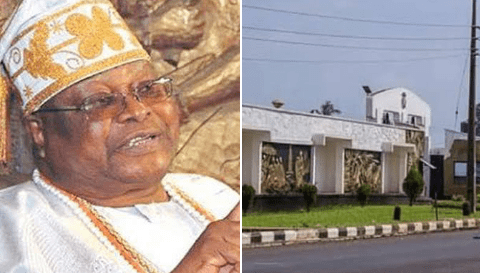
The Daily Crucible reports that the stool of the Awujale of Ijebuland became vacant on July 13, 2025, following the demise of Oba Sikiru Kayode Adetona, Ogbagba II, who joined his ancestors at the age of 91 after reigning on the throne for more than 65 years.
Efforts by the Fusengbuwa Ruling House, next in line to produce the successor to the Awujale, and the Ijebu-Ode kingmakers to fill the vacant stool through the nomination and selection of candidates have been mired in controversy, as the Governor Dapo Abiodun-led state government suspended the process on two different occasions, citing procedural errors and petitions against the kingmakers as reasons for its decisions.
No fewer than six kingmakers were recently quizzed by police operatives at the Eleweran Headquarters of the Nigeria Police Force (NPF), Ogun State Command, over allegations of “bribery and financial inducement” allegedly linked to the nomination and selection process of the next Awujale.
However, in the statement signed by Prince Adetokunbo Ogunbowale, IYEPF
President, the group specifically urged the state government to avoid any perception of imposing a candidate and instead allow kingmakers and Afobajes to carry out their duties independently in line with custom and the Chiefs Law of Ogun State.
It warned that any process perceived as manipulated or politically influenced could create long-term legitimacy challenges for both the eventual occupant of the stool and the government itself.
“Grassroots acceptance matters more than elite endorsements because it is the grassroots that vote and sustain tradition. A candidate with broad legitimacy strengthens both the stool and the state,” it stated.
The forum also warned that “He who burns the bridge he must cross tomorrow will swim in regret today,” invoking a Yoruba proverb to describe the growing concerns among indigenes over the handling of the succession process.
The forum stressed that the Awujale stool is not merely ceremonial but remains a key cultural, statutory, and spiritual institution in Ijebuland. According to the group, the monarch plays a central role in coordinating religious harmony, presiding over traditional councils, approving chieftaincy matters, and serving as a stabilising figure during periods of political tension.
“The stool serves as the paramount authority for the Chief Imam and the Muslim community, the central figure for the internationally recognised Ojude Oba festival, and a neutral father figure during elections and periods of tension,” the statement said.
The group also expressed concern over what it described as attempts to distort history regarding the 1959 succession period. It argued that claims suggesting Ojude Oba had previously held without a reigning Awujale were historically inaccurate.
According to the forum, records show that Awujale Daniel Robertson Adesanya died in March 1959, after which the traditional 90-day mourning rites were observed.
The Ileya festival reportedly fell on June 12 that year, while Ojude Oba would have taken place on June 15. However, the group maintained that no Ojude Oba celebration was held in the absence of a reigning monarch before Oba Sikiru Adetona’s eventual coronation on April 19, 1960.
“No Ojude Oba was held without a reigning Awujale in 1959,” the statement insisted, adding that using the period as a precedent for current arguments was “misleading.”
The forum urged Governor Dapo Abiodun’s administration to avoid any perception of imposing a candidate and instead allow kingmakers and Afobajes to carry out their duties independently in line with custom and the Chiefs Law of Ogun State.
It warned that any process perceived as manipulated or politically influenced could create long-term legitimacy challenges for both the eventual occupant of the stool and the government itself.
“Grassroots acceptance matters more than elite endorsements because it is the grassroots that vote and sustain tradition. A candidate with broad legitimacy strengthens both the stool and the state,” it stated.
Among its recommendations, the group called for the immediate filling of the vacant stool to restore religious, cultural, and security coordination in Ijebuland. It also demanded that kingmakers under the Olisa be allowed to act freely without political interference and that legitimacy be prioritised above convenience in the selection process.
The forum noted that history would judge how the current transition is managed.
“The Ijebu people are watching, and they remember. A decision that allows this year’s Ileya and Ojude Oba to be celebrated without an Oba on the throne will undermine both custom and the dignity of the stool,” it said.