





















A Kenyan researcher has received international recognition for pioneering work aimed at improving survival rates for oesophageal cancer, one of the deadliest cancers in Kenya.
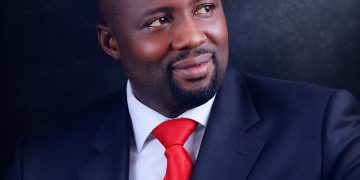
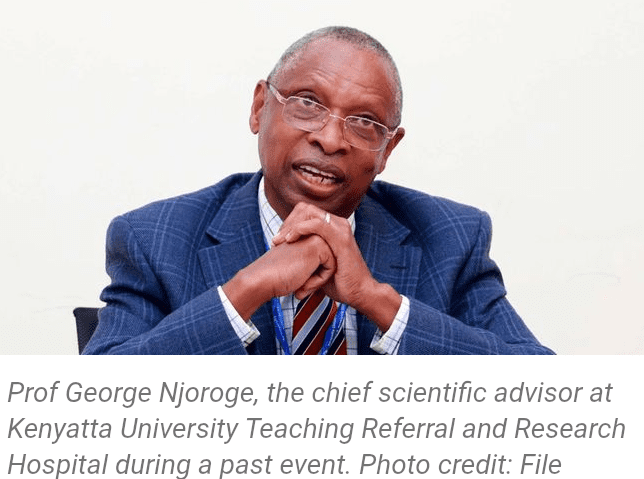
Prof George Njoroge, chief scientific advisor at Kenyatta University Teaching, Referral and Research Hospital (KUTRRH), was honoured with the Greater Manchester Cancer Award by the Greater Manchester Cancer Alliance for a collaborative research project focused on early detection and treatment of throat cancer.
The award-winning study brought together researchers from the University of Manchester, The Christie NHS Foundation Trust, and KUTRRH. The international team, co-led by Prof Njoroge and Prof Robert Bristow of the University of Manchester, was recognised for its work in improving oesophageal cancer survival in Kenya.
The project also secured Sh446 million in funding from the UK’s National Institutes of Health to expand outreach services through a mobile clinic initiative.
The Greater Manchester Cancer Awards celebrate researchers, NHS staff, volunteers, and community workers making exceptional contributions to cancer care and patient outcomes. More than 100 entries were submitted this year across eight categories.
Prof Njoroge said the research sought to address one of Kenya’s most lethal but often overlooked cancers through early diagnosis and community-based interventions.
“I feel humbled and honoured to be one of the leaders in this project that has generated information beneficial to early detection of throat cancer in our nation and the world at large,” he said.
“The success of this project has been highlighted, celebrated in the UK, and awarded as a finalist in the research area on May 12 of this year. We are happy it has been very successful.”
According to Prof Njoroge, oesophageal cancer is currently the third most common cancer in Kenya but records the highest mortality rate, claiming about 4,400 lives annually.
Research published by the National Institute of Medicine places Kenya within Africa’s “oesophageal cancer corridor”, one of the regions with the highest incidence rates globally. The country’s prevalence stands at 17.6 cases per 100,000 people.
Despite the growing burden, treatment and research capacity remain limited, with only a handful of hospitals managing oesophageal cancer cases, including KUTRRH, Moi Teaching and Referral Hospital, Tenwek Mission Hospital, Kijabe Mission Hospital, and M.P. Shah Hospital/Cancer Care Kenya.
Using a “hub-and-spoke” model, the research team combined community outreach, rapid pathology testing, and genomic research to tackle late-stage diagnosis, which remains a major challenge in Kenya.
The programme operated across Kisii, Nyeri, Nakuru, Kiambu, and Meru counties, where researchers worked with local communities to design awareness campaigns, train more than 400 clinicians and 500 community health workers, and roll out a mobile endoscopy service that has already conducted more than 1,000 procedures.
“This partnership has revealed vital insights that will benefit patients in Kenya and those of African and Black ancestry in Manchester and across the UK,” said an official statement from the Greater Manchester Cancer Alliance.
“The programme is now informing national policy discussions and shaping future early detection strategies. This model of shared leadership, community partnership and reciprocal training offers a blueprint for equitable cancer detection across global and local systems.”
Prof Njoroge said the partnership with the University of Manchester began three and a half years ago after researchers realised that oesophageal cancer prevalence and mortality rates in Kenya were nearly identical.
“That means if one is diagnosed with oesophageal cancer when they go to see their doctor, the chances that they will succumb to the disease is greater than 99 per cent,” he said.
He explained that many patients initially report symptoms such as coughs, sore throats, or heartburn and are often treated for minor illnesses, delaying proper diagnosis.
“At that point, the cancer has already advanced from stage one or two to stage three or four, which is more difficult to treat,” he said.
In 2022, the team developed a proposal centred on expanding access to endoscopy services using a small camera device inserted through the throat to examine suspicious cells.
“It is a very important effort by the endoscopist, because they are able to tell whether the cells in the throat are cancerous or might become cancerous within a given time,” said Prof Njoroge.
“The whole idea was to give patients access to this evaluation without travelling long distances.”
To encourage uptake, the researchers conducted public awareness campaigns through television, radio stations, and churches.
Patients identified during screening underwent further endoscopy procedures to confirm diagnosis, with several cases of cancer and pre-cancerous cells detected early enough for intervention.
Prof Njoroge said the ability to identify abnormal cells early could significantly improve treatment outcomes while reducing healthcare costs and the wider social burden of cancer.
“The findings will be important in saving lives through detecting throat cancer at a very early stage when it is treatable, less expensive, and less of a burden to society,” he said.