





















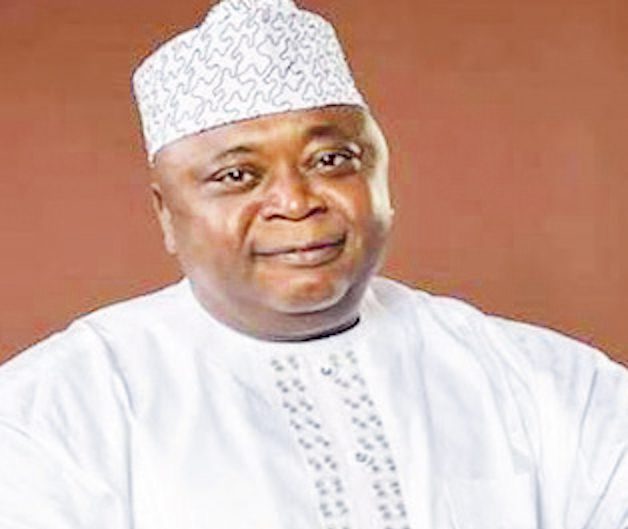
Ogun does not need a governor who sees the state as a warehouse of resources to be controlled. It needs a custodian who understands that public resources are held in trust
By Dayo Olufemi
There is a fundamental question Ogun State must ask as it considers the future of governance: can the people trust their governor to leave public money where it belongs?
For local governments, this question is particularly important.
Local government is supposed to be the government closest to the people. It is where citizens expect to see functioning primary healthcare centres, rural roads, drainage systems, markets, environmental services, water projects and other basic infrastructure. Yet when the financial resources meant for the grassroots are controlled from the centre, local government can be reduced to little more than an administrative structure without the financial muscle to respond effectively to the needs of its people.
This is why Ladi Adebutu’s position on local government autonomy deserves serious attention.
His proposition is simple: funds meant for local governments should go directly to the local governments and be used for the purposes for which they are allocated.
The issue is not merely about money. It is about integrity.
The Ogun State Auditor-General’s 2024 report records that ₦89.07 billion in statutory allocation was received through the Ogun State Joint Account Allocation Committee for local governments during the year. The existence of such substantial resources makes the questions of transparency, distribution and accountability even more important. Did the local governments genuinely receive the money allocated to them?
If local governments are genuinely expected to develop their communities, they must have predictable access to the resources legally due to them.
Adebutu’s argument, as presented by his campaign, is that his administration would respect that principle.
That position also speaks to the larger question of the character of the person entrusted with the state’s resources.
Integrity is not simply the absence of a scandal. It is the discipline to refuse what does not belong to you.
Local government autonomy, if properly implemented alongside transparency, auditing and strong accountability mechanisms, can bring government closer to the people
Adebutu’s supporters point to his public record and argue that he has not been embroiled in established corrupt practices. That record, in their view, strengthens confidence in his promise that resources belonging to local governments would not be treated as an extension of the governor’s personal or political resources.
It is a philosophy that can be summed up simply: what belongs to the people should remain for the people.
For Ogun’s 20 local government areas, this could have significant implications.
A local government that knows its resources are available can plan. A council that can plan can execute projects. A council that executes projects can be held accountable by its people.
The reverse is equally true.
When local government resources are not sufficiently within the councils’ effective control, responsibility becomes blurred. The council blames the state, the state points elsewhere, and the ordinary citizen is left asking why his or her community remains without the basic infrastructure that should be provided.
This is how grassroots government loses its meaning.
Adebutu’s proposed approach, therefore, goes beyond administrative restructuring. It is fundamentally about restoring the relationship between public money and public purpose.
It is also about changing a political culture in which control of resources can become more important than the delivery of services.
A governor who believes that every naira belonging to a local government must remain available for grassroots development would, in principle, have less reason to centralise those resources. That is the argument Adebutu is placing before Ogun voters.
And that argument ultimately returns to integrity.
The test of leadership is not how much public money passes through a government. The test is how much of that money can be traced to tangible improvements in the lives of the people. No doubt, those who portray government projects as their personal projects cannot be trusted with public funds.
Adebutu’s supporters believe his background as a businessman, his long-standing connection to Ogun and his emphasis on accountability provide grounds for confidence that he would not regard the state’s resources as personal property.
Ogun does not need a governor who sees the state as a warehouse of resources to be controlled. It needs a custodian who understands that public resources are held in trust.
Local government autonomy, if properly implemented alongside transparency, auditing and strong accountability mechanisms, can bring government closer to the people.
It can give communities greater visibility over what is allocated to them.
It can make elected local officials more directly answerable to their constituents.
And it can help restore the dignity of grassroots governance.
This is why the debate over Adebutu and local government autonomy should not be reduced to another campaign promise.
It should be viewed through the larger question of trust.
Who will regard public money as a trust?
Who will allow local governments to control resources meant for local development?
Who will accept that money belonging to a council is not money belonging to the governor?
For Adebutu and those advocating his candidacy, the answer is clear.
Integrity means not taking what belongs to others. Governance means ensuring that what belongs to the people works for the people.
That is the promise behind the call for genuine local government autonomy.
And if that promise is translated into law, transparent financial systems and accountable practice, Ogun’s grassroots may finally have the financial independence necessary to begin addressing the development challenges that have persisted for years.
•Dayo Olufemi writes from Abeokuta, the Ogun State capital.
•Opinions, positions or thoughts expressed here are personal and strictly those of the writer/author and do not represent the views of The Daily Crucible.