







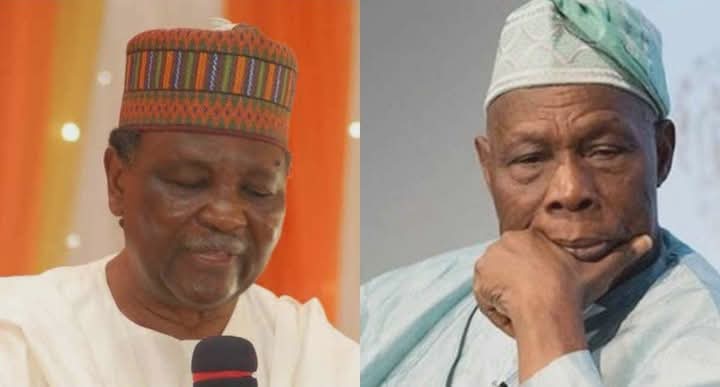
Unfortunately, one thing General Yakubu Gowon and his supporters appear to lack is the power of despicable propaganda which is the customary infantile trait of the Igbo
By Nwankwo T. Nwaezeigwe
Chief Obafemi Awolowo in his remarks during the launching of his book: The People’s Republic in October 1968 said:
“But I must warn that I have written only for those Nigerians who are prepared to learn, to study, to make painstaking research, to abjure prejudices and to think systematically and constructively. Up to now, it is the habit with many of us to approach the titanic, intricate and pressing problems of our country with blameworthy casualness, insufficient study and research, loose and desultory thinking, supercilious complacency, deep-seated prejudices and insensitive partisanship.”
This was about 57 years ago and in 2026 Chief Awolowo’s speech appears to echo the undeniable truth about General Yakubu Gowon’s autobiography. It is not for everybody or those Ndigbo who flood social media platforms to pour avoidable invectives on General Yakubu Gowon. It is meant for people like us who are dedicatedly ready and willing to painstakingly interrogate and investigate new historical theories, ideas and contrary opinions with empirical courage and precision.
Indeed, if I were General Yakubu Gowon I would have entitled that autobiography in Julius Caesar’s words, “Veni, Vidi, Vici” (I came, I saw, I conquered). General Yakubu Gowon came, saw Ojukwu, and conquered him. This is a basic fact of history which better and summarily describes General Yakubu Gowon’s life.
Autobiographies are not ends to themselves but the means to a new stage in research, debates and discourses. This is a fundamental historical truth. To the historian, autobiographies, memoires, biographies and eyewitness accounts of historical events are like the proverbial ten blind men sent to describe an elephant. The one that touched the body shouted, “Oh! The elephant is like a wall.” The other that touched the tusk shouted, “No, the elephant is like a snake.” While the one that touched the leg shouted, “I think the elephant is like a pillar.”
Each of the ten blind men described the elephant according to the feelings of his hand and thus was right from his perspectives. It will therefore take a professional historian the task of pinning together the ten respective descriptions in order to objectively arrive at what is considered the general and objective description of an elephant. That’s the position of what constitute objective accounts of the Nigerian civil war. What the Igbo are doing in respect of General Gowon’s autobiography is simply an insult to his sublime perspective of what he considers the truth about his experience.
General Yakubu Gowon has fulfilled his own task of describing the civil war from his perspective and Nigerians should celebrate him immensely for that. Regrettably enough, Col Chukwuemeka Odumegwu Ojukwu did not leave us with such comprehensive description of his own touch of the elephant, as General Yakubu Gowon has just done; and unfortunately no Igbo has summoned the courage to criticize him for the dereliction of his patriotic responsibility. So in this respect, it’s Gowon One, Ojukwu zero.
Unfortunately, one thing General Yakubu Gowon and his supporters appear to lack is the power of despicable propaganda which is the customary infantile trait of the Igbo. I remember the popular propaganda during the civil war then in Biafra was that Gowon was not a Christian but a blood-sucking demonic Muslim who did not know God; whereas in real life Gowon was a more devoted Christian than Ojukwu and his cronies.
But it’s not all about propaganda, social media bullying and noisemaking. It is about being on the side of truth and moral justice. Outside despicable propaganda constructed on contemptible ungratefulness, General Yakubu Gowon has every superior historical and moral judgment against both Ojukwu and those Igbo ethnic bigots currently vilifying him.
Indeed, the Igbo should be thankful to God that it was not Murtala Mohammed that occupied the position of Head of State in place of General Gowon during and immediately after the civil war; otherwise what happened in Benin City and Asaba would have been a child’s play. This was how a former American Ambassador to Nigeria John E. Reinhardt, described Murtala Mohammed over his brutal conduct of the civil war against the Igbo:
“During the war against the secessionist Biafra Republic, Mr. Muhammed commanded the army’s Second Division which was accused of executing thousands of civilians in Asaba, Delta State, in what is now known as the Asaba Massacre. The Division was also accused of ordering the killing of several Biafran prisoners of war.”
Thus regardless of what some limbless Igbo intellectual nonentities and ethno-bigoted social media byway commentators churn out in half-truths and ignorance, General Yakubu Gowon made Ndigbo what they are today after the Nigerian civil war. Evidently enough, a lot of American and European secret documents on Nigerian civil war have been de-classified.
Indeed, if there are two men on the Federal side that prevented the Igbo defeat in the civil war from being an utter annihilation and humiliation, these are Generals Yakubu Gowon and Olusegun Obasanjo. Ironically, both men have had their foot-prints in the cause of Christianity in Nigeria today.
And by the Grace of God, this explains why God has blessed them with long life in strength and good health. Both men also exhibited extraordinary exemplary humility by going back to school after ruling Nigeria and respectively obtaining doctorate degrees. So they are icons of intellectual development and political sanity in Nigeria.
From historical records, it is clear that these two men never wanted the war against their Igbo kinsmen, but Ojukwu in his inordinate ambition to be a Head of State by all means twisted their into the civil war. It is also an indisputable fact that these two patriots instilled the humanity that accompanied the operational conduct of the Nigerian civil war to the advantage of the besieged Igbo of Biafra.
In fact, Let me state with the hindsight of a professional historian that within the operational conduct of the Nigerian civil war General Yakubu Gowon should be considered the Julius Caesar of Nigeria and, General Olusegun Obasanjo the General Ulysses Simpson Grant of Nigerian civil war. The question is how?
What made Caesar a celebrated Roman General was not just the defeat of his friend General Pompey but the humanity that followed his victory. That was the same act General Yakubu Gowon exhibited towards the vanquished Biafran and which the Igbo in their naughty arrogance refuse to acknowledge.
On 11 January 49 B.C., Julius Caesar in defiance of the Roman Senate which had ordered him to disband his army, marching from his base in Cisalpine Gaul, the present Emilia Romagna, crossed the Rubicon River and declared war against the Roman Senate. On 9 August 48 BC at the decisive battle of Pharsalus in Central Greece, Julius Caesar routed Pompey’s army. Instead of ordering the mass slaughter of the vanquished army of Pompey or selling them into slavery as it was the custom of the time, he ordered general amnesty to all of them.
Meanwhile, Pompey had fled to Egypt where he was beheaded and his head brought to Julius Caesar. Instead of celebrating the death of Pompey he punished those responsible for his death, for it was not his intention to kill his long-time friend and ally. This was exactly what General Yakubu Gowon did for the vanquished Igbo after the civil war. I wish people could revisit the January 15, 1970 surrender ceremony of Biafran officers and see the conviviality with which General Gowon received them.
Unfortunately, the Igbo are historically and ethically blind to appreciate this fact.
Equally remarkable was Gowon’s manner of changing the commanding officers of the three Divisions of the Nigerian army which reflected his desire to protect rather than destroy the Igbo. All the commanders of the three Divisions of the Nigerian army that exhibited clear hostility against the Igbo, or those who could not be truly trusted as being favorably disposed to the Igbo were replaced by those commanders whose love for the Igbo were not in doubt.
Col later General Murtala Mohammed was replaced by Col later Major General I. B. M. Haruna, a moderate Muslim, who was later replaced by a more trusted Christian Col later Lt. General Gibson Jalo as Commanding Officers of 2nd Infantry Division. In fact, Gibson Jalo transferred the Divisional Headquarters from Onitsha to Ibusa, including 70 Battalion under the command of another trusted Christian, Captain, later Lt. General Ishaya Bamayi; while Lt Col later Brigadier Francis Aisida commanding the 7th Brigade was headquartered at Asaba.
Similarly, the commander of 1st Infantry Division Col later Major General Mohammed Shuwa was later replaced Col later Major General Iliya Bisalla. Unfortunately General Shuwa who survived the civil war as the first General Officer Commanding 1st Infantry Division of the Nigerian army was ignominiously killed by book Haram in Maiduguri on November 2, 2012; and Bisala killed after the unfortunate February 13, 1976 abortive coup.
It was equally the spirit of putting a round peg in a round hole in order to save the Igbo from extermination that led General Gowon to remove the erratic Col later Brigadier Benjamin Adekunle the Black Scorpion and, appoint the more humane Col later Lt General Olusegun Obasanjo as General Officer Commanding the 3rd Marine Commando Division.
Brigadier Benjamin Adekunle was reported to have told a foreign press in 1968: “1want to see no Red Cross, no Caritas, no World Council of Churches, no Pope, no missionary and no U.N. delegation. I want to prevent even one Ibo having even one thing to eat before their capitulation.”
In addition to his disastrous battle of Owerri codenamed Operation-OAU (Owerri-Aba-Umuahia) which lasted from September 2 to October 15, 1968, his anti-Igbo rhetoric which clearly put Gowon’s humane intentions toward the Igbo in question was the principal reason Gowon removed him and appointed Olusegun Obasanjo in his place as General Officer Commanding (GOC) 3rd Marine Commando Division.
This was exactly what Gowon did to the Igbo. It is therefore evident that if the Igbo are able to open their ungrateful mouths to pour horrendous invectives on General Yakubu Gowon today, it is simply the result of Yakubu Gowon’s magnanimity; otherwise the victor in any war is not under any obligation to show mercy to the vanquished.
It was indeed this spirit of mercy that General Olusegun Obasanjo wore into the battlefield that saw the Igbo defeated without reprisals from Federal troops. It was no doubt this act of sublime magnanimity that saw General Obasanjo placed on the same pedestal of honor with the American civil war hero General Ulysses S. Grant, who was subsequently elected the 18th President of the United States of America (1869–77), in the same manner General Olusegun Obasanjo became the 2nd democratically elected President of the Federal Republic of Nigeria (1999-2007).
General Ulysses S. Grant led the Union army as the General-In-Chief of the Army of United States of America, operating from the Army of Potomac against the secessionist Confederate army led by General Robert E. Lee with his Army of Northern Virginia during the American civil war (1861-1865).
One remarkable act of General Ulysses S. Grant was his exhibition of magnanimity in victory against his defeated adversaries, an act later exhibited by Col later Lt General Olusegun Obasanjo during the final stage of the Nigerian civil war and subsequent surrender of Republic of Biafra. Coincidentally, both men came to the point of becoming the heroes of their respective civil wars following their appointments at a stage when their civil wars appeared to be in a state of stalemate.
General Grant speaking on the character of the de jure commander of the Army of Potomac Major General George Gordon Meade wrote: “It is men who wait to be selected, and not those who seek, from whom we may always expect the most efficient service.” Like the case of General Ulysses S. Grant, General Olusegun Obasanjo never lobbied or inordinately aspired to become both the Military Head of State of Nigeria and, democratically elected President of the Federal Republic of Nigeria. Both were entrusted on him by the act of Providence.
Ulysses S. Grant was promoted Lieutenant General and made General-In-Chief of the Army of United States of America on March 9, 1864. He subsequently moved his headquarters to the Army of Potomac under Major General George Gordon Meade in Virginia, making himself the de facto Commander of the Army of Potomac, instead of residing in Washington D.C.
From that point he went ahead after several battles to force General Robert E. Lee to surrender at the Battle of Appomattox Court House on April 9, 1865, practically ending the American civil war exactly one year and a month after his appointment.
Similarly, General Olusegun Obasanjo assumed command as General Officer Commanding 3rd Marine Commando Division of the Nigerian army on May 12, 1969. In the same fashion, he fought his way to victory against the Army of Biafra on January 11, 1970 at the Battle of Uli Airport, which brought the secessionist Republic of Biafra to an end exactly eight months after his appointment as GOC 3rd Marine Commando Division.
There is equally no doubting the fact that General Olusegun Obasanjo’s operational strategy in the execution of the final campaigns of the Nigerian civil war proved him to be a master strategist in the manner of General Ulysses S. Grant. His humanity in battle was in tandem with Ulysses S. Grant’s approach, compared to Major General William Tecumseh’s total war, adopted by both Murtala Mohammed and Benjamin Adekunle.
For instance, on June 5, 1864, General Ulysses S. Grant wrote to General Robert E. Lee on the need to declare few hours of truce to bury their dead and take away their wounded in the following words:
“It is reported to me that there are wounded men, probably of both armies, now lying exposed and suffering between the lines occupied respectively by the two armies. Humanity would dictate that some provision should be made to provide against such hardships. I would propose, therefore, that hereafter when no battle is raging either party be authorized to send to any point between the pickets men bearing litters to pick up their dead or wounded without being fired upon by the other party. Any other method equally fair to both parties you may propose for meeting the end desired, will be accepted by me.”
Again, following the Battle of Sailor’s Creek of April 6, 1865, which saw the defeat of the rebel Confederate forces with unimaginable fatalities and 7,700 prisoners taken, including six Generals, General Grant wrote General Lee a passionate letter the following day, requesting his surrender to stop further bloodshed.
In his words: “The result of last week must convince you of the hopelessness of further resistance on the part of the Army of Northern Virginia in this struggle,” Grant wrote. “I feel that it is so, and regard it as my duty to shift from myself any further effusion of blood, by asking of you the surrender of that portion of the C.S. Army known as the Army of Northern Virginia.”
We can note the same feeling of compassion for the Igbo by General Olusegun Obasanjo during his final battle leading to the capture of Owerri on January 9, 1970. As he once put it:
“My troops were positioned for the final push. Hundreds of thousands of Igbo civilians were trapped, starving, dying. On one side was the imperative of ending the war quickly to stop further suffering. On the other was the risk that a military advance would deepen the humanitarian catastrophe. No textbook told me what to do. No senior officer was going to make that call. It was mine alone. I made it. We saved lives by not shelling Owerri. History has rendered its verdict.”
Equally fascinating was Olusegun Obasanjo’s battle strategy which quickly brought the civil to an end. Code-named “Operation Finishing Touch” and “Operation Tail-Wind”, it was a dazzling combination of General Ulysses Grant’s pincer strategy supported by superior manpower and driven by a lightning speed against retreating rebel forces after the fall of the rebel Capital Richmond on April 2, 1865 after the battle of Petersburg on April 1, 1865 and; Major General William Tecumseh Sherman’s operational secrecy that accompanied his infamous “March to the Sea.”
Indeed having extensively studied the history of American civil war and having read with in-depth cogitation, General Ulysses S. Grant’s two-volume Memoirs, I have come to the conclusion that what General Olusegun Obasanjo owes Nigerian historians and other scholars is a comprehensive memoir on his military command exploits as General Officer Commanding 3rd Marine Commando Division.
But the most decisive parallel between General Ulysses S. Grant and General Olusegun Obasanjo was on the final surrender of the respective rebel forces, which jointly paralleled Julius Caesar’s legacy of magnanimity in victory against the vanquished.
As Ulysses pursued Lee after the latter defeat at the Battle of Petersburg, inflicting weighty defeat in successive battles, General Lee eventually found himself and his troops surrounded on all sides by General Grant’s forces at Appomattox Court House on April 9, 1865. This eventually prompted his surrender, thus technically ending the American civil war.
What happened thereafter was a general amnesty which only required parole and surrender of arms and ammunition. Every soldier was free to go home with his horse if he had one, while the officers were permitted to keep their side-arms. General Grant’s policy soon became the general policy of surrender in all the armies of the United States of America.
This was the same policy General Olusegun Obasanjo applied following the collapse of Biafra at Uli Airport on January 11, 1970. There were no reported incidents of reprisal killings or mass looting. Both the Federal and the defeated Biafran troops jointly celebrated the end of the civil war. Col Joseph Achuzia who was entrusted with the command of what was left of the Biafran army by Col Ojukwu after fleeing the country tendered the actual surrender of the Biafran army.
Thereafter he led the advance team of Federal officers made up of Lt Col Alani Akinrinade, the General Staff Officer 1 of the 3rd Marine Commando Division, the Commander of 17 Brigade Major S. Tomoye and, Major Ola Oni, to meet the acting Biafran Head of State Major General Philip Effiong at Amichi for the details of formal surrender of the Biafran Government to the GOC 3rd Marine Commando Division Col Olusegun Obasanjo. This eventually took place on January 12, 1970. Ironically, Ojukwu entrusted the collapsing Biafra in the hands of two non-Southeast Igbo; Phillip Effiong from the present Akwa Ibom State and Joseph Achuzia from the present Delta State.
With formal surrender tendered to Col Olusegun Obasanjo by Major General Effiong which drove the final nail into the coffin of secessionist Biafra, arrangements were made for the official surrender in Lagos to the Head of State and Commander-in-Chief of Nigerian Armed Forces on January 15, 1970. Thereafter, Col Obasanjo proceeded to Radio Biafra at Obodoukwu to make the last official broadcast in the Station, assuring the people of the former Biafran enclave of their safety. The broadcast is reproduced hereunder:
“I, Colonel Olusegun Obasanjo, General Officer Commanding 3rd Marine Commando Division, Nigerian Army, having accomplished the task given to me by the Head of State and Commander-in-Chief of Nigeria Armed Forces wish to make this appeal to all our brothers and sisters in the Eastern State who are in hiding to come to come out of hiding and settle in their respective normal places of abode. I also in accordance with the broadcast of the Commander-in-Chief Major General Yakubu Gowon appeal to soldiers who fought on the befront side and are still hiding to come out and surrender themselves and their weapons to the nearest Federal troops location or Police Station. I do hereby guarantee the safety of all law abiding citizens resident in the Eastern State. I have ordered that tactical movements of all troops be stopped and that the Nigeria Police should take over maintenance of law and order throughout the Eastern State. Troops are garrisoned throughout the Eastern State and are confined to Barracks. Any case of molestation by soldiers should be reported at any military or Police Station for immediate action. All officers and men of 3rd Marine Commando hereby send their regards and appreciation to the Commander-in-Chief Major General Yakubu Gowon for his support and encouragement in our task. We also thank all citizens of Nigeria for their loyal support and steadfastness and I will like to make particular mention of the cooperation and warm support we received from all the people of Eastern State. I hope that the magnanimity which has been shown by the Commander-in-Chief and all our people since the beginning of the war would be strengthened by the ready and willing cooperation shown by the people of Eastern State. Thank you all and Long Live one United Nigeria.”
There is doubt that Olusegun Obasanjo displayed tremendous magnanimity towards the Igbo during the civil war and deserves to not only to be thanked but celebrated by the Igbo. It should be recalled that this same Olusegun Obasanjo on August 15, 1967 then Lt Col and Commander of Ibadan Garrison of Nigerian army stopped Hausa and Fulani elements in Ibadan from attacking the Igbo by sealing up their quarters with more than 60 Yoruba soldiers.
In 1981 President Shehu Shagari pardoned Ojukwu only as it related to his role as leader of the secessionist Biafra. He did not reabsorb him into the Nigerian army. However, it was the same Olusegun Obasanjo who as President and Commander-in-Chief of Federal Republic of Nigeria canceled the dismissal of all the former members of Nigeria Police Force and Armed Forces who joined Biafra and subsequently restored their ranks with accompanying pension and gratuity. First, it was the members of the Police force on May 29, 2000; followed by the armed forces on November 12, 2002.
This is without prejudice that some Igbo officers who fought on the Biafran side, such as Admiral Alison Madueke, Rear Admiral Godwin Ndubuisi Kanu, Commodore Ebitu Ukiwe, Group Captain Emeka Umerua, Lt. Col. David Ogunewe, Lt Col Chris Ugokwe, Col Robert Akonobi and Col Paul Omeruo among others, were reintegrated into the Nigerian armed forces immediately after the Nigerian civil war in 1970.
In exhibiting this unrivalled legacy of magnanimity towards the Igbo, President Obasanjo was of the opinion that the Igbo were only unfortunate by the fact of their defeat, and thus should not be subjected to further suffering, maltreatment and humiliation. As Jonathan Truman Dorris put it: “A people endeavoring to establish an independent nation were given, in their effort, the odious appellations of “rebels” and “traitors,” and, in their failure, found themselves at the mercy of those from whom they desired to be entirely separated.”
The question however, is do the Igbo understand the consequences of defeat in civil war? I don’t think they understand. Do the Igbo understand what secession means and the consequences of defeat for the secessionists? I don’t think they do, otherwise they would not be pouring invectives on General Yakubu Gowon and even refuse to acknowledge the fact that President Olusegun Obasanjo was their demigod in the civil war.
The question to the Igbo is what happened to Major Isaac Jasper Adaka Boro when he declared Niger Delta Republic with his Niger Delta Volunteer Force (NDVF) on February 23, 1966 under the Military Government of Major General J. T. U. Aguiyi-Ironsi? Did Ironsi, an Igbo man spare him? Are the Ijon holding Ironsi’s action against their secessionist Niger Delta Republic against the Igbo? It appears that only the Yoruba understand what defeat in civil war means when it comes to the matter of the vanquished being at the mercy of the victor.
Let us take a short promenade to an episode in Yoruba civil war of the 19th century— the fall of Offa to the Gambari Muslim Emirate of Ilorin, to show the Igbo what the actual consequences of defeat in civil war mean.
When Ibadan forces which were protecting Offa City against the siege of Ilorin army led by the brutal Balogun of Ilorin Karara withdrew, the following morning those Offa chiefs who were in support of the Ilorin trooped to Karara to announce their surrender, dancing with leaves on their heads accompanied by drummers singing, “No more are we for the Ibadans, with the long-bearded our lot we’ve cast.” Karara politely told them to come back after breakfast.
Before they returned, Karara ordered his men to secure all the gates of the city to prevent anyone from escaping. Then as the chiefs and elders prostrated before him, He ordered every one of them to be slaughtered like ram. Thereafter he went into the city, slaughtered as many people as he could, took the rest as slaves and set the city on fire. This pattern of reprisal might have been the fate of the Igbo had someone like Murtala Mohammed been the Head of State in place of General Yakubu Gowon.
•Dr. Nwankwo T. Nwaezeigwe is the Odogwu of Ibusa and was former Director, Centre for Igbo Studies, University of Nigeria, Nsukka. He currently lives in Philippines.
•Opinions, positions or thoughts expressed here are personal and strictly of the writer/author and do not represent the views of The Daily Crucible.