





















For Akeem Amosun, politics is not merely about elections; it is about building people, sustaining relationships, and creating opportunities that outlive political cycles
By Fatai Adiyeloja
“A politician thinks about the next election, while a statesman thinks about the next generation.”
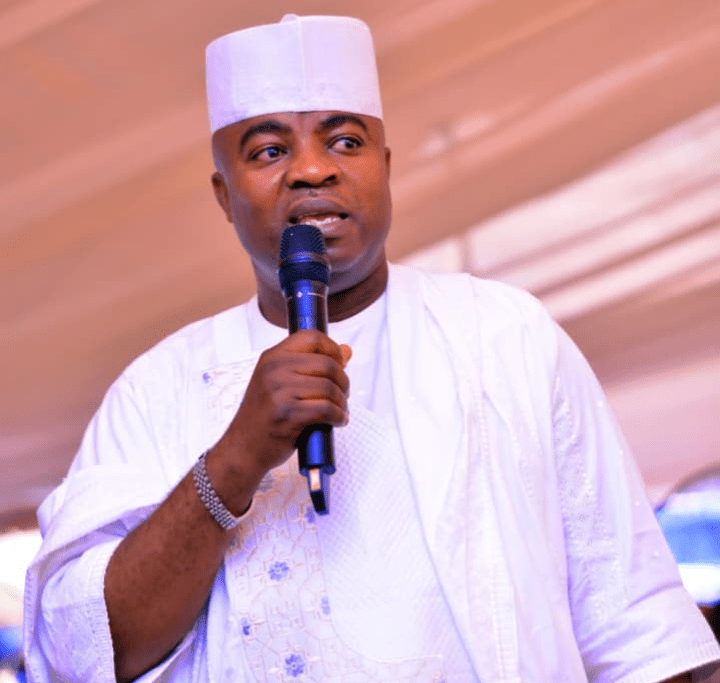
This timeless quote, widely attributed to James Freeman Clarke, perfectly captures the public philosophy of Hon. Akeem Akintayo Amosun, the current Ogun State Federal Commissioner representing the Revenue Mobilisation Allocation and Fiscal Commission (RMAFC).
In both words and actions, Akeem Amosun has demonstrated that statesmanship is not exclusively reserved for the elderly or politically entrenched. His rise reflects a growing belief that purposeful leadership can emerge from vision, conviction, and genuine concern for humanity.
Reading through the powerful speech delivered by Chief Bisi Akande during the 10th anniversary commemoration in honour of the late legal luminary and founder of the Nigeria Advance Party, Chief Tunji Braithwaite, one is reminded of the moral burden politics ought to carry. Akande recalled how Braithwaite boldly preached what many feared to say openly: that politics must be purified and governance must not become “a refuge for rats, cockroaches and mosquitoes.”
That philosophy resonates deeply with Akeem Amosun’s own conviction: “If politics is dirty, why can’t good people go there and clean it up?”
For many observers — including apolitical members of the media — such a perspective offers a refreshing departure from the cynicism that often surrounds Nigerian politics. In a political environment frequently characterised by double-speak, empty promises, and transactional loyalty, Amosun appears determined to chart a different course.
One recurring question among political watchers is whether Akeem Amosun shares any family ties with former Ogun State Governor, Senator Ibikunle Amosun, the man widely credited for redefining the infrastructural landscape of the Gateway State.
The answer is straightforward.
While Senator Ibikunle Amosun, whom Akeem Amosun greatly admires, is an illustrious son of Owu, Akeem Amosun himself hails proudly from Igbore in Abeokuta South Local Government Area of Ogun State. Their connection is rooted more in mutual respect and progressive ideals than bloodline.
Yet, what continues to intrigue political observers is the increasing visibility and grassroots appeal of Akeem Amosun’s humanitarian interventions. Many wonder whether his growing popularity may eventually translate into a larger political movement.
What distinguishes him, however, is that his philanthropy predates his political prominence.
Long before occupying public office, Akeem Amosun reportedly sponsored the overseas medical treatment of a child suffering from a hole-in-the-heart condition in Spain — an intervention carried out quietly, without political fanfare or media publicity.
Also note worthy was his timely intervention during COVID 19 era when he ensured succor and pprotection was given to thousands of indigenes.
Despite holding what many would consider a prestigious federal appointment, he appears convinced that public service should prioritise humanity over personal ambition.
Those close to him describe him as humble, accessible, generous, and deeply committed to uplifting ordinary people. Within less than a year of his current tenure, more than 500 students reportedly secured admissions into tertiary institutions through various support initiatives facilitated by his network — irrespective of ethnic, religious, or political affiliations.
In a country where many qualified students are denied educational opportunities because of financial hardship and systemic exploitation, such interventions carry enormous significance. Beyond admission support, beneficiaries also receive mentorship, counselling, and financial assistance.
One beneficiary, who received a business grant reportedly worth one million naira, became emotional while expressing gratitude for what she described as a life-changing intervention.
According to Amosun, the gesture was also symbolic — a tribute to the late father of the beneficiary, a loyal political associate who remained committed during difficult times.
His political philosophy repeatedly emphasises inclusion. Politics, he insists, should not remain the exclusive preserve of elites.
Another beneficiary — a non-literate trader who received financial support — reportedly struggled to comprehend the alert amount entering her account because of the number of zeros displayed. Notably, these acts were done without media cameras or orchestrated publicity.
Akeem Amosun’s movement also appears built on long-term loyalty rather than opportunistic patronage.
At various political gatherings and mentorship sessions, he reportedly reminds followers that sustainable growth requires patience, commitment, and shared sacrifice — not instant gratification.
Perhaps one of the most remarkable aspects of his empowerment model is its ripple effect. Several beneficiaries of federal appointments and opportunities facilitated through his network have, in turn, returned home to support others within the movement.
To him, empowerment is not complete until beneficiaries themselves become instruments of transformation.
His entrepreneurial interventions also extend to small-scale businesses. Beneficiaries operating Point-of-Sale (POS) businesses under his empowerment scheme reportedly receive startup support covering business registration and operational capital running into hundreds of thousands of naira, without repayment conditions.
Others have received motorcycles and vocational support packages aimed at improving their economic stability.
What, then, explains the expanding appeal of the Akeem Amosun movement across Ogun State and beyond?
The answer may lie in consistency.
Since deciding to participate actively in politics, he appears to have committed fully — investing time, resources, energy, and personal presence into grassroots engagement.
Political associates often describe him as a loyal disciple of former Speaker of the House of Representatives, Rt. Hon. Dimeji Bankole, from whom he reportedly learnt the values of loyalty, dependability, generosity, punctuality, and organisational discipline.
For Akeem Amosun, politics is not merely about elections; it is about building people, sustaining relationships, and creating opportunities that outlive political cycles.
At his popular political gatherings, often referred to as “AK City,” these values are continually reinforced among supporters and young political mentees.
As his influence steadily expands, many now view him as one of Ogun State’s emerging political figures whose contributions to public service and grassroots development continue to attract attention beyond partisan boundaries.
There is , however, no doubting the fact that Honourable Akeem Akintayo Amosun, is made for the top in the political calculation in Ogun State in no distant future, going by his administrative acumen, resourcefulness and high sense of patriotism.
What is increasingly difficult to ignore is the ideology driving it — an ideology rooted in service, accessibility, empowerment, and what may best be described as borderless altruism beyond politics.
•Fatai Adiyeloja, a veteran broadcast journalist and public affairs commentator writes from Abeokuta, Ogun State.
•Opinions, positions or thoughts expressed here are personal and strictly of the writer/author and do not represent the views of The Daily Crucible.