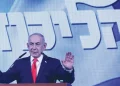





















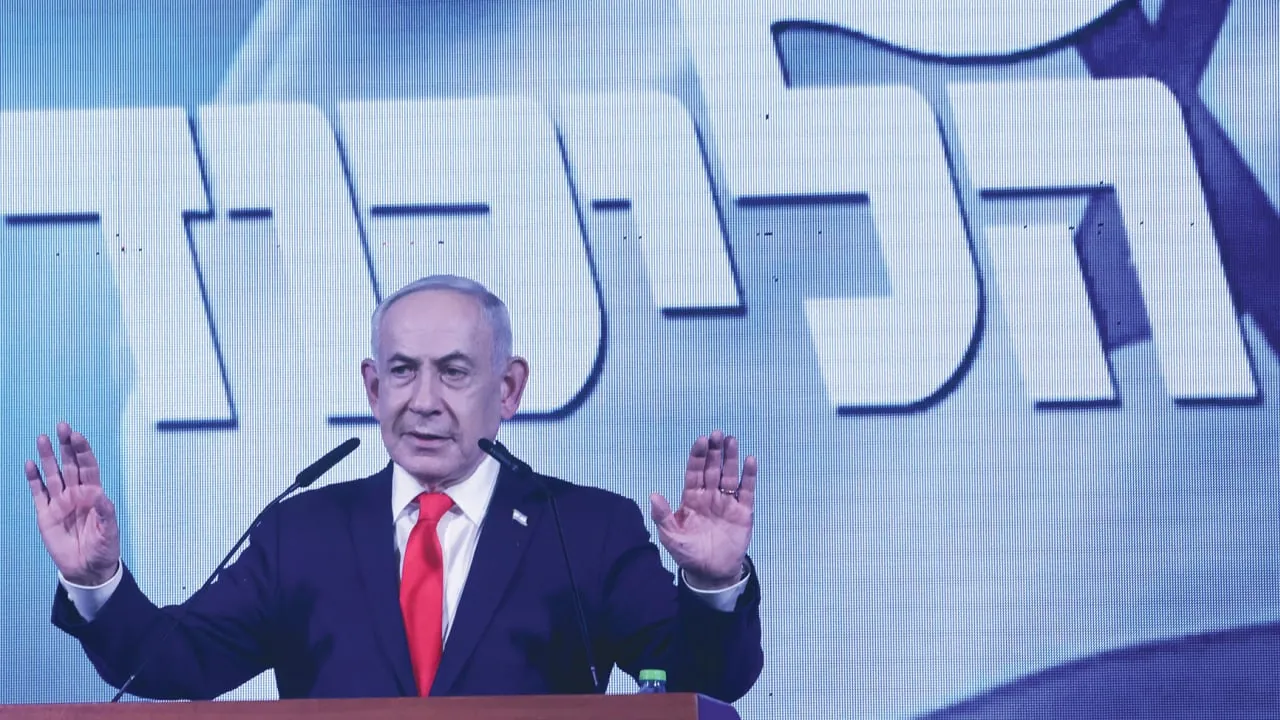
Israeli Prime Minister Benjamin Netanyahu’s political bloc has lost its parliamentary majority after securing 53 seats in the country’s 120-member Knesset, leaving the formation of a new government uncertain.
Final results released early Friday showed the main opposition bloc won 48 seats, while Arab-led parties secured 19 seats, according to the Associated Press.
A coalition requires at least 61 seats to command a majority in the Knesset.
The outcome means Netanyahu’s bloc cannot form a government on its own, setting the stage for complex negotiations among parties with divergent ideological positions.
Netanyahu, Israel’s longest-serving prime minister, remains in office in a caretaker capacity while parties explore possible alliances.
The opposition, led by centrist politician Gadi Eisenkot, could potentially secure a majority by working with Arab-led parties.
However, such an arrangement could prove politically difficult, as some opposition parties had ruled out partnering with them during the campaign.
Another possibility is a unity government involving Netanyahu’s bloc and some opposition parties, though negotiations could also prove difficult, AP reported.
The 19 seats won by Arab-led parties represent a historic showing and could make them influential in determining the next government.
Meanwhile, Netanyahu and his Likud party alleged that Arab-led parties stole the election, potentially with foreign assistance. The claims were not substantiated.
“The right-wing bloc has a clear, decisive majority among the Zionist public, among the Jewish public and all those who support the Jewish state. That is what has become clear. A decisive majority. We must form a strong, national, right-wing government. That is what must be done,” the BBC quoted Netanyahu as telling supporters.
Reacting to the outcome, Eisenkot said, “The public has chosen change. The coalition of failure has lost the people’s trust. The Israeli public voted against Benjamin Netanyahu continuing as prime minister.”
Israel’s election committee said allegations of systematic violations of electoral integrity were baseless, while the Shin Bet security agency said its investigation into possible interference was not intended to cast suspicion on Arab voters.
The results are expected to be certified and submitted to President Isaac Herzog next Wednesday. Herzog will then ask a politician to form a government after consultations with party leaders.
If attempts to form a government fail, Israel could hold another election early next year.
The new Knesset is expected to be sworn in on November 10. Before a new government is formed, the opposition and Arab-led parties could work together to elect a parliamentary speaker and shape the legislature’s agenda.