

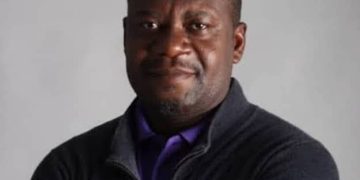
















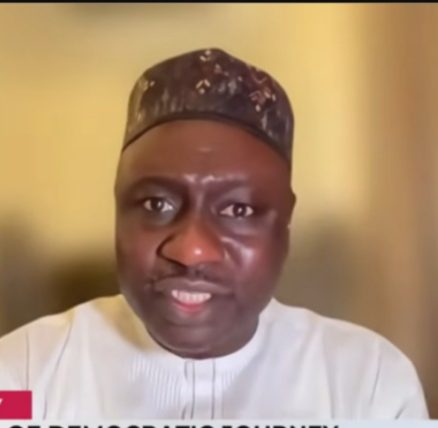
Veteran journalist and founder of Daily Nigerian, Jaafar Jaafar, has criticised the Federal Government’s handling of fuel subsidy removal under President Bola Tinubu, arguing that funds released to state governors was akin to entrusting meat to a hyena for safekeeping .
Jaafar claimed that subsidy removal gains have failed to translate into meaningful relief for ordinary Nigerians because the governors squandered them.
The Editor-in-Chief of Daily Nigerian, made the remarks during a recent interview on Kano-based Premier Radio 102.7 FM, where he questioned what became of the funds freed up by the removal of the petrol subsidy.
According to him, ordinary Nigerians were largely unaware of how the savings from subsidy removal were being deployed, while allocations to state governments increased significantly.
“When the fuel subsidy was removed, the ordinary citizen did not know what was done with the money. Money was increased for the governors; it was distributed to them. Seeing the funds available in their coffers, they went ahead to splurge and squander it,” he said.
Jaafar acknowledged that Tinubu’s administration had made efforts to stabilise Nigeria’s macroeconomic position, including measures that he said had strengthened the country’s foreign reserves.
He, however, drew a sharp distinction between improvements at the macroeconomic level and the everyday economic reality faced by households.
“So, he made an effort to restore that macroeconomic strength from the top level. But at the bottom level — what is called the microeconomy — there is a major problem. He failed on that end,” Jaafar said.
“Certainly, ordinary people are suffering. Goods have become expensive. Life has become difficult.”
The journalist argued that economic reforms should ultimately be measured by their impact on citizens, particularly those struggling to afford basic necessities.
Jaafar was particularly critical of the decision to channel increased resources to governors while asking citizens to look to their state governments for relief from the effects of subsidy removal.
He likened the arrangement to entrusting meat to a hyena for safekeeping.
“How can you entrust meat to a hyena for safekeeping? Do you understand?” he asked.
“The common man is at the receiving end, and we, the ordinary people, are the ones bearing the pain.”
According to Jaafar, governors have strong political incentives to prioritise electoral considerations, which he said could undermine sustained programmes designed to provide economic relief to vulnerable citizens.
“This is because governors will always prioritise their political survival, focusing on how to win the next election. That is their primary focus, not bringing relief or comfort to the masses,” he said.
He also questioned why, despite the additional resources available to state governments, Nigerians were still facing high food prices and an elevated cost of living.
Jaafar further argued that the removal of petrol subsidy should have been accompanied by a comprehensive social welfare system capable of cushioning vulnerable Nigerians from the resulting economic shock.
He cited countries such as the United States and the United Kingdom as examples of nations where government welfare programmes provide support to vulnerable populations.
“Even non-citizens or refugees in the UK, once legally recognised, receive monthly government support if they are unemployed. The government provides them with housing stipends and food allowances,” he said.
He questioned why Nigeria would eliminate what he described as a form of economic relief without establishing a comparable system to protect low-income households.
“So why should our government remove the little subsidy we had without putting in place any proper welfare system like those in the UK or America, which offer far more than the petrol subsidy we were receiving?” he asked.
Hardship and insecurity
The journalist also linked worsening economic hardship to rising criminal activity, arguing that desperation could push some people into crime.
“You remove the fuel subsidy, and then you complain about rising crime rates. Naturally, they will increase because hardship drives crime,” Jaafar said.
“When someone feels suffocated by hardship with no means of survival, he buys a knife, goes out, and attacks someone to steal their phone.”
He cited street gangs and phone-snatching as examples of the types of insecurity he believes can be exacerbated by worsening economic conditions.
‘Make basic necessities affordable’
Jaafar urged the Tinubu administration to pursue policies that would produce tangible improvements in the lives of low-income Nigerians, even if the government does not intend to restore the petrol subsidy.
He said the government should focus on making basic household necessities and staple foods more affordable so that citizens can directly feel the benefits of economic reforms.
“If he will not restore the subsidy, he should devise a strategy that the poor can feel directly,” Jaafar said, arguing that basic items such as food and household products should become more affordable.
Jaafar questions N15tn subsidy savings
The journalist also challenged the significance of the government’s claim that the country has saved about N15 trillion through the removal of the petrol subsidy.
He compared the figure with the scale of welfare spending in the United Kingdom.
“15 trillion Naira is less than 9 billion pounds,” Jaafar said.
“To put that in perspective, the UK spent over 333 billion pounds in the past year alone on social welfare for its people.”
He argued that the comparison demonstrated the scale of investment required to protect vulnerable citizens from severe economic hardship.
“The UK has less than 70 million people, yet they spent that amount on their citizens to ensure social stability, prevent extreme poverty, ensure every child goes to school, and provide free healthcare,” he said.
Jaafar concluded by calling for greater attention to the welfare of ordinary Nigerians, arguing that government economic policies should provide citizens with a sense that the state is responsive to their basic needs.
“Why can’t we in our country think about how to better the lives of the poor?” he asked.
“Every time, it is the wealthy who seek power only to strip away the few subsidies that offer relief to the common man.”
He urged Nigerian leaders to develop initiatives that would provide tangible economic relief and reassure citizens that government policies are designed not only to improve economic indicators but also to improve living conditions.