




















By Hadiza Mohammed, Northern Operation
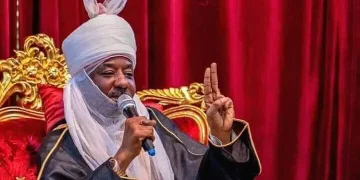
The Sultan of Sokoto and President-General of the Nigerian Supreme Council for Islamic Affairs (NSCIA), His Eminence Alhaji Muhammadu Sa’ad Abubakar III, and the President of the Christian Association of Nigeria (CAN), Most Rev. Dr Daniel Okoh, have urged Nigerians to reject hate speech and embrace dialogue as the foundation for lasting peace and national unity.
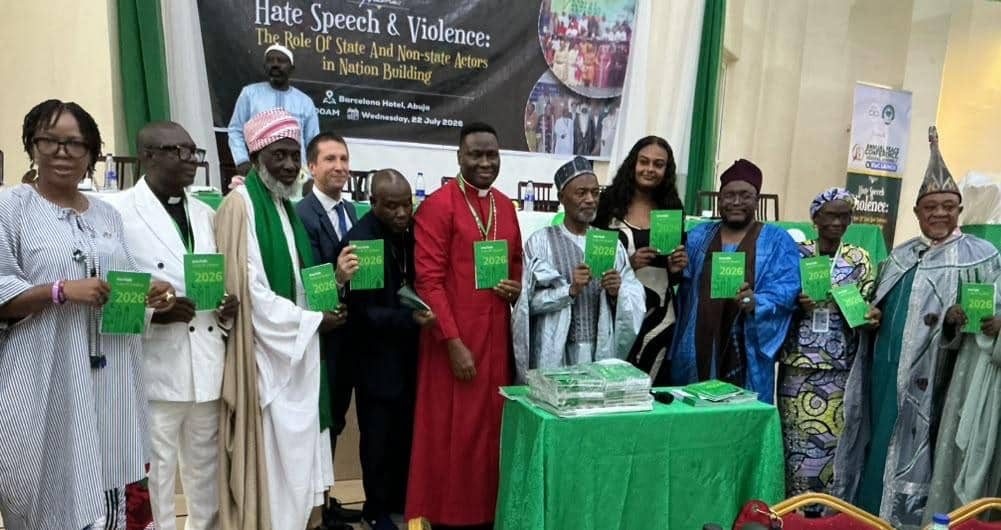
The appeal was made on Thursday at the Abuja Peace Conference, held as part of the 8th General Assembly of the Interfaith Dialogue Forum for Peace (IDFP), where Christian and Muslim leaders officially launched the Interfaith Code of Conduct (ICoC).
Represented by Prof. Muhammad Isah Maishanu, the Sultan said religious leaders have a sacred responsibility to use their influence to promote peace rather than deepen divisions.
He warned that inflammatory rhetoric and hate speech continue to fuel conflicts across communities, stressing the need for faith leaders to champion tolerance, mutual respect and understanding.
According to him, the newly unveiled Interfaith Code of Conduct provides a practical framework for strengthening collaboration between Christians and Muslims while promoting responsible religious leadership committed to peaceful coexistence.
The Sultan maintained that dialogue remains the most effective tool for resolving differences, urging Nigerians to see the country’s religious diversity as a source of strength rather than division.
Also speaking, the CAN President, Archbishop Daniel Okoh, represented by Most Rev. Dr Benebo Fubara-Manuel, described the launch of the Code as a major milestone in Nigeria’s peacebuilding efforts.
He said the initiative reflects the shared commitment of Christian and Muslim leaders to promoting harmony and tackling the root causes of violence and intolerance across the country.
Okoh urged religious leaders to translate the principles of the Code into concrete actions through sermons, public engagement and community-based peace initiatives.
He also called on government institutions, civil society organisations, traditional rulers and the media to support the implementation of the Code, noting that building a peaceful nation requires collective responsibility.
According to him, faith leaders must continue to champion dialogue, reconciliation and justice while discouraging messages capable of inciting violence or promoting religious hatred.
The Interfaith Code of Conduct was unveiled during the two-day IDFP General Assembly in Abuja with the theme, “Hate Speech and Violence: The Role of State and Non-State Actors in Nation-Building.”
Developed through a Nigerian-led interfaith process with support from the International Dialogue Centre (KAICIID), the Code outlines 10 core values, including mutual respect, protection of human dignity, peaceful conflict resolution, justice, transparency, compassion and the rejection of hate speech.
Participants at the conference resolved to promote the Code across churches, mosques, schools, media organisations and communities nationwide to strengthen national cohesion and prevent conflicts.
They also called for sustained collaboration among religious leaders, government agencies and other stakeholders to ensure interfaith dialogue remains central to Nigeria’s peacebuilding and nation-building efforts.