























The United States and Iran have taken a major step toward ending months of hostilities after their leaders electronically signed a memorandum of understanding aimed at formally ending the conflict and opening a new phase of diplomatic engagement.
US Vice President JD Vance announced on Thursday that a 60-day negotiation period between Washington and Tehran had officially commenced, adding that the blockade on Iranian ports had been lifted as part of confidence-building measures under the agreement.
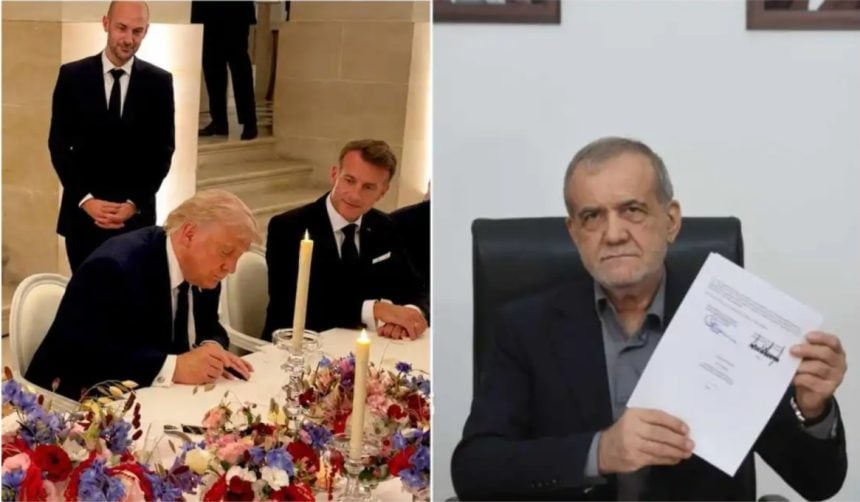
The development follows the electronic signing of the memorandum by US President Donald Trump and Iranian President Masoud Pezeshkian, marking what officials described as a significant breakthrough in efforts to de-escalate tensions between the two countries.
The agreement is expected to serve as a framework for further negotiations on security, economic cooperation, sanctions relief and regional stability during the two-month diplomatic window.
In Tehran, Iran’s Supreme Leader, Mojtaba Khamenei, acknowledged that he initially held reservations about the deal but ultimately approved it after receiving assurances from the Iranian president and senior officials.
“I had a different opinion,” Khamenei said, according to Iranian state media. He explained that he granted permission for the agreement after President Pezeshkian personally committed to safeguarding the rights of the Iranian nation and the interests of what he described as the “resistance front,” while explicitly accepting responsibility for the outcome.
The lifting of restrictions on Iranian ports is expected to ease pressure on the country’s economy and facilitate the movement of goods and commercial activity, a move analysts view as an early sign of goodwill between the two sides.
While details of the memorandum have yet to be fully disclosed, the accord is being seen as a potentially historic turning point in US-Iran relations, raising hopes that decades of mistrust and recurring confrontations could give way to sustained diplomacy.
Officials from both countries are expected to begin formal talks immediately as the 60-day negotiation period gets underway, with the international community closely monitoring whether the agreement can deliver a lasting peace.
The United States and Iran signed a landmark 14-point Memorandum of Understanding (MoU) aimed at ending hostilities, reopening the strategic Strait of Hormuz, easing economic restrictions and paving the way for a comprehensive peace and nuclear agreement within 60 days.
The agreement, signed electronically by U.S. President Donald Trump and Iranian President Masoud Pezeshkian, is being hailed as the most significant diplomatic breakthrough between the two countries in years, following months of heightened tensions and conflict.
Under the deal, both sides committed to an immediate and permanent cessation of military operations, including in Lebanon, and pledged to refrain from future threats or use of force against each other.
The memorandum, The Daily Crucible gathered, also requires both nations to respect each other’s sovereignty and territorial integrity while negotiating a final agreement within a 60-day window that can be extended by mutual consent.
A key component of the accord is the reopening of the Strait of Hormuz, one of the world’s most important energy corridors. Iran is expected to facilitate safe commercial navigation through the waterway, while the United States will begin lifting its naval blockade and restrictions on Iranian maritime activities within 30 days.
The memorandum also outlines significant economic incentives. Washington agreed to begin the process of easing sanctions, allow Iranian oil exports through waivers, and discuss the release of frozen Iranian assets. In addition, the U.S. and regional partners are expected to develop a reconstruction and economic development package for Iran worth at least $300 billion as part of a final settlement.
On the nuclear issue, Iran reaffirmed that it would not seek or develop nuclear weapons. However, more contentious matters—including the future of Tehran’s nuclear programme, enriched uranium stockpiles and long-term verification mechanisms—have been deferred to the next phase of negotiations.
While supporters have welcomed the agreement as a major step toward regional stability and the restoration of global energy flows, critics in the United States have argued that the deal grants Tehran substantial economic concessions without imposing tougher restrictions on its nuclear and missile programmes.
The signing of the memorandum starts a critical 60-day diplomatic countdown during which both governments will attempt to transform the interim arrangement into a comprehensive and lasting agreement.