





















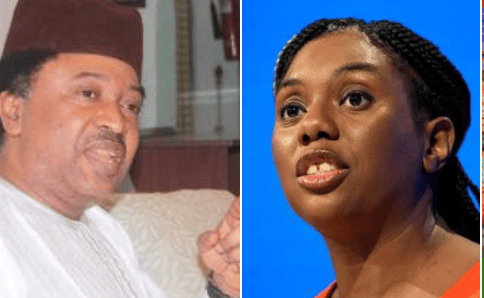
Former Kaduna Central Senator Shehu Sani has criticised UK Conservative Party leader Kemi Badenoch over her remarks about Nigeria, warning that consistently portraying one’s country of origin in a negative light does not necessarily guarantee acceptance in Britain.
Sani made the remarks in a post on X, where he questioned Badenoch’s efforts to assert her British identity while, in his view, facing continued reminders of her Nigerian heritage.
“Kemi is fighting hard to be identified as British and the Whites keeps reminding her of her roots and where she belongs,” the former lawmaker wrote.
He argued that repeatedly depicting one’s ancestral homeland negatively would not necessarily make the individual more acceptable to Western audiences.
“This is a message to all; you can’t continuously tell the World that your ancestral homeland is full of evil and think that that will make you acceptable to the World,” Sani said.
The former senator further suggested that people risk becoming associated with the negative characterisations they make about their countries of origin.
“You are an extension of whatever you say about your country,” he added.
Sani’s comments come amid renewed debate over Badenoch’s views on national identity, immigration and aspects of Nigeria’s political and social environment.
Badenoch, who represents North West Essex in the UK Parliament, recently expressed concerns about what she described as attempts by members of Reform UK to question people’s identities.
Speaking at the 2026 Conservative Party Conference, she said she did not want to live in a country where the identities of her mixed-race children could become a subject of debate.
“I don’t want to live in a country run by people who threaten journalists, who call veterans traitors, and who debate whether my mixed-race children are English,” she said.
Born in the United Kingdom, Badenoch spent part of her childhood in Nigeria before returning to Britain. She has previously made critical remarks about Nigeria, drawing reactions from Nigerians and members of the diaspora.
Sani’s intervention has added to the wider debate over national identity, belonging and the relationship between public figures and their countries of origin, particularly among people with connections to both Nigeria and the United Kingdom.