





















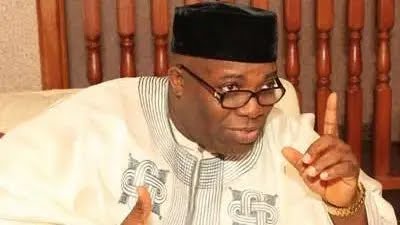
More than a year after his death in March 2025, the late Dr. Doyin Okupe is once again at the centre of a national conversation—not as a politician or physician, but as a communicator whose ability to defend government policy continues to shape discussions about what makes an effective presidential spokesman.
At the 45th edition of the Boiling Point Arena public discourse, veteran journalist and former Managing Director of The Guardian, Mr. Martin Oloja, described Okupe as the best presidential spokesman Nigeria has produced in the democratic era, arguing that his success came not from his medical background but from his exceptional communication skills, emotional intelligence and strategic thinking.
For many Nigerians who watched Okupe through different administrations, his career was one of remarkable reinvention. Trained as a medical doctor, he successfully crossed into politics and public communication, becoming one of the country’s most recognisable government voices. Whether defending controversial policies or addressing difficult national issues, Okupe possessed an ability to explain government positions with confidence, composure and persuasive clarity.
Speaking during the discussion themed “Journalism Is Not Public Relations: Why Many Successful Journalists Are Misfits in the Reputational Management Role,” Oloja argued that academic qualifications alone do not produce effective government communicators.
“Dr. Doyin Okupe, of blessed memory, remains one of the best presidential spokespersons in this democratic dispensation. He was a medical doctor, yet he communicated government positions with clarity, confidence and remarkable articulation,” Oloja said.
According to him, organisations today increasingly value emotional intelligence, storytelling ability, strategic thinking and the capacity to persuade stakeholders over formal academic credentials in communication.
Oloja also pointed to former Information Minister Prof. Jerry Gana as another example of an outstanding government communicator, praising his calm, factual and intellectual style of public engagement.
While Oloja was unequivocal in naming Okupe as the benchmark for presidential spokespersons, other communication experts preferred a broader assessment.
Public relations strategist Dr. Eddy Ademosu declined to rank individual spokespersons, insisting that excellence should instead be measured through reputation management, strategic communication, institutional leadership and ethical conduct. He argued that the most effective presidential advisers are those who possess policy fluency, crisis management skills, cultural intelligence and the discipline to shape public narratives without sacrificing credibility.
For his part, President of the Nigerian Institute of Public Relations (NIPR), Dr. Ike Neliaku, urged caution in making absolute judgments.
“Circumstances differ,” he said, noting that every administration faces unique communication realities that demand different strengths from its spokespersons.
Despite their differing perspectives, all three experts agreed on one important lesson from Okupe’s legacy: successful presidential communication is built less on academic qualifications and more on integrity, emotional intelligence, sound judgment, credibility and the courage to provide honest professional counsel.
For those who followed Nigerian politics over the past three decades, Okupe’s story remains one of resilience and adaptability. A physician who became one of the country’s most prominent political communicators, he demonstrated that the art of public persuasion often depends more on clarity of thought, confidence and strategic judgment than on one’s original profession.
As debates continue over who ranks among Nigeria’s greatest presidential spokespersons, Martin Oloja’s endorsement has reignited public reflection on a man whose voice, style and communication instincts left a lasting imprint on democratic governance.
Although opinions may differ on the title of “best,” the renewed recognition of the late Dr. Doyin Okupe underscores a broader truth: the most enduring communicators are remembered not simply for speaking on behalf of power, but for their ability to connect government with the people during moments that mattered most.