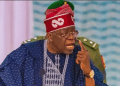

























President Bola Ahmed Tinubu has directed that all cleared and unencumbered looted funds recovered by the Economic and Financial Crimes Commission, EFCC, be transferred to the *Nigerian Education Loan Fund, NELFUND*, to strengthen financing for tertiary education.
The President also ordered that funds in the Unclaimed Dividends Trust Fund and the Dormant Accounts Trust Fund be mobilised for NELFUND, subject to compliance with existing laws.
Minister of Education, Dr. Tunji Alausa disclosed this on Wednesday while briefing journalists at the State House, Abuja, after the fourth Federal Executive Council, FEC, meeting of the year presided over by President Tinubu.
Alausa described the decisions as “a major boost for Nigerian students” and clarified that only liquid funds legally recovered and no longer subject to litigation would be affected.
“The President was very clear: not seized properties, all recovered looted funds, liquid funds recovered by the EFCC will now be transferred to NELFUND,” the minister said.
According to him, the President directed the Attorney-General of the Federation and Minister of Justice, the Minister of Finance, the Ministry of Education, the Debt Management Office and other relevant agencies to work out the legal and operational framework for transferring the affected funds.
“The Attorney-General, he added, would also work with the EFCC Chairman to identify recovered funds that are legally available for transfer.
“Every single fund that is still subject to a legal challenge will not be part of the money that will be transferred to NELFUND. The funds that will be transferred will be all cleared funds, unencumbered funds that were looted, funds that legally belonged to Nigeria, to Nigerians,” Alausa said.
He said the government would similarly examine existing legislation governing the Unclaimed Dividends and Dormant Accounts Trust Funds to determine the legal steps required to make the resources available to NELFUND.
*”Education Cannot Wait”*
The minister said President Tinubu considers education one of the most productive uses for recovered public funds, as the administration pursues its ambition of growing Nigeria into a $1 trillion economy.
“The education of our children cannot wait; it is of utmost importance to him, and he will do anything and everything to protect the future of every single Nigerian child, every single Nigerian student,” Alausa said of the President.
He said the directive was intended to put NELFUND on a sustainable financial footing as demand for the student loan scheme expands.
According to him, more than *1.2 million Nigerian students* are currently benefiting from NELFUND. The Fund has disbursed *over N93 billion* as upkeep allowances and *more than N250 billion* as institutional fees to public tertiary institutions across the country.
Alausa described the student loan programme as fulfilment of one of Tinubu’s campaign promises to broaden access to tertiary education irrespective of students’ financial backgrounds.
He also addressed complaints about institutions withholding refunds from students who had paid school fees before NELFUND remitted their charges. He said a framework requiring institutions to refund affected students within a stipulated period had been established, and that reported difficulties during the scheme’s early stages had been resolved.
Meanwhile, FEC approved an augmentation of about N118.31 billion to complete the long-abandoned *National Library of Nigeria headquarters complex in Abuja, and about N37 billion* to furnish it.
Alausa said the project, which commenced on April 29, 2006 and was scheduled for completion in two years, had remained abandoned since work stopped in October 2008.
“The council today approved the augmentation of the existing contract for the completion of the construction of the National Library of Nigeria headquarters building complex in Abuja,” he said, adding that construction is expected to resume within months.
He credited First Lady Senator Oluremi Tinubu* for mobilising about *N25 billion* toward the project after requesting that birthday gifts be directed to it. Funding will also be sourced through the Tertiary Education Trust Fund, TETFund.
Council also approved the establishment of the *Nigerian Academy for the Gifted and Talented*, through the transformation of the existing Suleja Academy.
Alausa explained that Suleja Academy, established to nurture exceptionally gifted children, had operated largely like a Federal Government College.
“We have to look for every single genius in this country and bring them in, nurture them, and let them help create the Nigeria of tomorrow,” he said.
FEC approved the preparation of an executive bill by the Attorney-General for transmission to the National Assembly to give legal effect to the transformation. The academy will have autonomous governance and diversified funding including federal appropriation, endowments and gifts.
Council further approved the rollout of an *Entrepreneurship, Innovation and Business Incubation Certification programme* in 14 federal universities this year.
The pilot institutions are: Ahmadu Bello University, Zaria; Bayero University, Kano; Nnamdi Azikiwe University, Awka; Obafemi Awolowo University, Ile-Ife; University of Abuja; University of Benin; University of Ibadan; University of Ilorin; University of Jos; University of Lagos; University of Maiduguri; University of Nigeria, Nsukka; University of Port Harcourt; and Usmanu Danfodiyo University, Sokoto.
Alausa said the technology-driven programme, already tested at UNILAG, is designed to shift graduates from job-seeking to job creation through certification, mentorship and incubation support.
He said the approvals reflected the administration’s determination “to position education at the centre of Nigeria’s economic transformation and ensure that young Nigerians acquire both academic knowledge and practical capabilities required to participate in the emerging economy.”