





















By Jane Okafor, Abuja
President Bola Ahmed Tinubu has declared that reducing the cost of living will remain a central priority of his administration, with the government focusing on cutting the cost of producing, transporting and distributing goods and services across Nigeria.
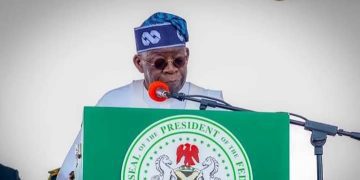
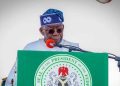
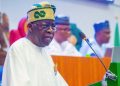
Tinubu made the commitment in his Independence Day address to Nigerians as the country commemorated its 66th anniversary, using the occasion to defend his administration’s economic reforms and outline what he described as the next phase of Nigeria’s economic transformation.
The President said Nigeria had survived decades of military rule, civil conflict, economic crises, insecurity and political instability because of the resilience and determination of its people.
He said the country’s independence had always represented more than the raising of a national flag, arguing that the struggle for self-rule was ultimately about giving Nigerians the freedom and opportunity to determine their own future.
According to him, Nigeria’s founding generation envisioned a united and prosperous country capable of commanding influence both within Africa and globally.
“Sixty-six years later, Almighty God has made it our responsibility to deliver that promise,” Tinubu said.
He paid tribute to farmers, traders, teachers, entrepreneurs, members of the Armed Forces and security agencies, saying their contributions and sacrifices had helped sustain the nation and protect its sovereignty.
Tinubu Defends Economic Reforms
The President used the anniversary address to defend the economic decisions taken by his administration, saying successive governments had for decades postponed difficult choices and allowed structural weaknesses in the economy to worsen.
He argued that Nigeria had now reached a critical stage after about three years of economic reforms, saying the country was moving from the difficult process of correcting distortions to a new phase focused on delivering prosperity to citizens.
“The age of reform has done its work. Now begins the age of prosperity,” he declared.
Tinubu maintained that the reforms did not create Nigeria’s longstanding economic problems but were introduced to tackle distortions that had accumulated over many years.
Using a medical analogy, he compared the economy to a patient suffering from cancer, arguing that fundamental treatment was required rather than temporary measures that merely eased the symptoms.
“For too long, Nigeria’s leaders chose morphine while praying for a miracle that never came,” he said.
He said his administration instead opted to confront the underlying problems, even though doing so had imposed significant economic hardship on citizens.
The President consequently rejected calls for the government to reverse the reforms, particularly measures involving subsidies, warning against a return to what he described as the misuse of subsidies.
President Highlights Economic Gains
Tinubu said the economy was beginning to show signs of improvement following the reforms, citing growth of more than four per cent in 2026 and contributions from both the oil and non-oil sectors.
He also pointed to reduced oil theft, a significant decline in inflation from its previous peak, stronger foreign reserves and increased stability in the foreign exchange market as evidence of progress.
The President said Nigeria recorded more than $6 billion in non-oil export revenue in 2025, describing it as the highest figure ever recorded.
“These are not idle claims. International observers, journalists, NGOs and multilateral institutions can see the change,” he said.
Tinubu also said the private sector was responding positively to the changing economic environment and that foreign direct investment was continuing to increase.
He stressed, however, that economic prosperity should not be measured solely by headline growth figures or other macroeconomic indicators.
“When I speak of prosperity, I do not speak merely of a larger economy, abstract numbers or better statistics. I mean something much more personal,” he said.
Lower Production, Transport Costs to Drive Cheaper Goods
The President said the next stage of his administration’s economic programme would focus on making it cheaper to produce and move goods across the country.
He described his vision of prosperity as one in which farmers could cultivate their land safely, increase production and earn better returns; manufacturers could access reliable electricity; businesses could obtain affordable credit; and young Nigerians could find productive employment.
He said the government would expand mechanised agriculture, irrigation and dry-season farming while improving farmers’ access to seeds, fertiliser and modern equipment.
Investment in storage facilities and transportation, he added, would help reduce losses between farms and markets.
Tinubu also said road, rail and port infrastructure was being developed and completed to improve the movement of agricultural and industrial goods.
He explained that lowering production and logistics costs would eventually translate into lower prices for consumers.
“Our logic is simple. When a farmer produces more cheaply, when fewer crops are lost between the farm and the market, when a manufacturer spends less on electricity, when a truck reaches its destination faster, and when the business environment fosters fair competition, all those savings will ultimately find their way into the price of goods in the market,” he said.
Jobs, Industry at Centre of Next Phase
Tinubu said productive employment would be essential to Nigeria’s transition to broad-based prosperity, particularly given the country’s large and youthful population.
“We are therefore placing jobs, enterprise, and industrial growth at the heart of our government’s policies,” he said.
The President said the government would leverage Nigeria’s gas resources to support industrial development, assist businesses seeking to reopen or expand factories, improve digital connectivity and develop skills aligned with the needs of employers.
He also pledged to provide businesses with infrastructure and access to finance to enable them to expand.
“I want to see more Nigerians making things. I want to see more Nigerian farms feeding our cities and supplying our factories. I want to see Nigerian businesses selling Nigerian goods to the whole world. I want young Nigerians building unicorns and creating opportunities for others here at home,” he said.
Tinubu Acknowledges Cost-of-Living Pressure
Despite the economic gains he cited, Tinubu acknowledged that millions of Nigerians remained under severe financial pressure.
He said many households were still struggling to pay for food, education, healthcare and transportation.
According to the President, these challenges predated his administration and reflected the accumulated impact of decades of weak productivity, inadequate infrastructure, limited economic opportunities and institutions that had failed to adequately protect vulnerable citizens.
“We cannot erase in four years what accumulated over generations. But we can change its course,” he said.
Tinubu said his administration was strengthening direct assistance to poor households and improving the National Social Register to ensure that government support reached people who genuinely needed it.
He also cited the Nigerian Education Loan Fund, saying the programme was helping students from low-income families access higher education despite their inability to afford tuition and other expenses.
The President further highlighted CREDICORP, which he said was expanding access to consumer credit for working Nigerians seeking to acquire vehicles, solar power systems, digital devices and other essential assets.
He added that the Federal Government would continue working with state and local governments to strengthen primary healthcare, basic education and other essential services.
Tinubu also said salaries and pensions had been paid fully and on time since 2023, while reforms to the national pension system were designed to provide greater protection for retirees and vulnerable citizens.
“These programmes are not substitutes for prosperity. They are a bridge to aid our nation’s citizens on their path towards it.
“Our objective is not to manage poverty more efficiently. We will defeat it,” he said.
‘No Looking Back’
Tinubu acknowledged that achieving widespread prosperity would require time, discipline, sustained economic growth and the creation of millions of productive jobs and business opportunities.
He nevertheless expressed confidence that Nigeria was entering the next phase from a stronger economic position, arguing that the major distortions had been confronted and the foundations for long-term growth had been laid.
“We confronted the difficult choices we faced and have laid the foundations for lasting prosperity,” he said.
The President urged Nigerians to remain focused on the future, describing the country as having “passed through our own Red Sea” and warning against returning to the policies of the past.
He envisioned a Nigeria where prosperity would be widely shared, children could aspire beyond the circumstances of their birth and the country’s vast economic potential would translate into improved living standards.
“The Promised Land before us is a Nigeria of abundance and opportunity; a nation where prosperity is broadly shared, where every child can dream beyond the circumstances of his birth, and where our country’s immense promise is finally reflected in the lives of our people,” he said.
“Our destination is in sight. Our foundations are strong. Our direction is clear. So let us go forward. No looking back.”
Tinubu concluded by calling on Nigerians to move forward together with confidence in themselves and in the country, saying the sacrifices made during the reform period would ultimately produce lasting benefits.