





















By Ayobami Ife, Abeokuta
It was a grand display of style, culture, and glamour on Friday as the Ijebu people of Ogun State celebrated the 2026 edition of the Ojude Oba Festival with elegance and splendour characteristic of the ancient kingdom.
Despite the absence of the late Awujale and Paramount Ruler of Ijebuland, Oba Sikiru Kayode Adetona, Ogbagba II, who passed on July 13, 2025, at the age of 91 after an impactful 65-year reign, the festival retained its vibrancy and cultural significance.
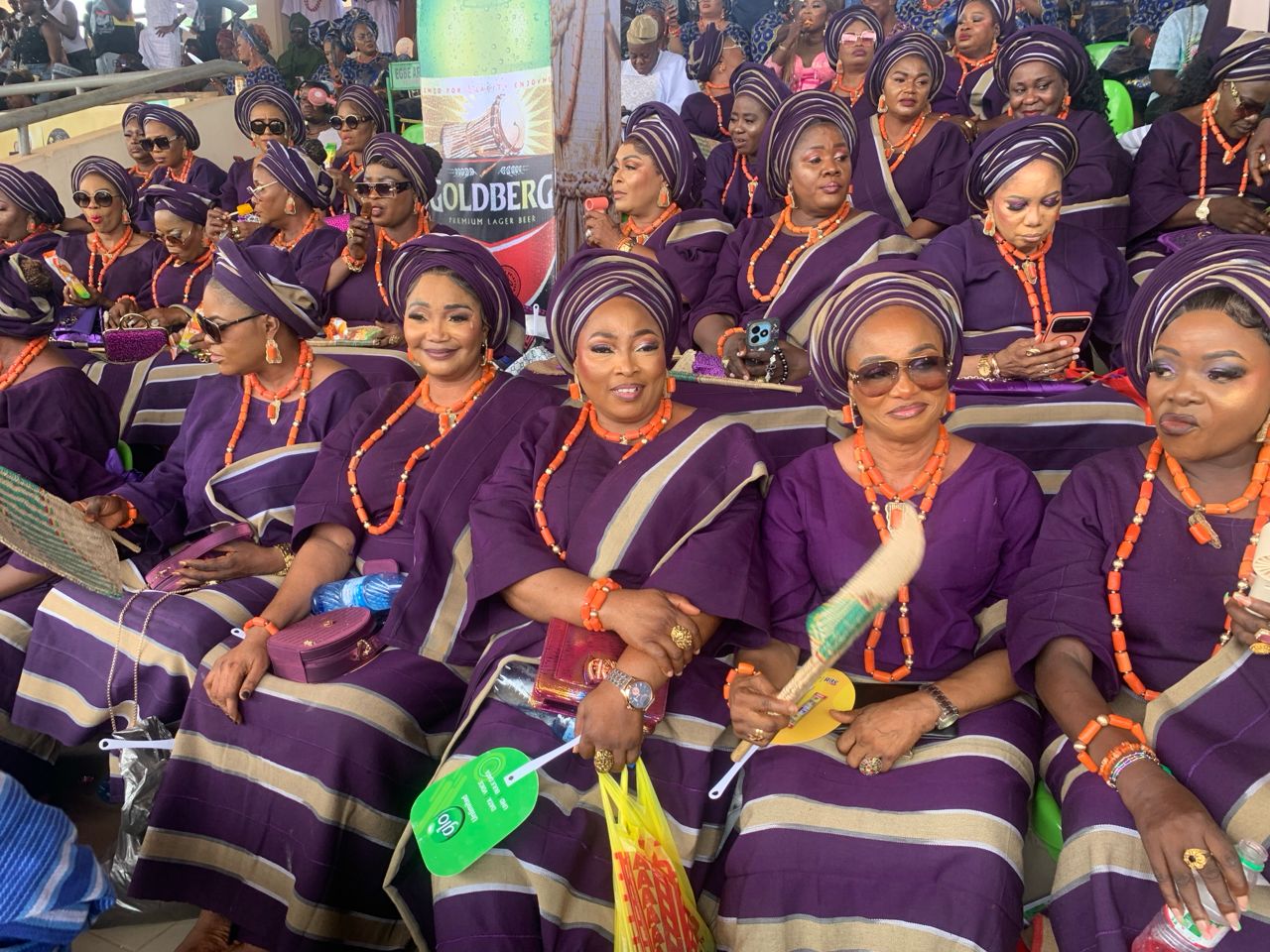
The atmosphere across Ijebu-Ode was electrifying, with sons and daughters of Ijebuland dressed in colourful and stylish attires that reflected class, tradition, and cultural pride.
The over-a-century-old festival, which showcases the enterprise, unity, accomplishments, and religious harmony of the Ijebu people, has remained a major rallying point for the ethnic group. For decades, the late Oba Adetona stood as the symbol of the enduring heritage and identity of the Ijebu nation.
The Oba Sikiru Adetona Pavilion in Ijebu-Ode, venue of the festival, came alive with a kaleidoscope of colours as various age-grade groups, known as Regberegbe, took turns in rhythmic dance processions to pay homage to the revered monarch, fondly referred to as Orisa Ijebu — the Oracle of Ijebuland.
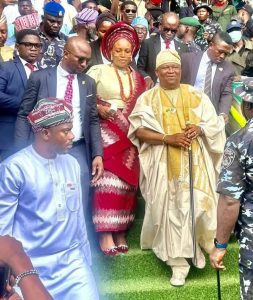
•Senator Solomon Olamilekan Adeola and wife
Among dignitaries seated at the pavilion were Ogun State Governor, Prince Dapo Abiodun; Senator Solomon Olamilekan Adeola and his wife, Seyi Tinubu, son of President Bola Ahmed Tinubu; captains of industry; and the Minister of Art, Culture, Tourism and Creative Economy, Barrister Hannatu Musawa.
An estimated 25,000 people, including tourists, guests, and well-wishers, attended the festival physically and virtually. The celebration has often been compared in grandeur and pageantry to Brazil’s Rio Carnival and London’s Notting Hill Carnival.
As early as 9 a.m., the stadium-like arcade built for the festival had begun receiving a massive influx of celebrants and spectators. By noon, the crowd had spilled into the Awujale Archway, Folagbade Street, adjoining roads, and the Itoro headquarters of the Ijebu-Ode Local Government Council.
Every corner of the town echoed with drumbeats and traditional music as local entertainers thrilled guests in festive excitement.
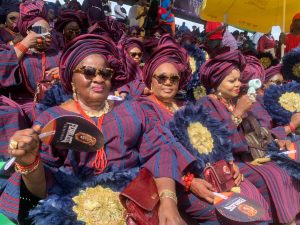
By 10 a.m., the Regberegbe groups had commenced the homage procession traditionally reserved for the Awujale.
The festival later assumed its famous equestrian dimension with the colourful parade of the Baloguns and Eleshins — descendants of Ijebu war heroes and legendary horse riders who fought historic wars during the turbulent era of Yoruba inter-tribal conflicts.
Among the prominent families represented were Balogun Odunnuga, Balogun Bello Odueyungbo Kuku, Balogun Agboola Alausa, Balogun Alatishe, Balogun Otubu, Balogun Adesoye, Balogun Odejayi, Balogun Towobola, Balogun Aregbesola, and Balogun Ajibike Odedina.
Others included Balogun Sarunmi, Balogun Areagba, the Eleshin Keregbetu family, Eleshin Oyewole family, and Eleshin Josi family.
The horse riders gallantly rode into the pavilion in triumphant fashion, reminiscent of victorious warriors returning from battle. Their dramatic entries were accompanied by the staccato blasts of dane guns, adding excitement and historical symbolism to the spectacle.
Originally a Muslim religious gathering in Yorubaland, Ojude Oba took root in Ijebu-Ode following the settlement of the first Muslim converts during the reign of Awujale Adesimbo Tunwase around 1889. Horse riding was not initially part of the celebration until the reigns of Oba Adenuga Folagbade and Oba Adesanya.
However, the festival attained national and international prominence during the reign of Oba Sikiru Adetona, whose over six decades on the throne transformed Ojude Oba into one of Nigeria’s biggest cultural tourism events.
This year, many horse riders thrilled spectators with impressive displays of skill and horsemanship, prompting calls from notable Ijebu sons for more time to be allocated to equestrian performances in future editions.
The festival also recorded significant economic impact across Ijebuland. Hospitality businesses boomed as hotels, caterers, printers, transporters, tailors, artists, souvenir vendors, and event planners witnessed brisk patronage.
Observers estimated that business activities generated well over N100 million during the celebration, while corporate organisations such as Globacom leveraged the event to deepen brand visibility among grassroots communities.