













The Christian Association of Nigeria (CAN) in the 19 Northern states and the Federal Capital Territory, alongside the Ecumenical Synods of Bishops, Archbishops, Apostles and Senior Clergy, has dismissed United States President Donald Trump’s claim that American military intervention had ended the killing of Christians in Nigeria.
The church leaders described the assertion as false, misleading and disconnected from the realities on the ground, warning that such claims could undermine the country’s ongoing security challenges.
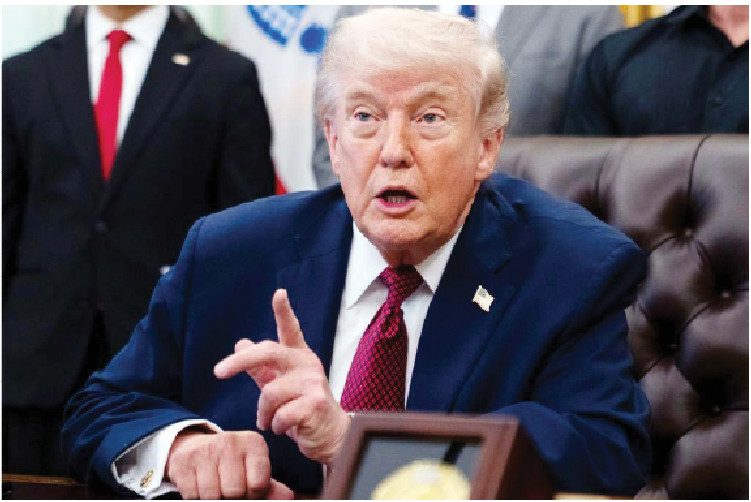
Trump, speaking at an event in Washington on Friday, claimed that recent US military action in Nigeria had largely halted attacks on Christian communities, particularly in areas plagued by insurgency and violent extremism.
“As you know, we recently struck Nigeria and largely ended the slaughter of great Christian populations,” the US President said.
He added: “They have a great Christian population. They were being butchered, thousands and thousands of people were being killed, children, women, old people, just being slaughtered, hacked to death.”
Trump further claimed the military action dealt a decisive blow to those behind the attacks.
“They know that if they go further, the attack will be far greater and that they don’t want to really get involved anymore so much. We hit them very hard. We knocked out their leader. We knocked out their second leader and their third leader,” he said.
Reacting to the remarks, CAN Chairman for the 19 Northern states and the FCT, Rev. Joseph Hayab, insisted that insecurity remained widespread, stressing that both Christians and other Nigerians continued to suffer killings and abductions across the country.
Hayab maintained that only Nigerians directly affected by insecurity could determine whether any meaningful progress had been made by Trump’s intervention, according to Sunday PUNCH report.
“The right people who should tell whether Trump has succeeded should be Nigerian Christians or Northern Christians, not Trump himself. But probably he is getting his information from the wrong source. I think some of his political claims are not good enough to resolve things.
“Trump should allow the victims to make that confession, not him. The victims are the right people who can tell whether whatever he has done has yielded any success,” he said.
While acknowledging recent US strikes against terrorist elements, Hayab argued that the operations had not ended attacks on innocent Nigerians.
“The strategy Trump’s America is adopting is not good enough because after the US forces struck in Sokoto last December, they went on a long recess. They came recently again and killed some ISIS commanders, but people are still being killed here every day,” he said.
He urged the US administration to prioritise practical support over political messaging.
“We don’t know those who are advising or telling him stories that are not true. If they want to truly bring an end to the killing of innocent Nigerians, let them stop the propaganda or the media story and focus on the reality, because I’m not sure the victims would like this kind of claim.
“I think he needs to be properly informed about what is happening rather than claiming what is not, because if someone is still sick and in hospital and you claim that he has recovered, it means you have either been misinformed or you probably do not understand what it means to be ill.
“We want help, but the help shouldn’t be propaganda. It should be genuine help, not propaganda or misinformation. All those people who are still in bandits’ captivity in Oyo, Kwara and Kogi, what has happened? People are still in Kwara, Katsina, Borno and other states. Trump and his men can find a better story.
“We want help to bring an end to the killings, not Trump making claims for political gains. Those who are giving him information are not giving him the right one,” he added.
The Ecumenical Synods of Bishops, Archbishops, Apostles and Senior Clergy also questioned Trump’s assertion, saying there was no convincing evidence that the reported US intervention had achieved its objective.
The International Secretary of the body, Archbishop Osazee William, said Nigerians expected a more comprehensive intervention capable of addressing the root causes of insecurity.
“I don’t seem to agree with him because, in the first place, I have yet to see evidence of that claim. I think there was a kind of warning strike in Sokoto, but I didn’t see any visible killing.
“This is not the kind of intervention we were hoping and looking forward to. We are looking at a good intervention. I saw what we had after that time,” he said.
William also expressed concern over reports of possible behind-the-scenes negotiations that may have influenced Washington’s position on Nigeria’s security situation?
“It has been rumoured that there has been a kind of high-level bargain to make the guy (Trump) soft-pedal on the issues that are paramount in the hearts of everyone in Nigeria. Is it true?
“Yes, he made the statement, but that statement alone is not good enough because the aftermath makes it clear that it (airstrike) had not really done the job we are expecting.”
The bishops called for sustained and concrete efforts by both Nigerian authorities and international partners to address insecurity and better protect lives and property across the country.