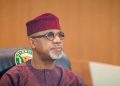











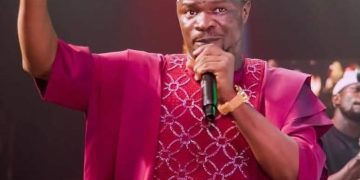










Nigerian-American family medicine physician, political reformer, and candidate for the Delta South Senatorial District in the upcoming 2027 National Assembly elections, Austin Avuigwerie Orette has passed on.
“I’m devastated. Austin Orette’s death leaves me cold” prominent Nigerian journalist, media strategist, political communication expert, and consultant, Henry Ovie Ebireri said in a statement Saturday morning.
Orette died in Houston Texas.
Born in Owhelogbo, Isoko North LGA, Delta State, Orette spent over four decades practicing medicine both in Nigeria and the United States (primarily in Houston, Texas) before directly transitioning into Nigerian politics.
The statement praised Orette for his honesty and bravery.
Dr. Orette earned his medical degree from the University of Nigeria College of Medicine in Enugu in 1985 and relocated to the United States where he completed his Family Medicine Residency at the Memorial Hermann Health System in Houston, Texas, between 1992 and 1995.
He had over 30 years of medical practice in Houston spanning family medicine, emergency medicine, and chronic disease management. He maintained an active Texas State Medical License and affiliated with institutions like Altus Baytown Hospital and Cleveland Emergency Hospital.
Dr. Orette became a notable political figure in Nigeria, publishing opinion essays on national security, governance reform, and economic policies.
Originally a founding member of the All Progressives Congress (APC) in Delta State, he defected to the Nigeria Democratic Congress (NDC) in early 2026, citing undemocratic practices. He subsequently resigned from the NDC in mid-2026 over primary election disputes and joined the African Democratic Congress (ADC), under which he secured his senatorial ticket.
Recently, Orette filed a lawsuit at the Federal High Court in Abuja against the Independent National Electoral Commission (INEC), seeking ₦1 billion in punitive damages following the omission of his name from the final list of candidates for the January 16, 2027 election, despite overwhelmingly winning the ADC direct primary with 10,950 votes.
He structured his senatorial run as an “ideas-driven campaign” aimed at grassroots advancement rather than political patronage. His manifesto focused on constitutional reform, healthcare transformation, education and digital access, economic empowerment and agriculture and food security:
He advocated for regional fiscal restructuring and decentralising powers away from Abuja to grant Niger Delta communities greater control over local resources.
He vowed to Implement rural healthcare networks, scale up community health worker initiatives, and end the trend of government officials travelling abroad for healthcare.
He promised to establish local digital libraries, modernization funds for public schools, and vocational hubs to train artisans.
He promised to create low-interest loan frameworks and regional enterprise zones to help youths launch startup businesses.
He also promised to invest in mechanised equipment, local food storage infrastructure, and flood control to safely boost crop yields in Delta South.