




















By Godwin Akomah, Umuahia
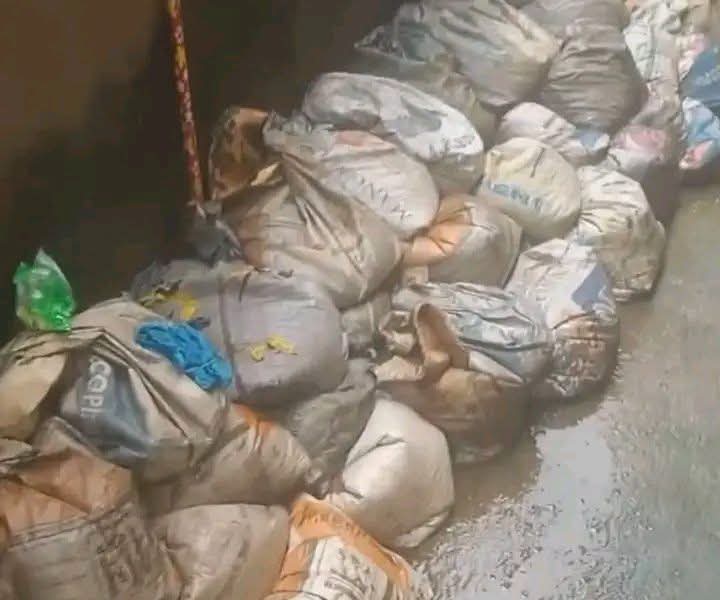
Public health officials in Abia State have sealed a residential building in Aba after discovering over 100 bags of human faeces stored inside, including a sewage tank located directly beneath a bed where tenants sleep.
Officials of the Abia State Environmental Protection Agency, ASEPA, Aba Zone, made the discovery on Tuesday during an inspection of the property at No. 16 Ibadan Street.
According to ASEPA, the faeces were packed in bags and stored within the compound. Four additional basins containing human excreta were also found in the building’s corridor.
The agency said the most alarming finding was a sewage tank constructed inside one of the downstairs rooms.
“Even more disturbing, a sewage tank was discovered inside one of the downstairs rooms, directly beneath a bed where occupants sleep daily, despite being aware of the situation,” ASEPA stated.
Reacting to the discovery, ASEPA said it sealed the premises on August 18, 2026, pursuant to a court order, to prevent further access while investigations and corrective measures are carried out.
The agency described the situation as “more than an environmental violation,” warning that it posed “a serious threat to public health” and risked triggering an epidemic.
“The building would only be reopened after the occupants meet the necessary requirements,” ASEPA added.
*Unconfirmed Claims of Sale to Farmers*
The reason for storing such a large quantity of excreta has not been officially established by authorities.
However, some residents who commented on ASEPA’s social media post alleged that the faeces were being sold to farmers for about N10,000 per bag to be used as manure.
The claim has not been independently verified, and ASEPA is yet to confirm whether the excreta were intended for sale or agricultural use.
ASEPA said investigations are ongoing to determine the source of the faeces, how long they had been stored, and those responsible.
The agency urged residents to report similar cases of environmental abuse, stressing that unsafe sanitation practices would not be tolerated in the state.