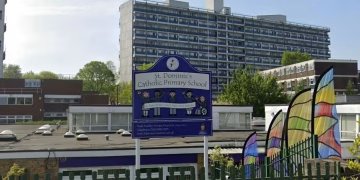






















Scores of students from several secondary schools in Ijebu-Ode, Ago-Iwoye and Ijebu-Igbo in Ogun State have reportedly been hospitalised following another outbreak of gaseous emissions suspected to be methane.
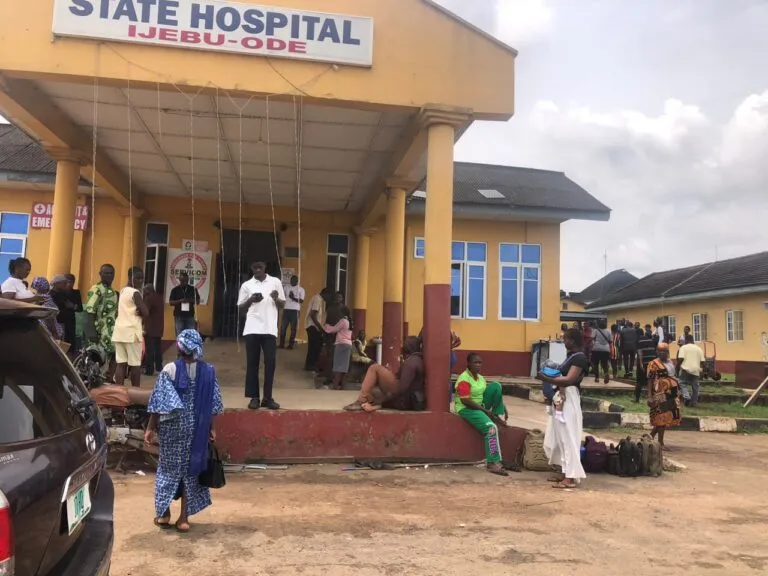
The affected students were taken to the State Hospital in Ijebu-Ode, the General Hospital in Ijebu-Igbo and other healthcare facilities after experiencing breathing difficulties, fainting and other symptoms reportedly linked to the inhalation of the gas.
Among the worst-affected schools were Ijebu-Igbo Girls Grammar School, Anglican Girls Grammar School in Ijebu-Ode and Itamerin Comprehensive High School in Ago-Iwoye.
A video circulating on social media showed some students fainting and being rushed to hospitals as the situation escalated.
A teacher at one of the affected schools, who spoke on condition of anonymity, said the incident began at about 10 a.m., affecting both students and staff.
“The students and staff started inhaling the gas and began to have difficulty breathing. Some of them fainted and were subsequently rushed to hospitals,” the teacher said.
According to the teacher, some schools in Ago-Iwoye were forced to close for the day around 11 a.m. as the situation became increasingly unbearable.
The teacher added that worried parents had also visited the schools to take their children home amid uncertainty over the source of the emissions.
“We even heard that this gas leak had been occurring since April, sending hundreds of students to hospitals whenever it appeared unexpectedly,” the teacher said.
Expressing concern over the recurring incidents, the teacher called on the state government to intensify efforts to identify and address the cause of the emissions.
“We are all anxious about our health and that of our students. I think it is taking the government too long to get to the root of this mysterious gas leakage. The government has to act quickly before it is too late,” the teacher added.
The latest occurrence is reportedly the fourth time gaseous emissions have caused panic in communities across Ijebu land since April 2026.
The first reported incident in April affected about 40 students, while more than 120 students were reportedly hospitalised following another exposure in May.
On June 1, a further 69 students were reportedly hospitalised after another occurrence.
Schools affected in previous incidents included Our Lady of Apostles Secondary School, Epe Garage, Ijebu-Ode; Anglican Girls Grammar School, Ijebu-Ode; and St Anthony Grammar School, Ijebu-Imusin, among others.
Earlier in June, Ogun State Governor Dapo Abiodun said the state government was working with relevant agencies and experts to determine the cause of the recurring emissions.
The governor said the Ministries of Environment and Health were collaborating with the Nigerian Midstream and Downstream Petroleum Regulatory Authority and the Department of Geology at Olabisi Onabanjo University to investigate the incidents.
According to Abiodun, gas analysers had been installed in affected schools following earlier occurrences, and preliminary findings identified the gas as methane.
He also noted that investigators were examining possible geological factors, including fault lines, as potential sources of the emissions.
“Following the first occurrence, we installed gas analysers across the schools to determine the nature and concentration of the gas, which has now been confirmed to be methane,” the governor said.
He added that the government was awaiting the final report from the professionals conducting the investigation.
Commenting, the Commissioner for Environment, Ola Oresanya, said the government was responding to the situation.
“We are on top of the situation,” he said.
Kehinde Bello, a Senior Special Assistant to the governor and General Manager of the Ogun State Environmental Agency, who visited the affected areas in Ijebu-Ode and Ijebu-Igbo, linked the latest occurrence to underground gas emissions previously recorded in the area since April 2026.
Bello said the situation was under control and assured residents that the government would work towards finding a lasting solution.
He said government investigations had indicated that the phenomenon was a natural occurrence associated with geological and tectonic fault lines, rather than sabotage or a gas pipeline leak.
Bello urged residents to remain calm, adding that the affected students were expected to recover after receiving medical attention.
He also advised residents exposed to the odour to cover their noses and mouths with wet handkerchiefs rather than wear nose masks.
Medical personnel were reportedly attending to the affected students at the general hospitals as of the time of filing this report.
The latest incident has renewed concerns over the recurring gaseous emissions in Ijebu land, particularly the risks they pose to students, school staff and residents.
With multiple incidents reported since April, affected communities are awaiting the outcome of ongoing investigations and the implementation of measures to prevent further exposure.