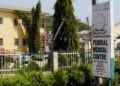
























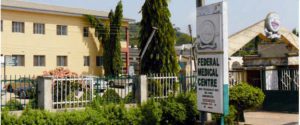
The Federal Government has said it will investigate allegations of unprofessional practices, dereliction of duty and illegal collection of levies involving some officials of the Federal Medical Centre (FMC), Abeokuta, Ogun State.
The Chairman of the Board of Management of the Federal Medical Centre (FMC), Abeokuta, is Dr. Dayo Israel, while Dr. (Mrs.) Sarah Titilola Ibiyemi is the current and first female Medical Director of the specialist healthcare centre.
Both were appointed by President Bola Ahmed Tinubu in January and November 2025, respectively.
The centre has been grappling with challenges in the last couple of years. The Daily Crucible recalls that elder statesman and former President, Chief Olusegun Obasanjo, had, in February 2025, advised the Board Chairman to brace for the challenges ahead and be prepared to step on toes, if necessary, to achieve success in office.
Obasanjo pointed out at the time that no effective leader could succeed without making difficult decisions.
“If you’re doing a job and you’re not stepping on toes, then you’re not effective,” the former President had said.
A few months ago, an uneasy calm enveloped the centre following allegations of burglary, robbery and recurring theft of staff and patients’ belongings within the facility.
Frustrated medical personnel, who said they could no longer endure the deteriorating security situation, temporarily withdrew their services in a bid to compel the management to take urgent action.
It was alleged that a patient’s car parked within the FMC premises was stolen while the patient was receiving treatment.
It was also alleged that during one of the invasions of the facility, particularly the House Officers’ Quarters, several doctors lost laptops, cash, bags and other valuables after thieves broke into their apartments.
The affected resident doctors subsequently embarked on a warning strike in protest against the recurring incidents of theft and burglary.
The industrial action was announced by the President of the Association of Resident Doctors, Dr. Olanipekun Arise-Kola, during an emergency general meeting.
A communiqué issued by Dr. Arise-Kola and the association’s Assistant General Secretary and Dr. Olufemi Alawode, cited “persistent security lapses that have continued to endanger the lives and property of healthcare workers” as the reason for the temporary withdrawal of services few months ago.
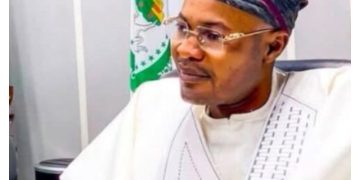
However, speaking at the flag-off and distribution of Advanced Trauma Life Support (ATLS) and tricycle ambulances to selected health facilities in Ogun State on Friday, the Minister of State for Health and Social Welfare, Dr Iziaq Kunle Salako, disclosed that his office had, in recent months, received several complaints concerning alleged misconduct at the medical centre and had also come across media reports on the matter.
Salako said the allegations would receive the comprehensive attention of the Federal Government, stressing that any official found culpable would be sanctioned in accordance with the civil service rules.
“Unfortunately, in the last few months, my office has been inundated with several complaints and has also come across some reports in the media that alleged unprofessional practices, dereliction of duty and illegal collection of levies against some officials of this centre,” the minister said.
“These complaints and reports are now going to receive our comprehensive attention and anybody found culpable will be sanctioned in accordance with the civil service rule in order to ensure that we sustain the confidence of the public in Federal Medical Centre, Abeokuta.”
The minister said patients seeking care at the facility deserved professional medical attention, adequate support, clear communication and respectful treatment.
He, however, commended health workers at the centre who, according to him, continued to work diligently and maintain high ethical standards in the discharge of their responsibilities.
Salako said such commitment and professionalism would not go unnoticed, urging health workers to remain dedicated to their duties.
The minister’s warning came as the Federal Government handed over emergency medical assets to health facilities in Ogun State under the National Emergency Medical Services and Ambulance System (NEMSAS).
The intervention includes three Advanced Life Support (ALS) ambulances, one Basic Life Support (BLS) ambulance and nine tricycle ambulances for selected federal and state tertiary institutions as well as high-volume, remote secondary and primary healthcare facilities.
Salako said the initiative was part of the Federal Government’s efforts to strengthen emergency medical services and ensure timely access to life-saving care.
He said the government had acquired 145 tricycle ambulances, six boat ambulances, 15 BLS ambulances and 79 ALS ambulances in the first phase of the initiative, alongside laptops, printers and communication devices.
According to him, the intervention was designed to create a more coordinated emergency-care system linking transportation, trained personnel, communication, referral pathways and definitive hospital treatment.
He said the effectiveness of the ambulances would depend on proper management and accountability by the state government and beneficiary facilities.
Salako directed that the ambulances be deployed according to identified emergency-care needs, properly maintained, used exclusively for emergency medical services and operated by appropriately trained personnel.
He also warned against diverting the vehicles for non-emergency purposes.
“These ambulances are not hearse for moving corpse or going to the market to purchase goods, including drugs and other hospital consumables,” he said.
The minister urged the Ogun State Government and management of beneficiary facilities to provide the necessary operational and maintenance funding to ensure the sustainability of emergency medical services in the state.
He said the Federal Government remained committed to strengthening emergency response across the country through greater collaboration among federal and state authorities, health facilities, emergency responders, security agencies and communities.
Salako further said the government would work with the National Assembly to address what he described as a fragmented regulatory framework for first responders and emergency management in Nigeria.
He said efforts were underway to establish a unified system capable of connecting emergency dispatch, pre-hospital care, transportation and receiving hospitals.
The minister expressed optimism that the reforms would help build an emergency medical system that is accessible, responsive, coordinated, equitable, resilient and sustainable, ultimately saving lives when every second counts.