




















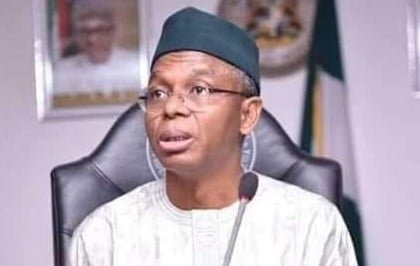
El-Rufai’s declaration on television that he and unnamed associates wiretapped the phone of the nation’s National Security Adviser was the height of provocation. Yet one could sense the desperation of someone who felt ignored and had to go for the jugular
By Gimba Kakanda
Every government needs its fearless commentators, even its provocateurs, to keep decision-makers in check. One person who has excelled in this role beyond the newspapers and television screens is Mr Omoyele Sowore. This is because he is one political actor whose activism did not begin as a reaction to personal grievance or political disappointment; it is who he has been since his university days. That consistency of engagement, long before today’s contests for power, is why I hold him in high regard, even where we differ.
As someone who has been on the other side of government, I can attest that we operate within a system where one needs political pedigree, street credibility, or vast resources to oppose the state effectively. That deficiency explains how our dear friend, Abubakar Idris aka Dadiyata, could be whisked away from his home in Kaduna while the world moved on as though nothing had happened, leaving his parents, wife, children, and friends distraught.
You cannot whisk away a Sowore or an el-Rufai in such fashion. That is why a lone citizen who is neither wealthy nor socially connected, yet chooses to oppose a government without the networks or resources to resist persecution, undertakes one of the riskiest jobs in the world. The el-Rufais and the Sowores are necessary in every democracy. They remind us of the fallibility and replaceability of those in power. And that’s how democracies survive.
What is unfolding in the case of el-Rufai, however, is not, in all honesty, activism against the government. It’s a campaign of retribution against old friends he believes betrayed him. In the process, he has found himself at odds with a longtime friend, Malam Nuhu Ribadu, who once named a child after him. And that is the dark side of the quest for power that unsettles me.
Whatever I say here may be coloured by my personal relationship with Ribadu, but this much I can volunteer: he is not the sort of person who would hand el-Rufai what he seeks by descending into the pigsty to fight. Even without the resources now at his disposal, he has never been one to wage a media war. Now that his office places him in a Goliath position in this contest, it is even wiser for him to resist his old friend’s provocation.
If Ribadu were to respond in similar fashion, it could result in the Mandelafication of el-Rufai. The former Kaduna state governor would become the David of a political apartheid, and his grievance would be framed as the Robben Island of a narrative that may not favour his old friend in the long run. History often sides with the underdog. The only way for Ribadu, who I believe is being given too much credit in el-Rufai’s travails, to keep the arena level is to ignore the provocation.
El-Rufai’s declaration on television that he and unnamed associates wiretapped the phone of the nation’s National Security Adviser was the height of provocation. Yet one could sense the desperation of someone who felt ignored and had to go for the jugular. I do not believe there was any order for his arrest, and certainly not from Ribadu, who had earlier stated, in a measured response to an allegation by el-Rufai, that he would not trade words with his old friend because he had an office to run and could not afford such distractions.
The wiretapping claim, and now this allegation that the NSA has procured a dangerous poison, appear less like spontaneous disclosures and more like escalating gambits. He must have sensed, after watching in silence for days, that Ribadu, who had refused to arrest him as he had fantasised upon his return to Nigeria, would still not take the bait, and so he doubled down, hopeful that the NSA would be provoked by this escalation into making him a Mandela, a Mandela of vendetta.
These claims read as attempts to corner an adversary who has refused to engage, to force a reaction that could then be curated into a narrative of persecution, to manufacture a path to Robben Island and, in the process, assume the moral theatre of imprisonment within our political imagination. Yet it is unlikely to stir someone who has ignored him all this while. Silence, in this case, may be the sharper response from Ribadu. It is only a fight when there are two contenders in the ring. When one stands alone, swinging at shadows, the spectacle takes on a different name.
•Opinions, positions or thoughts expressed here are personal and strictly of the writer/author and do not represent the views of The Daily Crucible.