



















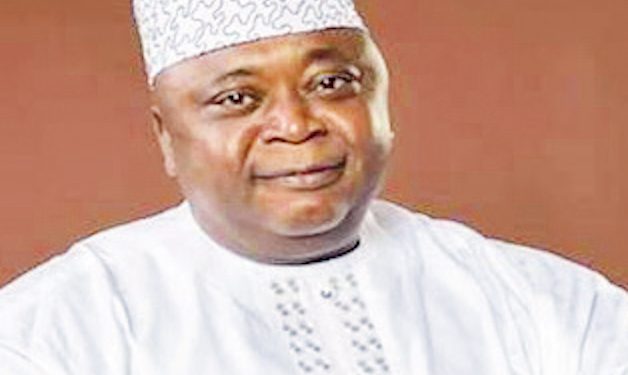
Barely three months to the 2027 governorship election, Ogun State’s political landscape has crystallised once again around two dominant figures: Senator Solomon Olamilekan Adeola, popularly known as Yayi, of the All Progressives Congress (APC), and Hon. Oladipupo Adebutu of the Peoples Democratic Party (PDP).
Weeks earlier, and up to the early morning of Friday, Adebutu’s name was missing from the list of governorship candidates released by the Independent National Electoral Commission (INEC) for the February 2027 poll in the Gateway State.
The development set the stage for a one-horse race, with Senator Adeola technically positioned as the lone sprinter on the 2027 governorship dash. The other candidates, more than a dozen of them, remain largely weakened by internal crisis, poor membership drive, paucity of funds and dearth of foot soldiers to give the race the robustness and statewide reach required.
However, the dynamics changed on Friday when a Federal High Court in Abuja ordered INEC to reinstate Adebutu as the PDP governorship candidate.
In the judgment delivered by Justice Peter Lifu, the court directed INEC to restore Adebutu’s name to the official list of candidates within 24 hours.
The court ruled that INEC lacked the constitutional authority to independently disqualify a candidate validly nominated by a political party.
Justice Lifu also held that the commission violated Adebutu’s right to fair hearing by removing his name without giving him an opportunity to defend himself.
Describing INEC’s action as unlawful, unconstitutional and of no effect, the judge maintained that the authority to disqualify a nominated candidate rests with the Federal High Court or a State High Court.
He explained that if INEC had concerns about Adebutu’s eligibility, it should have approached a court of competent jurisdiction rather than unilaterally excluding his name.
Justice Lifu further faulted INEC’s decision, noting that Adebutu participated in the PDP governorship primary held on May 24, 2026, which the court recognised as valid.
The judge also dismissed INEC’s argument that Adebutu’s name was absent from the PDP membership register. In evaluating the commission’s evidence, the court noted that INEC’s witness, Mustapha Mohammed, admitted during cross-examination that he was not the official who received the flash drive containing the party’s membership register.
Consequently, the court ordered INEC to correct the list it published on October 10, 2026, by including Adebutu’s name.
For many politicians and voters, the battle lines have now been redrawn. On one side stands Yayi, the powerful senator from Ogun West and Aremo of Yewaland, whose political influence has expanded steadily across the state. On the other side is the resurgent Adebutu, the PDP stalwart whose strong performance in the 2023 governorship election convinced many that he remains the opposition’s most formidable asset in 2027.
In that election, INEC declared Governor Dapo Abiodun of the APC winner with 276,298 votes, while Adebutu polled 262,383 votes to come second, a difference of 13,915 votes.
It is still strongly believed in some quarters that the outcome did not truly reflect the expressed wish of the electorate, and this perception is fuelling optimism that Adebutu may carry the day in 2027.
The court order is not only redesigning the governorship map. It is also seen as capable of influencing the senatorial polls in Ogun Central and Ogun East.
With Adebutu back on the ballot, the political equation in both districts has shifted, with his influence threatening to upend the senatorial contests.
During the 2023 governorship election, Adebutu posted a robust outing in Ogun Central, defeating Governor Abiodun in Abeokuta South, performing impressively in Abeokuta North and holding his own across the rest of the district.
With Adebutu’s towering influence now coupled with Senator Iyabo Obasanjo on the ballot, there is growing fear that Egbaland may witness a selective political shift in favour of PDP candidates, a development said to be causing considerable jitter in the camp of Senator Salisu Shuaib.
In Ogun East, Adebutu also ran over the APC candidate in 2023, a result that has emboldened the opposition ahead of the coming polls.
Observers say with Governor Abiodun’s hands preoccupied with the Awujale succession crisis and attendant disaffections, unresolved party crisis arising from the primaries in Ogun East, and public discontent over living hardship, the district may sustain Adebutu’s PDP winning streak at governorship level and swing to the PDP for the Senate seat too.
There is an undercurrent pointing to a surprise outcome where voters, regardless of political leanings, may vote Tinubu for President, Yayi for Governor, and PDP for other candidates, particularly in Ogun Central and East.
The appeal of opposition resilience in Adebutu and grassroots loyalty, which are gaining momentum to the Baba Ijebu son’s advantage, may favour PDP candidate, Senator Iyabo Obasanjo, against incumbent Senator Salisu Shuaib.
However, facts on ground indicate that there is probably no politician in the state currently commanding the level of momentum that surrounds Senator Adeola. Over the years, Yayi has transformed himself from a regional political figure into a statewide contender. Through constituency projects, empowerment programmes, scholarships and strategic political alliances, he has extended his influence beyond Ogun West into Ogun Central and Ogun East.
The Muslim clerics could not miss this recently during the celebration of this year’s edition of the 1448 Hijrah calendar year in Abeokuta.
Acting under the aegis of the Progressive Muslim Clerics in Ogun State, they threw their weight behind Yayi’s governorship aspiration, urging voters to support him in the next election.
Justifying the decision, the President of the group, Alhaji Abdul Wasiu Akinyemi, waded into Ogun State’s succession debate, arguing that principles of fairness and justice support the emergence of a governor from Ogun West.
Akinyemi cited Qur’anic injunctions on justice and equity, insisting that the district deserves the opportunity to produce the next governor.
“With this very strong divine injunction on justice and fairness, Ogun West producing the next Ogun State governor, and the fact that Senator Adeola-Yayi’s antecedents speak for him more than anything else, Progressive Muslim Clerics cannot possibly close its eyes to all the compelling imperatives surrounding the senator’s governorship aspiration,” he said.
“We urge Ogun State electorate to give the ranking legislator their votes en bloc.”
Also, endorsements from party stakeholders across the three senatorial districts have reinforced the perception that key power brokers within the ruling party see the Aremo of Yewaland as the natural successor to Governor Dapo Abiodun.
Adeola’s ongoing political engagements and stakeholders meetings across the state are widely seen as a strategic move that could significantly strengthen his prospects ahead of the 2027 election.
He visited former President Olusegun Obasanjo some months back, and that carries considerable political weight. As one of Nigeria’s most influential political figures and a respected elder statesman from Ogun State, Obasanjo’s recent fatherly counsel, commendation and prayers for the APC governorship candidate could be interpreted by the electorate as a morale boost for Adeola. While it does not amount to a formal endorsement, the optics of that meeting at the Obasanjo Presidential Library may help enhance Adeola’s acceptability among stakeholders and sections of the electorate who still regard Obasanjo’s opinion as influential.
Similarly, Adeola’s meeting with former Governor Ibikunle Amosun underscores an apparent effort to bridge longstanding political divides within the ruling party. Amosun remains a formidable political force with a loyal grassroots structure across Ogun. Any improvement in relations between both camps could reduce internal friction within the APC and improve the party’s chances of presenting a united front in 2027.
His homecoming reception by his Egba maternal relatives and subsequent visit to the Alake and Paramount Ruler of Egbaland, Oba Adedotun Gbadebo, further strengthens his local political credentials. The warm reception from traditional leaders and Egba chiefs, including the Ogbonis, helps reinforce his ancestral ties to Ogun, particularly the Egba axis, where questions about his political roots have occasionally featured in public discourse.
Although traditional rulers are constitutionally expected to remain non-partisan, such symbolic engagements can improve public perception of Yayi and deepen cultural and emotional acceptance among Egba communities.
The three engagements together suggest a deliberate strategy of political consolidation: winning over elder statesmen, reconciling influential party blocs, and strengthening traditional and grassroots acceptance.
Also, the APC’s incumbency advantage further strengthens his position. As the ruling party in Ogun State and at the federal level, the APC candidate would enjoy access to government structures, local government networks and institutional advantages that have continued to play significant roles in governorship contests.
More importantly, Yayi profits from a powerful political argument bordering on justice, fairness and inclusiveness that resonates beyond party affiliations.
Since the creation of Ogun State in 1976, no governor has emerged from Ogun West. Across many communities, there is a growing sentiment that the district deserves an opportunity to produce the state’s next governor. Power has rotated between Ogun Central and Ogun East since the return of democracy in 1999, leaving Ogun West either as a mere spectator or playing second fiddle.
At different dispensations and across party platforms, Ogun West sons and daughters, including Afolabi Olabimtan, Leye Odunjo, Dr. Tunji Otegbeye, General Tunji Olurin, Senator Iyabo Anisulowo, Prince Gboyega Nasir Isiaka, Hon. Abdulkabir Adekunle Akinlade, and Barr. Biyi Otegbeye, among others, had struggled to become governor without success.
The zoning argument today may prove to be one of Yayi’s most potent electoral weapons.
However, Yayi’s path to Oke-Mosan is not entirely free of obstacles. His opponents initially questioned the depth of his roots within Ogun politics, pointing to the fact that a substantial portion of his political career was built in neighbouring Lagos State before his eventual migration into Ogun’s political arena, but that argument has died down and is unlikely to influence voting decisions in 2027.
A similar argument was raised against Otunba Gbenga Daniel, but it did not stop the Senator from Sagamu from ruling for eight years. It is hoped that the indigeneship debate won’t work against Yayi in 2027, despite repeated declarations that he is from Pahayi community near Ilaro in Yewa South Local Government Area.
More significantly, there are signs of unease within sections of the APC itself arising from the party primaries. Many who stepped down for him did so with conditions, and the bad blood has become difficult to heal. Former Commissioner, Abayomi Hunye, is tearing from within to wrest the ticket from Yayi. This does not augur well for party harmony and unity amid an approaching keen contest.
Also, Senator Iyabo Obasanjo has left the APC for the PDP to stand as an opposition senatorial candidate. Elder Joju Fadairo, a chieftain of the APC in Ogun Central who was one of the arrowheads of Yayi’s inroad in Central and through whom Ambassador Tunji Isola Sarafa collapsed his ambition and dozens of support groups into Yayi’s governorship project. The elder statesman has since retired from partisan politics. This represents a consequential nibbling away of the support base in Central, where the electoral fate of any governorship candidate is often decided.
There are also lingering grievances arising from consensus arrangements that produced candidates within the party. Supporters of former Governor Gbenga Daniel and loyalists of former Governor Ibikunle Amosun have not completely hidden their dissatisfaction with aspects of the APC’s internal power-sharing process.
Like a woodpecker persistently pecking at a tree, these grievances may appear insignificant individually, but collectively they possess the potential to weaken party cohesion.
Across the political divide stands Adebutu, a man whose political story has become intertwined with persistence and resilience. His performance in the 2023 governorship election transformed him from a perennial challenger into a serious contender.
For PDP faithful, the 2023 election remains proof that victory is achievable in 2027. Adebutu’s strength lies primarily in his grassroots network. Over the years, he has cultivated substantial goodwill, particularly in Remo and Ijebu divisions, and he made a robust showing in Ogun Central during the 2023 election, defeating Governor Abiodun in Abeokuta South with a consequential margin.
Through empowerment programmes, community interventions and sustained engagement with local political actors, he has endeared himself to not a few voters.
Unlike many opposition politicians who depend entirely on party machinery, Adebutu enjoys the advantage of personal political structures and considerable financial capacity. This independence allows him to maintain visibility and relevance even during periods when the PDP is struggling internally.
His supporters also believe he can capitalise on any anti-incumbency sentiment that may emerge as the APC administration approaches the end of its tenure.
Yet the PDP candidate faces challenges that may be even more daunting than those confronting his APC rival. Foremost among them is the instability within the PDP at the national level. Persistent leadership disputes, defections and factional conflicts continue to cast shadows over the party’s ability to present a united front.
Another challenge is voter fatigue. After previous governorship contests, some undecided voters may begin to view him as a familiar face offering familiar promises rather than a fresh political alternative.
There is also the zoning question. Adebutu comes from Ogun East, the same senatorial district as Governor Abiodun. Although his supporters frequently emphasise his ancestral links to Ogun Central, political opponents are likely to argue that equity demands a shift to Ogun West after eight years of leadership from Ogun East.
As the political season gathers momentum, the 2027 governorship race increasingly appears to be a contest between structure and sentiment. Yayi represents institutional power, ruling-party dominance, elite endorsements, federal connections and a well-organised political machine.
Adebutu embodies opposition resilience, grassroots loyalty, personal political networks, anti-incumbency sentiment and the determination of a candidate seeking redemption after a near miss.
Despite its challenges, the APC remains relatively united, and Yayi is likely to enter the general election as the favourite. The combined advantages of incumbency, party structure and the Ogun West zoning narrative would make him an exceptionally difficult opponent to defeat.
But one reality is becoming increasingly clear: barring an unexpected political earthquake, the road to the Ogun State Government House in 2027 will almost certainly run through two men, Solomon Olamilekan Adeola and Oladipupo Adebutu.
And whichever force ultimately prevails, the machinery of power or the energy of opposition, will shape the future of the Gateway State for years to come.