



















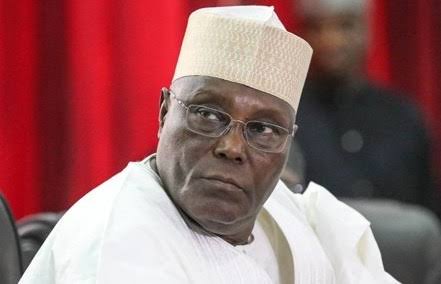
Former Vice President Atiku Abubakar has questioned the Federal Government over the utilisation of funds freed by the removal of fuel subsidy, saying the renewed threat of an industrial action by the Academic Staff Union of Universities (ASUU) has exposed a gap between the government’s promises and the reality in the country’s tertiary institutions.
Atiku, in a statement issued on Sunday by his Senior Special Assistant on Public Communication, Phrank Shaibu, said the Tinubu administration had justified subsidy removal on the promise that savings would be redirected to education, healthcare, infrastructure and other essential services.
He, however, asked why university lecturers were still protesting unpaid entitlements and unresolved agreements, while public universities continued to grapple with inadequate funding and infrastructure.
“If the subsidy is gone and Nigerians have paid for that decision through unprecedented hardship, then President Tinubu owes the country a simple answer: where is the money?” Atiku asked.
The former Vice President said Nigerians had endured higher fuel, transport, food and energy costs, as well as rising school fees, without seeing corresponding improvements in public services.
He argued that the renewed ASUU strike threat had further exposed what he described as the weakness of the government’s justification for subsidy removal.
“The house of cards of falsehoods erected by the Tinubu administration to justify the suffering of Nigerians is collapsing before our eyes,” he said.
Atiku accused the government of removing the economic cushion provided by fuel subsidy without putting adequate social protection measures in place to shield Nigerians from the resulting hardship.
He said the situation in the universities was particularly troubling because the government had repeatedly maintained that increased revenues and allocations following subsidy removal would translate into improved public services.
“More than three years later, lecturers are still raising concerns about unpaid salaries and unresolved agreements. ASUU is again warning of industrial action. University infrastructure remains inadequate, while millions of young Nigerians compete every year for limited admission spaces,” he said.
Atiku also questioned claims that subsidy savings had translated into increased allocations to state governments, asking why public education remained under pressure if substantially more funds were now available.
“Government officials repeatedly tell Nigerians that subsidy savings have translated into larger allocations to states. But if substantially more money is supposedly flowing to the states, why has the condition of public education not improved accordingly?” he asked.
He noted that the problem extended beyond federal universities, with some state-owned institutions also experiencing industrial disputes and disruptions.
According to him, the situation reflects broader problems in the funding and management of tertiary education across Nigeria.
Atiku also criticised the government’s student loan policy, arguing that rising living costs had made it increasingly difficult for families to afford university education.
“This government removed subsidy, increased the cost of transportation, food and virtually every other necessity, and watched the cost of university education rise beyond the reach of many families,” he said.
He questioned the rationale of introducing student loans after economic policies had increased the financial burden on households.
“What kind of reform first empties a family’s pocket and then offers the child a loan to survive the hardship government helped create?” he asked.
The former Vice President further raised concerns about whether Nigerian universities had the capacity to accommodate the country’s growing youth population.
He questioned where new classrooms, laboratories, hostels and other facilities were being provided to meet the increasing demand for university education.
“You cannot raise the cost of education, leave infrastructure inadequate, fail to settle lecturers’ legitimate claims, disregard agreements and then congratulate yourself for giving students loans,” Atiku said.
He also accused the administration of imposing sacrifices on ordinary Nigerians while allegedly granting concessions and privileges to powerful interests.
“The poor are told there is no money for subsidy. Students are told to borrow. Lecturers are told to wait. Parents are told to endure,” he said.
Atiku maintained that Nigerians deserved greater accountability over the funds the government said would become available after subsidy removal.
He said the government had promised that removing subsidy would free resources for investment in education, healthcare, infrastructure and social welfare, but argued that the persistent crisis in the university system suggested that the expected benefits had not been fully realised.
“The sacrifice has been collected from Nigerians in full. The promised benefits have not been delivered in full,” he said.
Atiku urged President Bola Tinubu to explain how the resources freed by subsidy removal had been utilised, repeatedly asking: “Where is the money?”
He said the renewed ASUU strike threat, unresolved obligations to lecturers, inadequate infrastructure and rising education costs showed that Nigeria’s tertiary education crisis remained unresolved.
“Tinubu removed subsidy from the people, but he has not removed the threat of ASUU strikes. He has not resolved the crisis of unpaid obligations. He has not sufficiently expanded our universities. He has not made education more affordable. And he certainly has not removed the hardship confronting Nigerian families,” Atiku said.