













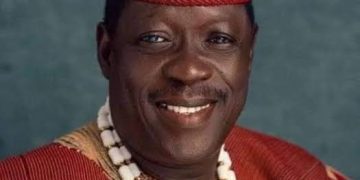

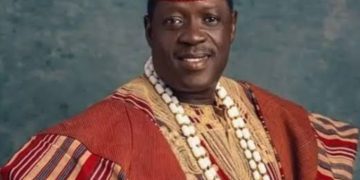









…2027 should be about performance, not just genealogy. If Yayi is unfit to govern Ogun, let his opponents tell Ogun people why. Challenge his record. Challenge his legislative performance. Challenge his competence. Challenge his policy proposals. Challenge his temperament. Challenge his political coalition. Challenge his vision for Ogun
By ‘Dare Odufowokan
There is something rather amusing about the sudden emergence of “emergency historians” whenever Senator Solomon Olamilekan Adeola, popularly known as Yayi, becomes the subject matter, especially from the ranks of those to whom the firebrand Senator is not politically convenient. There has been several attempts. Many of such have disgracefully persisted, even in the face of bountiful evidences, arguments and common senses, to debunk and make mincemeats of the claims therein.
One of such is the unrelenting attempt to blindly interrogate Yayi’s ancestry with mischief as the intention, distinguish between Ishaga-Orile and Ilaro, and then use that distinction to manufacture a political problem around his claim to Ogun West. Unfortunately for the attempt and its promoters, history does not work by political convenience. Neither does indigeneity. And certainly not electoral politics.
The central weakness in this funny historical humpity-dumpity, is the effort to spin that because Yayi’s ancestors originated from Isaga-Orile before migrating to Ago-Isaga/Pahayi in Ilaro, Yayi therefore cannot properly claim Ilaro, Yewa or Ogun West as his place of origin. That proposition is historically simplistic and socially untenable largely because an ancestor’s homeland is not necessarily his descendant’s only homeland. I gladly invite scholarly debates over this time proven position.
Very important to note is the fact that nobody disputes the historical significance of Isaga-Orile in the story of the Isaga people. Indeed, accounts published as far back as a.decade ago quoted prominent Isaga descendants, including Chief Lawrence Osayemi, Balogun of Isaga, explaining that Yayi’s great-grandfather, Olege, migrated from Isaga-Orile to Ago-Isaga/Pahayi in Ilaro following the Dahomey invasion. The same account expressly described Adeola as a bona fide son of Yewa and said the dispersal produced Isaga settlements across Yewa, Abeokuta, Lagos and the Republic of Benin.
We may need to keep educating these sudden storytellers, or are they makeshift storymakers?, that this historical account does not destroy Yayi’s Ilaro identity. It explains it because migration does not cancel settlement.
A family that leaves its ancestral homeland, establishes itself elsewhere, raises successive generations there, builds a family compound there, participates in the community there and becomes recognised by that community does not remain permanently a “stranger” simply because somebody has discovered an older point on the genealogical map.
If that were the rule, a substantial proportion of Nigerians would have to return to the geographical locations from which their great-great-grandparents migrated before they could make any claim to belonging. For example, all Yoruba sons and daughters with traceable roots to Oduduwa and his descendants will have to return to only Ile-Ife in Osun State to stand for elective positions.
…the people of Ogun, not emergency historians, will ultimately determine whether Solomon Olamilekan Adeola is worthy of their mandate in 2027. History should illuminate that decision. It should not be conscripted into a partisan campaign to distort it
The possible scenarios of the implementation of the arguments contained in this unreasonable pursuit would be absurd. The emergency historians have discovered a distinction without a difference. The argument being advanced is essentially this:
“Your ancestors came from Isaga-Orile; therefore Ilaro is merely a refugee settlement and cannot be regarded as your origin.” But what exactly is the meaning of “origin” in this context? There is ancestral origin. There is paternal lineage. There is family settlement. There is place of birth. There is place of upbringing. There is community recognition. And there is political constituency.
These are not interchangeable concepts. A person can simultaneously be Yoruba, Yewa, Isaga, Ilaro, Ogun indigene and Lagos-born without suffering a historical contradiction. Yayi’s publicly documented biography says he was born at Lagos Island Maternity Hospital and raised in Alimosho. His own official profile also identifies his parents and his educational history in Lagos.
Nobody seriously disputes that. But neither does being born in Lagos erase the genealogy of his paternal family. The same logic should apply in reverse. His ancestral connection to Isaga-Orile does not erase the settlement history of his paternal family in Ago-Isaga/Pahayi, Ilaro. If migration invalidates indigeneity, where do we stop?
This is where the argument becomes intellectually dangerous. The history of Yorubaland is a history of migration, wars, dispersal, resettlement, kingdom formation, intermarriage and the establishment of new communities. Ilaro itself is not an archaeological time capsule in which every present resident must demonstrate that his ancestors emerged from the same spot before the nineteenth century.
The same is true of Lagos. The same is true of Abeokuta. The same is true of virtually every major Yoruba settlement. The question is therefore not whether Yayi’s ancestors once lived in Isaga-Orile. The question is whether his paternal family subsequently established a recognised and enduring connection with Ago-Isaga/Pahayi in Ilaro.
On that question, the available historical record is remarkably clear. Contemporary reports from Isaga descendants identified Ago-Isaga/Pahayi in Ilaro as the settlement to which Olege migrated and described Adeola as a bona fide son of Yewa. Another published account states that the family settled first in Ago-Isaga and subsequently in Pahayi, which eventually became integrated with Ilaro as the communities expanded.
That is not a story invented in 2027. It was publicly articulated years before the present governorship contest. The “Lagos Boys” argument is even weaker. There is another curious contradiction in the argument.
Yayi’s critics are happy to emphasise that he was born and politically nurtured in Lagos. Fine. But what exactly does that prove? That he is Lagos-born? Yes. That he built a significant political career in Lagos? Yes. That he represented Alimosho in the House of Representatives and later Lagos West in the Senate? Yes.
But none of those facts proves that his paternal family has no Ogun connection. In fact, his political history demonstrates precisely how Nigerian political identity works. People move. People build careers. People represent constituencies. People return to their ancestral communities. People maintain homes and family relationships in places other than where they were born.
Yayi’s political journey from Lagos to Ogun is therefore not a historical anomaly. It is a very Nigerian story. The real issue is not Isaga-Orile. It is Ogun West. And here the argument should be stripped of unnecessary mythology. The most compelling case for 2027 is not that Yayi must somehow prove that Ilaro was the place where his ancestors first appeared on earth. The compelling political case is that Ogun West has never produced an elected governor since the creation of Ogun State in 1976.
That fact is not Yayi’s invention. It has been repeatedly acknowledged in political discussions about Ogun’s power rotation. Recent reporting also records the position that Ogun East and Ogun Central have produced governors while Ogun West remains without one. That is the real issue. Ogun West is not asking for a governor because Yayi has discovered an obscure genealogical footnote. The zone is demanding political equity because, after five decades of Ogun State, it has never occupied the governorship.
Those who oppose Yayi are free to oppose him. They are free to argue that another Ogun West candidate is better. They are free to campaign against him. They are even free to argue that zoning should not determine the election. But they should not manufacture a historical impossibility where none exists.
And here is the constitutional embarrassment. There is an even bigger problem with the attempt to turn genealogy into a qualification test. The Nigerian Constitution does not say that a governorship candidate must trace his ancestors to the exact geographical location from which his great-grandfather emerged. Section 177 of the 1999 Constitution sets out the qualifications for election as governor: Nigerian citizenship by birth, attainment of the prescribed age, membership and sponsorship by a political party, and the requisite educational qualification. The Supreme Court has expressly restated these requirements.
There is no requirement to pass an “ancestral purity examination.” There is no constitutional provision requiring a candidate to prove that his great-grandfather was born in the same LGA in which he is contesting. And there is certainly no constitutional requirement that a Lagos-born Nigerian whose paternal family settled generations earlier in Ogun must return to a nineteenth-century settlement map before he can seek public office.
Indigeneity can be politically and socially significant in Nigeria. But it should not be confused with the constitutional qualifications for governorship. The Amosun and Obasanjo comparison proves nothing. The comparison with Ibikunle Amosun or Iyabo Obasanjo allegedly having to return to Orile-Owu or Erunmu is rhetorically attractive but historically defective because the relevant question is not simply where someone’s ancestors once lived. The relevant question is the person’s established family and community connection to the political territory in question.
Furthermore, if ancestry alone is to determine political entitlement, then the argument must be applied consistently. If a Lagos-based descendant of an Ogun family cannot claim Ogun because he lives in Lagos, should an Ogun-born person whose ancestors originated elsewhere automatically lose his Ogun identity? If the answer is no, then the argument against Yayi collapses and the clan of sudden storymakers should stop presenting it as though repetition can substitute for evidence. It cannot. Politics should not turn into a courtroom where rumours become exhibits. Truth be told, today in Ogun politics, the real emergency is the emergency historian.
There is a difference between historical scholarship and political archaeology. A historian asks:
What happened?
An emergency historian asks:
What version of what happened can help my political argument today?
That distinction matters.
The historical record available in the public domain does not establish that Yayi suddenly invented an Ilaro connection for the 2027 election. On the contrary, published accounts from Isaga descendants have for years identified his paternal lineage with Olege, Isaga-Orile and the subsequent settlement at Ago-Isaga/Pahayi in Ilaro.
The proper conclusion, therefore, is not that one identity must destroy the other.
It is this: Isaga-Orile may be part of the deeper ancestral history. Ago-Isaga/Pahayi in Ilaro may be the established settlement and paternal family base. Lagos is the place of birth and political upbringing. Ogun West is the current senatorial constituency. Indeed, that is how family histories normally work. There is no contradiction whatsoever.
Moreso, 2027 should be about performance, not just genealogy. If Yayi is unfit to govern Ogun, let his opponents tell Ogun people why. Challenge his record. Challenge his legislative performance. Challenge his competence. Challenge his policy proposals. Challenge his temperament. Challenge his political coalition. Challenge his vision for Ogun.
If another candidate is better, present that candidate and make the argument. But resurrecting nineteenth-century migration patterns and pretending that a settlement becomes permanently illegitimate because its founders migrated there is not a superior argument. It is merely political desperation dressed in historical language. Ogun West deserves to decide who should represent its political interest. Ogun State deserves to decide who should become governor.
And the people of Ogun, not emergency historians, will ultimately determine whether Solomon Olamilekan Adeola is worthy of their mandate in 2027. History should illuminate that decision. It should not be conscripted into a partisan campaign to distort it.
The question in 2027 is therefore not whether Yayi’s ancestors once left Isaga-Orile. They did. The question is whether that migration permanently disqualifies their descendants from belonging to the community where those descendants settled, built families and became recognised. The answer, historically, socially and politically, is a big NO.
•Odufowokan writes from Abeokuta, Ogun State.
•Opinions, positions or thoughts expressed here are personal and strictly of the writer/author and do not represent the views of The Daily Crucible.