


















By Mick Oseji, Asaba
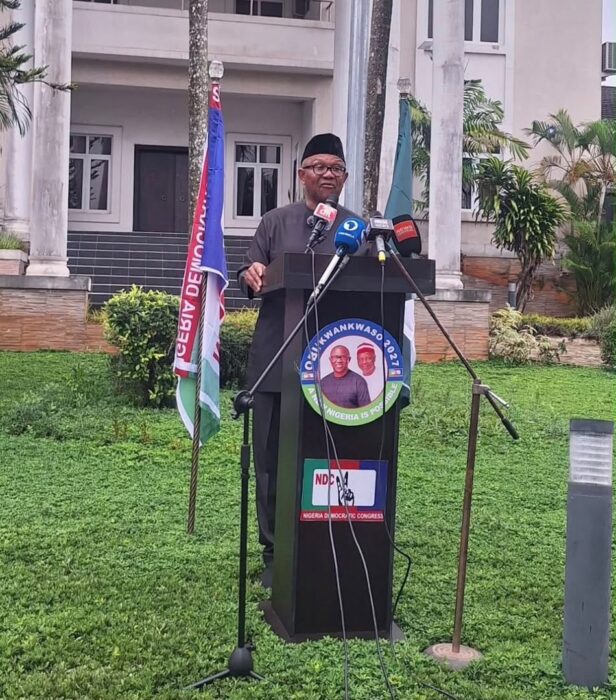
The presidential candidate of the Nigeria Democratic Congress (NDC), Peter Obi, has said his campaign ahead of the 2027 general elections will focus on rebuilding Nigeria through responsible management of public resources, investment in human capital and a shift from consumption to production.
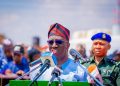
Obi, who spoke at a press conference in Onitsha, Anambra State, on Friday, said the campaign would provide Nigerians with an opportunity for a national conversation on the country’s challenges and the policies needed to address them.
He said although he and his running mate, Rabiu Kwankwaso, had different backgrounds and experiences, they were united by a common objective: improving the living conditions of Nigerians, particularly those living in poverty.
“Our experiences differ, but our conclusion is clear: Nigeria must invest in its people and manage its public resources responsibly,” Obi said.
The NDC candidate said Nigeria’s economic challenges could not be resolved through reactive measures alone, insisting that the success of any government should ultimately be measured by whether the lives of citizens are improving.
He challenged Nigerians to ask their leaders whether people can afford food, education and healthcare, whether businesses can expand and create jobs, and whether young people can find productive employment.
According to him, farmers must also be able to operate safely and transport their produce to markets without being hindered by insecurity or inadequate infrastructure.
Obi urged voters to demand answers directly from presidential candidates and evaluate their records, ideas and policy proposals rather than relying on statements made by political surrogates.
“I enter this contest with one firm belief: Nigeria can work, and Nigeria must work,” he said, describing the challenges confronting the country as numerous and, in some cases, existential.
Citing figures attributed to the International Monetary Fund, Obi said 63 per cent of Nigerians, representing more than 140 million people, live at or below the national poverty line. He added that humanitarian agencies estimate that about 35 million Nigerians would require food assistance during the 2026 lean season.
He also pointed to the estimated 3.6 million internally displaced Nigerians, largely as a result of conflict and insecurity, while noting that millions of young people enter the labour market each year without finding meaningful economic opportunities.
Obi said Nigeria’s growing population and large domestic market should be treated as an economic advantage rather than a burden.
With the country’s population exceeding 200 million, he argued that Nigeria has the labour force, consumer base and natural resources required to build a productive economy capable of competing internationally.
“Nigeria cannot import its way to prosperity,” he said, outlining a strategy centred on producing more of what Nigerians consume, processing more of what the country produces and increasing the competitiveness of Nigerian businesses in global markets.
He said his administration would seek to combine experience from public finance management, the private sector and the civil service to turn Nigeria’s population into productive human capital and its natural resources into value-added industries.
Obi identified agriculture, manufacturing, technology, construction, energy, the creative sector and services as critical areas for economic transformation.
On insecurity, the former Anambra State governor said the crisis had displaced millions of Nigerians and disrupted agriculture, education, trade and investment.
He called for a comprehensive approach that would include improved intelligence gathering, better coordination among security agencies, stronger policing and border management, and greater use of technology.
He also spoke on healthcare, unemployment and the state of Nigeria’s democracy, urging voters to subject those seeking political office to rigorous scrutiny.
Obi said presidential candidates should be prepared to engage directly with Nigerians across the country and answer questions about their plans.
“Any presidential candidate who lacks the resolve to travel across the country, meet the people, and respond to their questions lacks the capacity to govern it,” he said.
He maintained that the 2027 election should be about more than political rhetoric, urging Nigerians to assess candidates on their records, competence, ideas and capacity to address the country’s deepening economic and security challenges.