
























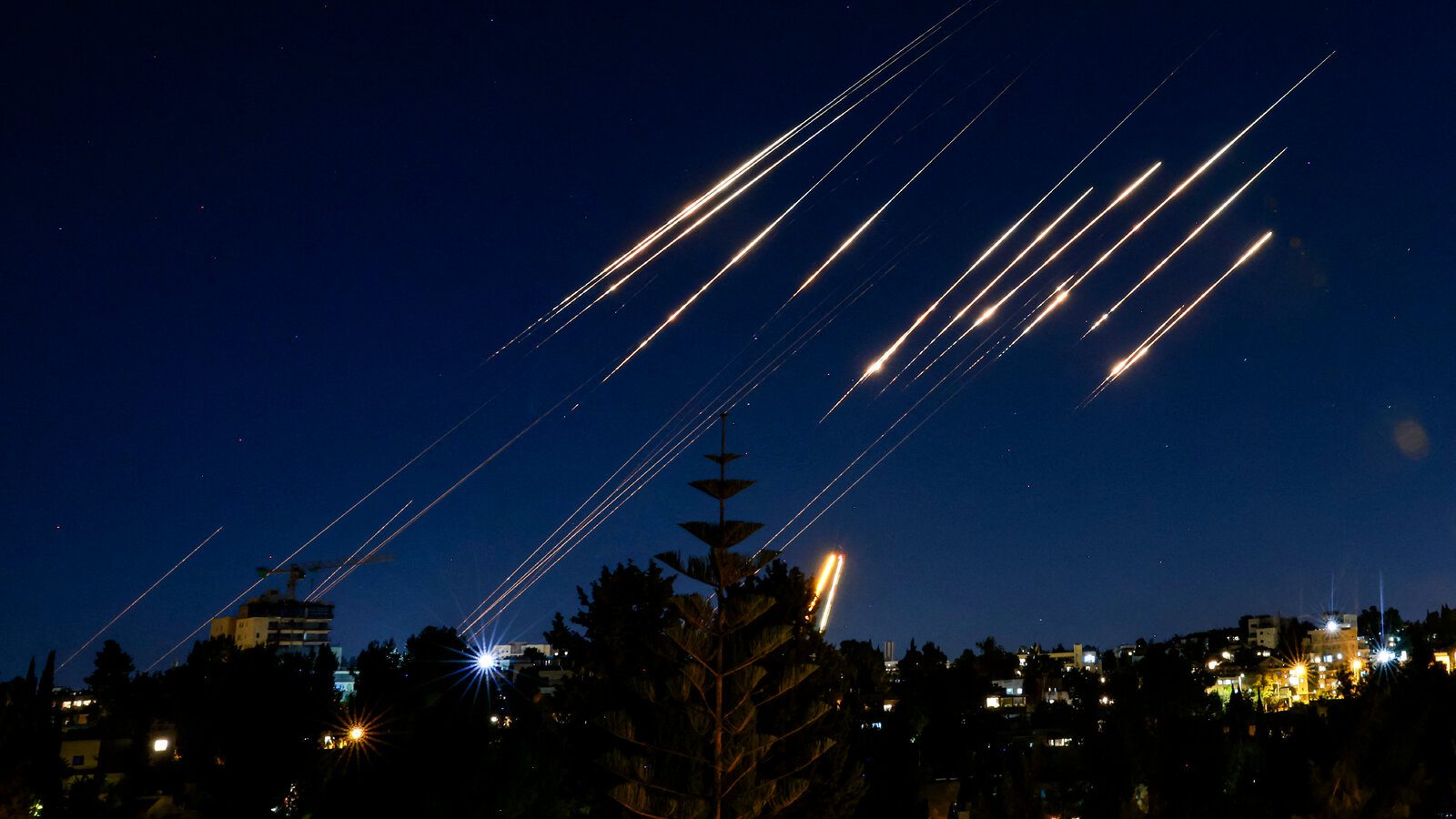
Israel has launched airstrikes on Iran after Tehran fired missiles at northern Israel, marking the first direct exchange of fire between the two countries since a ceasefire was reached on April 8 and fueling fears of a renewed regional conflict in the Middle East.
The escalation widened further as Yemen’s Iran-backed Houthi rebels fired missiles at Israel and announced a ban on Israeli-linked shipping in the Red Sea, threatening a key global trade route.
The Israeli strikes appeared to contradict the position of U.S. President Donald Trump, who had publicly urged restraint and reportedly advised Israeli Prime Minister Benjamin Netanyahu against further retaliation. Trump insisted that Israel and Iran must “immediately stop shooting” and claimed that Netanyahu did not “call the shots.”
Posting on his Truth Social platform on Monday, Trump wrote: “Israel and Iran must immediately stop ‘shooting’. President DONALD J. TRUMP.”
The U.S. president has recently pressured Israel to scale back military operations in Lebanon to create room for broader negotiations aimed at ending the conflict with Iran. However, Israel carried out strikes near Beirut on Sunday, despite a U.S.-backed truce proposal announced last week.
Iran, meanwhile, dismissed suggestions that Israel acted without Washington’s knowledge. Foreign Ministry spokesman Esmaeil Baqaei said Tehran believes any Israeli military action would have required prior coordination with the United States.
“No one believes that the Zionist regime would carry out any action without prior coordination and cooperation with the United States,” Baqaei said, warning that the latest developments could undermine diplomatic efforts to end the conflict.
The White House did not immediately respond to questions about whether the Israeli strikes were coordinated with Washington.
Israeli attacks reportedly targeted an Iranian petrochemical complex and several air defence systems. The Israeli military said it struck and dismantled defence installations deployed across multiple areas of Iran.
Iranian state television reported explosions in Isfahan, Karaj, Tabriz and Tehran, though authorities did not immediately disclose the extent of the damage. Iran’s Islamic Revolutionary Guard Corps (IRGC) said Israel used air-launched ballistic missiles during the attacks.
In response, the IRGC said it targeted two Israeli military bases as part of “Operation Nasr” (Victory). The Israeli military said it intercepted a fresh wave of Iranian missiles, while explosions were heard in Jerusalem as residents sought shelter. A missile fragment reportedly damaged homes in a settlement in the occupied West Bank, although no casualties were recorded.
According to a senior U.S. official cited by the Associated Press, Trump personally called Netanyahu after Iran’s missile attack and urged him not to retaliate immediately. The official said Trump believed he had persuaded the Israeli leader to delay any response.
The official, speaking anonymously, said Trump had “got Bibi to hold off for the time being,” but offered no further details. Netanyahu’s office did not immediately comment on the report.
In a separate interview with the Financial Times before the Israeli strikes, Trump said he was directing the overall approach to the conflict and suggested Netanyahu had limited room to act independently.
The Houthis added another layer to the crisis by announcing their first missile attack on Israel since early April. The group also declared a “complete and total ban” on Israeli maritime navigation in the Red Sea, raising concerns over renewed disruption to one of the world’s busiest shipping lanes.
The latest violence threatens already fragile diplomatic efforts between Washington and Tehran. Iranian negotiators have faced mounting pressure from hardliners within the country to abandon talks with the United States, while others have called for stricter terms in any potential agreement.
Ehsan Movahedian, an international relations specialist at Tehran University, claimed evidence suggested direct U.S. involvement in the Israeli strikes, alleging that cruise missiles were launched from the eastern Mediterranean. His claims have not been independently verified.
The renewed conflict rattled global markets, with Brent crude oil surging by $3.50 to $96.59 per barrel on Monday. Stock markets across Asia also fell sharply amid concerns over energy supplies and regional stability.