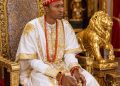






















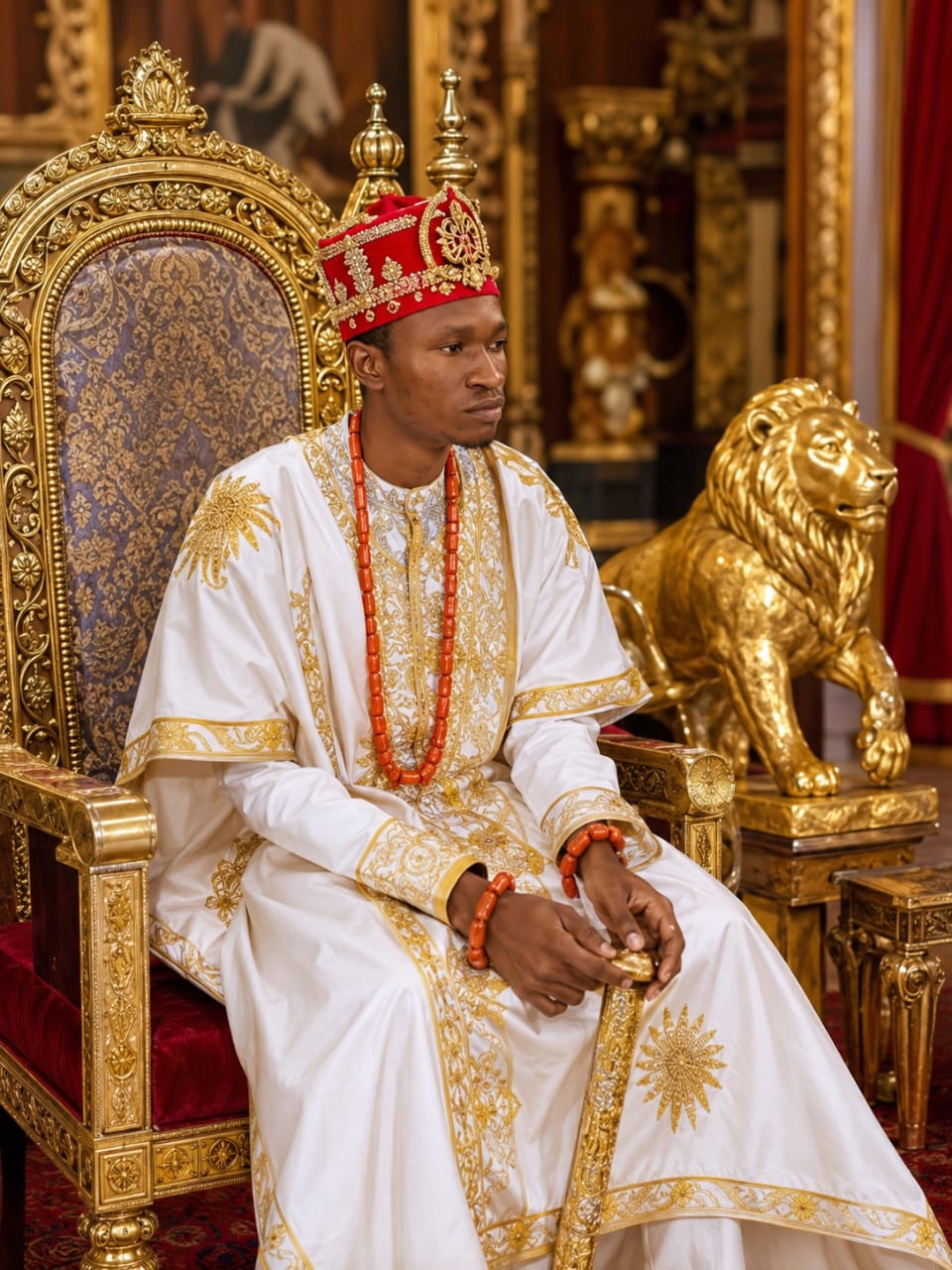
•Daniel Afamefune Chukwujindu, Ezeagwu Ukpo 11 and 11th Ajeh of Ekwuoma Kingdom
By Our Reporter
At just 23, Prince Daniel Afamefune Chukwujindu has assumed the traditional throne of Ekwuoma Kingdom in Ika North East Local Government Area of Delta State, succeeding his late father and becoming the town’s 11th Ajeh.
The formal presentation on Thursday, September 3, 2026, which coincided with the completion of the burial rites of his father, the late King Samuel Chinedu Chukwujindu, Ezeagwu-Ukpo I, was marked by an impressive display of culture, tradition, unity and community spirit.
The young monarch, an undergraduate of Microbiology at Delta State University (DELSU), Abraka, now bears the royal title Ezeagwu-Ukpo II, succeeding his father, who died on June 2, 2026, after an 18-year impactful reign.
His emergence followed the centuries-old tradition of primogeniture in Ekwuoma, under which the first son of a reigning monarch succeeds to the throne. The royal family, elders and the town’s chiefs said the practice has remained the accepted traditional norm and custom of succession since the kingdom was founded nearly 400 years ago.
What could have been an emotionally difficult transition, however, unfolded into a remarkably successful and colourful occasion, with the timing of the ceremony and the weather appearing to cooperate perfectly with the organisers.
From the commencement of the traditional rites to the enthronement ceremony, favourable weather conditions provided a major boost, allowing guests and residents to participate fully in the outdoor activities without the disruption that adverse weather could have caused.
The turn of events gave the ceremony an atmosphere of celebration and reassurance, with the scale of attendance and smoothness of proceedings surpassing the expectations of even some of the event’s sceptics and naysayers.
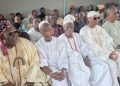
Traditional rulers, members of the Council of Chiefs, community leaders, government representatives, academics, members of the Ekwuoma Progressive Union (EPU), professionals, family members, friends and well-wishers converged on the kingdom to witness the historic transition.
The ceremony featured traditional rites symbolising the passage of authority from the late monarch to his successor, as well as prayers, tributes, goodwill messages and cultural expressions celebrating Ekwuoma’s rich heritage.
For many participants, the event represented more than the installation of a new king. It was a moment of continuity—an opportunity to mourn a departed monarch, celebrate his legacy and simultaneously open a new chapter under a young successor.
In his remarks, the Chairman of the Council of Chiefs and Orikeze of Ekwuoma Kingdom, Chief Ernest Njokede, described the occasion as both solemn and joyous.
He paid tribute to the late Ajeh, whom he said left an enduring legacy of service, peace and commitment to the welfare of his people during his 18-year reign.
Njokede congratulated the new monarch and prayed for divine guidance, wisdom, courage, good health and a long and peaceful reign.
He reminded the young Ajeh that the crown was not merely an ornament of honour but a sacred trust representing the hopes, aspirations and collective destiny of the people.
“Ekwuoma belongs to all of us. It is our collective heritage. Let us treasure and guard it jealously because we are the envy of the numerous less fortunate communities around us,” he said.
The Orikeze called on the people to close ranks, rise above personal interests and embrace a common vision for the development of the kingdom.
He stressed that community development should not be left to the traditional institution and chiefs alone, but should be regarded as a collective responsibility of all sons and daughters of Ekwuoma and residents of the kingdom.
Njokede also highlighted Ekwuoma’s growing population and rapid physical development, saying the transformation presented opportunities that demanded greater planning, vision and cooperation.
He praised the community’s youths for distinguishing themselves in business, public service, academia, technology and other fields, both within Nigeria and abroad.
He equally acknowledged the contributions of the Council of Chiefs, the EPU and the Ekwuoma Elite Group to peace, unity and development in the kingdom.
The traditional leader urged the new monarch to work closely with the chiefs, elders, government and other stakeholders to consolidate peace and accelerate development.
He also drew attention to the economic potential of Ekwuoma’s cultural heritage, particularly the New Yam Festival and Ogbanigbe Festival, describing them as living expressions of the kingdom’s history, identity and values.
According to him, the festivals could be developed into nationally and internationally recognised cultural events capable of attracting tourists, stimulating commerce, creating opportunities for young people and projecting Ekwuoma’s rich heritage to the wider world.
He therefore encouraged sons and daughters of the kingdom in the diaspora to strengthen their relationship with home through investments, mentorship, infrastructure projects and other development initiatives.
In his remarks, the new Ajeh expressed gratitude to the people for the confidence reposed in him, pledging to uphold the customs and traditions of Ekwuoma while promoting peace, unity and development.
The young monarch also appealed to the people to unite behind the traditional institution and work collectively to build a stronger and more prosperous kingdom.
He stressed the importance of cooperation between the traditional institution, government and the people in addressing the challenges confronting the community.
His installation has therefore ushered Ekwuoma into a new era—one in which a young monarch is expected to combine the weighty responsibilities of traditional leadership with his academic pursuits.
The successful ceremony, buoyed by favourable weather, impressive attendance and a palpable sense of communal solidarity, provided a fitting bridge between the reign of Ezeagu-Ukpo I and the emergence of Ezeagu-Ukpo II.
For Ekwuoma, the message from the historic occasion was unmistakable: the old has been honoured, the present has been secured, and the future has arrived in the person of a 23-year-old king.
As the celebrations drew to a close, prayers and goodwill continued to pour in for the new Ajeh, with the people expressing hope that his reign would preserve Ekwuoma’s centuries-old heritage while ushering in a new era of purposeful leadership, peace, unity and development.