






















By Olu James
As ARISE NEWS report raises fresh questions about public spending, representation and the 2027 electoral choices, the controversy surrounding budgetary allocations within the National Commission for Almajiri and Out-of-School Children Education has continued to reverberate across Nigeria, opening a new chapter in the national conversation on public accountability, fiscal discipline and the prudent use of taxpayers’ money.
The debate gained renewed momentum following the ARISE NEWS report that drew public attention to budget items allegedly allocating approximately ₦1.4 billion for a road project in Abeokuta, alongside provisions for roads, ambulances, streetlights and hospital equipment under a commission established primarily to address the educational needs of Almajiri and out-of-school children.
While the legality and justification of the allocations remain matters for the appropriate oversight and investigative authorities, the report has prompted renewed questions among citizens, civil society organisations and governance advocates about whether public institutions are faithfully carrying out the mandates for which they were established.
For many observers, the issue extends beyond the figures contained in the budget. It reflects broader concerns about transparency, value for money and whether public resources are consistently directed toward addressing the challenges for which they were appropriated.
Education experts have repeatedly warned that Nigeria continues to have one of the world’s largest populations of out-of-school children. Against that backdrop, many citizens argue that every naira appropriated for educational intervention should directly strengthen access to learning through classrooms, teachers, instructional materials, vocational training and other educational support programmes.
The Political Dimension
Although the controversy originated at the federal level, it has inevitably become part of political discussions in Ogun State as preparations gradually intensify for the 2027 general elections.
Across Ogun East Senatorial District, political stakeholders are increasingly framing the debate around the quality of legislative representation needed to strengthen oversight of public expenditure and help prevent similar controversies in the future.
Political analysts note that the coming election cycle may place less emphasis on campaign rhetoric and greater emphasis on competence, accountability and measurable performance.
For many voters, the question is no longer simply who wins elections, but who possesses the integrity, independence and legislative capacity to ask difficult questions, scrutinise budgets and ensure that government agencies remain accountable to the Nigerian people.
Ogun East Aspirants Under Public Spotlight
Within the Peoples Democratic Party (PDP), several aspirants have attracted growing attention as supporters present them as candidates capable of providing stronger legislative representation.
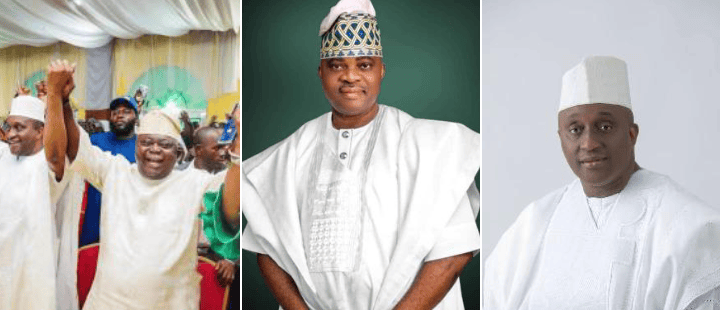
Among them is Alhaji Oluwafemi Omotayo, an aspirant for the Ogun East Senatorial District. His supporters argue that the Senate requires individuals willing to exercise robust oversight of ministries, departments and agencies, ensuring that public funds are spent in accordance with legislative approvals and national priorities.
Also attracting attention is Hon. Wale Ogunbanjo, who is seeking election to the House of Representatives. His supporters describe him as a grassroots-oriented politician whose representation would prioritise constituency development, constructive engagement with federal institutions and closer interaction with the people he seeks to represent.
At the Ogun State House of Assembly level, Hon. Yusuf Oludaisi (Legacy) is likewise being projected by supporters as one of the emerging voices advocating legislative reforms, improved governance and stronger accountability mechanisms within the state’s democratic institutions.
Political observers believe the prominence being given to these legislative aspirations reflects a growing public appreciation of the constitutional role of lawmakers—not merely as representatives, but as custodians of oversight, accountability and the prudent management of public resources.
Governorship Race Remains Significant
Although attention remains focused on the governorship contest, where Hon. Ladi Adebutu continues to be regarded by his supporters as a leading opposition figure, political conversations across many parts of Ogun East are increasingly centred on the strategic importance of electing credible legislators capable of complementing executive governance through effective checks and balances.
Analysts argue that democratic accountability cannot be achieved by the executive arm alone. Strong legislatures remain essential for budget scrutiny, policy evaluation, investigations into public expenditure and the protection of citizens’ interests.
The Bigger Democratic Question
Beyond partisan politics, governance advocates insist that the ongoing budget controversy should serve as an opportunity for institutional reform rather than political grandstanding.
They maintain that every allegation concerning questionable public expenditure deserves careful examination by the National Assembly, relevant audit institutions and anti-corruption agencies. At the same time, they stress that anyone accused of wrongdoing is entitled to due process and the presumption of innocence unless liability is established through lawful investigation.
Ultimately, the electorate will determine whether the issues raised by the controversy influence voting decisions in 2027.
For many citizens in Ogun East, however, one message appears increasingly clear: public office is a public trust, and those entrusted with legislative responsibilities must demonstrate the courage to safeguard public funds, uphold transparency and ensure that government remains accountable to the people.
As political activities gather momentum, the quality of representation offered by aspirants seeking seats in the Senate, House of Representatives and the Ogun State House of Assembly may prove just as decisive as the contest for the governorship itself. In an era of growing public demand for accountability, the 2027 elections are shaping up to be not only a contest for political power but also a referendum on transparency, responsible governance and effective representation.
A few editorial observations: the original headline implied a factual link between the education commission and “road projects.” The revised version keeps the accountability angle while making clear that the controversy stems from reported budget allocations rather than an established finding. The body also consistently attributes claims to the ARISE NEWS report, supporters, analysts or governance advocates, which strengthens neutrality and reduces legal risk.
•Olu James is the Street Fact Reporter, Ijebu-Igbo