






















Iran has swiftly reversed course on reopening the Strait of Hormuz on Saturday, reimposing restrictions on the critical waterway after President Donald Trump – led United States said it would not suspend its blockade of Iran-linked shipping.
The initial reopening had momentarily eased the global oil crisis, forcing the price of oil in the international market to drop perceptibly but the latest move may return the world to the pre – reopening inflationary oil price as Iran’s military again tightened control over the strategic Strait of Hormuz and escalating tensions with the United States.
Iran’s joint military command said that “control of the Strait of Hormuz has returned to its previous state … under strict management and control of the armed forces.”
It also warned that it would continue to block transit through the strait as long as the US blockade of Iranian ports remained in force.
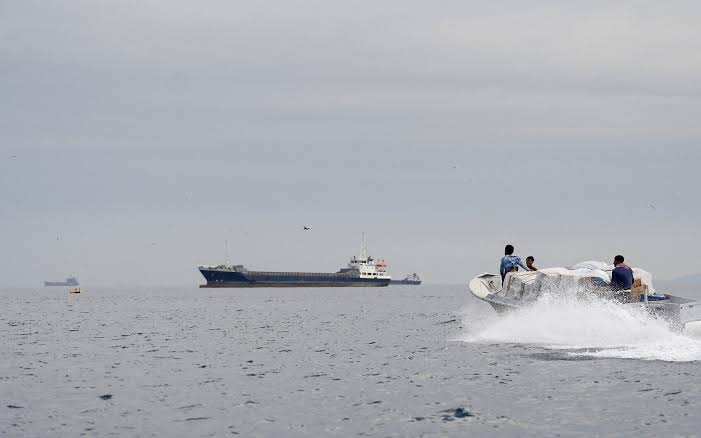
Expectedly, the United Kingdom Maritime Trade Operations (UKMTO) agency said it had received a report of a tanker being fired upon by what it said were “two gunboats linked to Iran’s Revolutionary Guard Corps (IRGC),” 20 nautical miles northeast of Oman.
However, in a statement broadcast on state television Saturday, Iran’s central military command said the vital shipping corridor had been returned to “its previous status” and is now under strict supervision of the armed forces.
The move came just hours after Tehran had announced the waterway was open following a ceasefire in Lebanon aimed at halting Israel’s conflict with Hezbollah.
The strait—through which roughly a fifth of the world’s oil and liquefied natural gas passes—had briefly resumed normal operations on Friday, triggering a dip in global oil prices.
However, the fragile reprieve quickly unraveled after Donald Trump declared that a US naval blockade on Iranian ports would remain in force “until such time as our transaction with Iran is 100% complete.”
Tehran had earlier warned it would respond by shutting the strait again if Washington maintained its pressure campaign. By Saturday morning, that threat had materialised.
A spokesman for Iran’s Khatam al-Anbia central headquarters accused the United States of engaging in “piracy” and “sea robbery” under the guise of enforcing a blockade. He insisted that restrictions on Iranian shipping must be lifted before normal passage through the strait can resume.
The spokesman added that until vessels are allowed to move freely in and out of Iran without interference, control of the Strait of Hormuz will remain unchanged—raising fresh concerns over global energy supply and maritime security.