












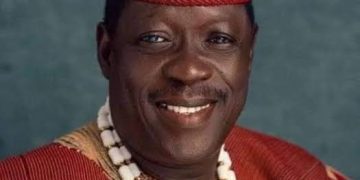












President Bola Ahmed Tinubu has urged a United States federal court to dismiss a bid for the release of additional FBI and DEA records concerning him, arguing that the lawsuit is less about government transparency than an attempt to obtain decades-old personal information for political purposes in Nigeria.
In a filing submitted on Friday, August 28, 2026, Tinubu asked the US District Court for the District of Columbia to reject American transparency activist Aaron Greenspan’s motion for summary judgment and uphold the redactions and withholdings made by US law-enforcement agencies.
Tinubu’s lawyers — Christopher W. Carmichael and Victor P. Henderson of Henderson Parks, LLC, alongside Oluwole O. Afolabi — argued that Greenspan had failed to produce evidence showing that the FBI or DEA had engaged in misconduct capable of overriding the privacy protections attached to law-enforcement records.
At the centre of the dispute is whether US Freedom of Information Act provisions can be used to obtain private information about an individual simply because that person is now a prominent foreign political figure.
Tinubu: FOIA is not a political opposition tool
The President’s response seeks to shift the focus of the case away from speculation about his past and towards the legal purpose of the American FOIA regime.
Tinubu argued that FOIA is designed primarily to shed light on the activities of government agencies, not to enable requesters to search government archives for personal information about individuals.
He said Greenspan’s requests appeared aimed at finding potentially damaging records about him and using them to influence political debates in Nigeria.
“Neither the interest in possible criminal records of an individual, nor influencing a foreign nation are ‘public interests’ that FOIA recognizes,” Tinubu argued through his lawyers.
The President said the plaintiff’s repeated emphasis on obtaining records bearing his name further illustrated that the litigation had become centred on him personally rather than on the conduct of the FBI or DEA.
According to Tinubu, Greenspan’s “singular focus” was obtaining documents with the President’s name on them, rather than establishing what the US agencies had done or failed to do.
‘No evidence of cover-up’
Tinubu also attacked what he described as unsubstantiated suggestions that he was the subject of a secret criminal prosecution, investigation or agreement not to prosecute.
He said Greenspan had repeatedly invoked alleged conspiracies and a possible government cover-up without presenting evidence sufficient to support those claims.
“The claim that there is some coverup conspiracy is unsubstantiated by actual evidence,” the President submitted.
“Unsubstantiated allegations are easy to assert in filings, but insufficient to justify a request for information about an individual,” he added.
Tinubu maintained that a person seeking to overcome the privacy protections attached to law-enforcement records must present evidence capable of leading a reasonable person to believe that government wrongdoing may have occurred.
He argued that Greenspan had not met that threshold.
Three decades later, privacy rights remain
Another major plank of Tinubu’s defence is the age of the records being sought.
The disputed material relates to events dating back more than 30 years, including a period in 1993 when Tinubu was a private individual and a student rather than a public official.
His lawyers argued that his subsequent rise in Nigerian politics and eventual election as President could not retrospectively erase the privacy protections attached to records concerning his private life during that earlier period.
“Intervenor should retain his full privacy interests because he was not a public official in 1993,” Tinubu argued.
He added that his later involvement in foreign politics should not diminish his privacy interests in records generated before he became a public official.
FBI, DEA records already released
Greenspan initially filed 12 FOIA requests seeking records relating to “Bola Ahmed Tinubu and associates” from several US agencies, including the Department of Justice, FBI, Internal Revenue Service, CIA and DEA.
One request sought what Greenspan described as the “entire FBI file” on Tinubu.
After the agencies responded, eight requests involving the CIA, FBI and DEA remained disputed.
The court subsequently upheld the CIA’s use of a so-called Glomar response, which allows an agency to refuse to confirm or deny whether responsive records exist. The court, however, directed the FBI and DEA to search for and process records that were not exempt from disclosure.
The agencies later released thousands of pages of material, including redacted documents and a Vaughn index setting out the legal basis for withholding particular information.
Greenspan nevertheless sought summary judgment, complaining that he could not recall seeing Tinubu’s name printed on any of the released pages.
Tinubu seized on that argument as evidence that the lawsuit was primarily about uncovering information specifically identifying him.
Court ruling did not erase privacy protections
The President also rejected Greenspan’s claim that an earlier court ruling had effectively removed his privacy interests.
Tinubu said the court had distinguished between his interest in keeping secret whether he had been investigated and the separate privacy interest in the contents of any investigative files.
His lawyers argued that the earlier ruling did not eliminate the latter protection and that US law continues to permit agencies to redact or withhold sensitive investigative material under FOIA Exemption 7(C) and the Privacy Act.
1993 forfeiture case does not settle the issue
Greenspan has also relied on information connected to a 1993 forfeiture proceeding, arguing that material associated with the case is already in the public domain.
Tinubu disputed that interpretation.
He argued that the forfeiture proceedings and the Moss Affidavit cited by Greenspan did not reveal the details or outcome of any potential criminal investigation involving him.
“The purpose of Plaintiff’s motion is to obtain such information because it is not public,” Tinubu submitted.
His lawyers maintained that the existence of some publicly available information about an individual does not automatically eliminate privacy protections over additional material held in government files.
They further argued that the public-domain doctrine relied upon by Greenspan applies where the same information has already been officially disclosed elsewhere — a condition they say has not been established in this case.
‘Fitness for office’ argument rejected
Greenspan has argued that disclosure is warranted because Tinubu is President of Nigeria and his personal history is of legitimate interest to a population of more than 230 million people affected by his decisions.
Tinubu rejected that reasoning, drawing a distinction between public curiosity about a politician and the narrower concept of “public interest” recognised under US FOIA law.
He argued that the fact that he is now Nigeria’s President does not automatically turn decades-old private records into matters subject to disclosure under the American transparency statute.
According to the President, Greenspan’s repeated references to his “fitness for office” demonstrate that the litigation is ultimately concerned with Tinubu as an individual and the possible political consequences of the records in Nigeria.
“The record is clear that Plaintiff’s FOIA requests are focused on the individual and are not intended to discover anything about the agency,” Tinubu submitted.
President asks court to preserve redactions
Tinubu also argued that the thousands of pages already released by the FBI and DEA have provided substantial information about the agencies’ handling of the matter.
Removing redactions that protect personal information, he maintained, would contribute little to understanding the conduct of the US government while potentially exposing information protected by privacy laws.
He therefore asked the court to reject Greenspan’s challenges to the FBI’s searches, the DEA’s Vaughn index and other document-specific withholdings.
The President ultimately urged the court to deny Greenspan’s motion for summary judgment and allow the FBI and DEA to maintain their existing redactions and withholdings.
“For all the foregoing reasons, Intervenor requests that the Court deny Plaintiff’s motion for summary judgment and allow the redactions or withholdings made by the FBI and DEA to stand,” Tinubu’s filing concluded.